Today, The Grandma has been remembering last time she visited Le Louvre in Paris, and she could admire Liberty Leading the People, the painting by the French artist EugèneDelacroix.
Liberty Leading the People, in French La Liberté guidant le peupleis a painting of the Romantic era by the French artist Eugène Delacroix, commemorating the July Revolution of 1830 that toppled King Charles X (r. 1824-1830).
A bare-breasted woman of the people with a Phrygian cap personifying the concept and Goddess of Liberty, accompanied by a young boy brandishing a pistol in each hand, leads a group of various people forward over a barricade and the bodies of the fallen while holding aloft the flag of the French Revolution -the tricolour, which again became France's national flag after these events- in one hand, and brandishing a bayonetted musket with the other. The figure of Liberty is also viewed as a symbol of France and the French Republic known as Marianne. The painting is sometimes wrongly thought to depict the French Revolution of 1789.
Liberty Leading the People is exhibited in the Louvre in Paris.
By the time Delacroix painted Liberty Leading the People, he was already the acknowledged driving force of the Romantic school in French painting. Delacroix, who was born as the Age of Enlightenment was giving way to the ideas and style of romanticism, rejected the emphasis on precise drawing that characterised the academic art of his time, and instead gave a new prominence to freely brushed colour.
Delacroix painted this work in the autumn of 1830. In a letter to his brother dated 21 October, he wrote: My bad mood is vanishing thanks to hard work. I've embarked on a modern subject -a barricade. And if I haven't fought for my country at least I'll paint for her. The painting was first exhibited at the official Paris Salon of 1831.
Delacroix depicted Liberty as both an allegorical goddess-figure and a robust woman of the people. The mound of corpses and wreckage acts as a kind of pedestal from which Liberty strides, barefoot and bare-breasted, out of the canvas and into the space of the viewer. The Phrygian cap she wears had come to symbolize liberty during the first French Revolution of 1789. The painting has been seen as a marker to the end of the Age of Enlightenment, as many scholars see the end of the French Revolution as the start of the Romantic era.
The fighters are from a mixture of social classes, ranging from the bourgeoisie represented by the young man in a top hat, a student from the prestigious ÉcolePolytechnique wearing the traditional bicorne, to the revolutionary urban worker, as exemplified by the boy holding pistols. What they have in common is the fierceness and determination in their eyes. Aside from the flag held by Liberty, a second, minute tricolore can be discerned in the distance flying from the towers of Notre-Dame.
The identity of the man in the top hat has been widely debated. The suggestion that it was a self-portrait by Delacroix has been discounted by modern art historians. In the late 19th century, it was suggested the model was the theatre director Étienne Arago; others have suggested the future curator of the Louvre, Frédéric Villot; but there is no firm consensus on this point.
Several of the figures are probably borrowed from a print by popular artist Nicolas Charlet, a prolific illustrator who Delacroix believed captured, more than anyone else, the peculiar energy of the Parisians.
Although Delacroix was not the first artist to depict Liberty in a Phrygian cap, his painting may be the best known early version of the figure commonly known as Marianne, a symbol of the French Republic and of France in general.
The painting may have influenced Victor Hugo's 1862 novel Les Misérables. In particular, the character of Gavroche is widely believed to have been inspired by the figure of the pistols-wielding boy running over the barricade. The novel describes the events of the June Rebellion two years after the revolution celebrated in the painting, the same rebellion that led to its being removed from public view.
A drawing of Charles Dickens' A Tale of Two Cities
When you start to read a book, the first important thing is to know something about the author. Once you have enough information about him, it's important to situate the book in time and space.
Charles Dickens' A tale of two cities has two main localizations. The first of them is Paris, the capital of France. The story happens in 1775 when the French city is near to live a great social revolution that will change not only France but the world history.
Paris in the 18th century was the second-largest city in Europe, after London, with a population of about 600,000 persons. The century saw the construction of Place Vendôme, the Place de la Concorde, the Champs-Élysées, the church of Les Invalides, and the Panthéon, and the founding of the Louvre Museum. Paris witnessed the end of the reign of Louis XIV, was the center stage of the Enlightenment and the French Revolution, saw the first manned flight, and was the birthplace of high fashion and the modern restaurant.
Louis XIV distrusted the Parisians; when he was young he had been forced to flee the city twice, and he did not forget it. He moved his residence from the Tuileries Palace to the Palace of Versailles in 1671, and moved his entire court to Versailles in 1682. But while he disliked the Parisians, he wanted Paris to be a monument to his glory; he declared in 1666 that he wished to do for Paris what Augustus had done for Rome.
A typical day in 18th century in Paris
Immediately following the death of Louis XIV, his nephew, Philippe d’Orléans, manoeuvered the Parlement into breaking the King's will and naming him the Regent for the five-year-old king Louis XV. On 12 September, the Regent had the child King brought to the Palais de Justice to ratify his Regency, and then to the Château de Vincennes. On 30 December, the young King was installed in the Tuileries Palace, while the Regent took up residence in his family's palace, the Palais Royal, the former Palais-Cardinal of Cardinal Richelieu.
Until the 1789 Revolution, Paris had a strict social hierarchy, whose customs and rules were established by long tradition. It was described by Louis-Sébastien Mercier in the Le Tableau de Paris, written in 1783: There are in Paris eight distinct classes; the princes and great nobles, these are the least numerous; the Nobles of the Robe; the financiers; the traders and merchants; the artists; the craftsmen; the manual workers; the servants; and the bas peuple, the lower class.
The bourgeois, or members of the middle class of Paris, financiers, merchants, shopkeepers, artisans, and those in the liberal professions like doctors, lawyers, accountants, teachers or government officials were a growing social class. They were specifically defined by law as persons who had lived in the city at least a year in their own residence, and earned enough money to pay taxes.
A drawing of Charles Dickens' A Tale of Two Cities
Most Parisians belonged to the working class or the poor. There were some forty thousand domestic servants, mostly working for middle-class families. Most came from the provinces; only five percent were born in Paris.
They lived with the families they served, and their living and working conditions depended entirely on character of their employers. They received very low wages, worked long hours, and if they lost their job, or if a woman became pregnant, they had little hope of getting another position.
In the domain of finance and banking, Paris was far behind other European capitals, and even other French cities. The first venture of Paris into modern finance was launched by the Scottish economist John Law, who, encouraged by the Regent, in 1716 started a private bank and issued paper money. Law invested heavily in the Mississippi Company, causing wild speculation, with shares rising to sixty times their original value. The bubble burst in 1720, and Law closed the bank and fled the country, ruining many Parisian investors.
Parisians were suspicious of banks and bankers. The Bourse, or Paris stock market, didn't open until 24 September 1724 on rue Vivienne, in the former hôtel de Nevers, after stock markets had existed in Lyon, Marseille, Bordeaux, Toulouse and other cities. The Banque de France wasn't founded until 1800, after the Bank of Amsterdam (1609), and the Bank of England (1694).
Notre Dame de Paris in the 18th century
During most of the 18th century, the Parisian economy was based on thousands of small workshops, where skilled artisans produced products.
The workshops were clustered in particular neighborhoods; furniture makers in the faubourg Saint-Antoine; cutlery and small metal-work in neighborhood called the Quinze Vingts near the Bastille. At the beginning of the 18th century, security was provided by two different corps of police; the Garde de Paris and the Guet Royal, or royal watchmen. Both organizations were under the command of the Lieutenant General of Police. The Parisians considered the police both corrupt and inefficient, and relations between the people and the police were increasingly strained.
For most of the 18th century, the hospitals were religious institutions, run by the church, which provided more spiritual than actual medical care. The largest and oldest was the Hôtel-Dieu, located on the parvis of Notre-Dame Cathedral on the opposite side of the square from its present location. It was founded in 651 by Saint Landry of Paris.
Paris possessed an extraordinary number and variety of prisons, used for different classes of persons and types of crimes.
The guillotine during the French Revolution
In October 1789 Doctor Joseph-Ignace Guillotin, in the interest of finding a more humane method, successfully had the means of execution changed to decapitation by a machine he perfected, the guillotine, built with the help of a Paris manufacturer of pianos and harps named Tobias Schmidt and the surgeon Antoine Louis.
The University of Paris had fallen gradually in quality and influence since the 17th century. It was primarily a school of theology, not well adapted to the modern world, and played no important role in the scientific revolution or the Enlightenment.
The great majority of Parisians were at least nominally Roman Catholic, and the church played an enormous role in the life of the city; though its influence declined toward the end of the century, partly because of the Enlightenment, and partly from conflicts within the church establishment. The church, along with the nobility, suffered more than any other institutions from the French Revolution.
The Protestant Church had been strictly controlled and limited by the royal government for most of the 18th century.
A drawing of Charles Dickens' A Tale of Two Cities
The Jewish community in Paris was also very small; an estimated five hundred persons in 1789. About fifty were Sephardic Jews who had originally come from Spain and Portugal, then lived in Bayonne before coming to Paris. They lived mostly in the neighborhood of Saint-German-des-Prés, and worked largely in the silk and chocolate-making businesses. There was another Sephardic community of about one hundred persons in the same neighborhood, who were originally from Avignon, from the oldest Jewish community in France, which had lived protected in the Papal state. They mostly worked in commerce. The third and largest community, about three hundred fifty persons, were Ashkenaze Jews from Alsace, Lorraine, Germany, the Netherlands and Poland. They spoke Yiddish, and lived largely in the neighborhood of the Church of Saint-Merri.
The Freemasons were not a religious community, but functioned like one and had a powerful impact on events in Paris in the 18th century. The first lodge in France, the Grand Loge de France, was founded on 24 June 1738 on the rue des Boucheries, and was led by the Duke of Antin. By 1743 there were sixteen lodges in Paris, and their grand master was the Count of Clermont, close to the royal family. The lodges contained aristocrats, the wealthy, church leaders and scientists. Their doctrines promoted liberty and tolerance, and they were strong supporters of the Enlightenment.
Democracy must be built through open societies that share information. When there is information, there is enlightenment.
When there is debate, there are solutions. When there is no sharing of power, no rule of law, no accountability, there is abuse, corruption, subjugation and indignation.
French Revolution: Fraternity, Equality and Freedom
Today, The Jones have had an intensive day. After visiting Disneyworld Paris and the Stade Roland-Garros and talking about their feelings and impressions about them during last three days, the family has returned to the English lessons.
Then, they have revised a modal verb Have to/Don't have to and its importance to talk about routines.
Later, they have read another chapter of Oscar Wilde's The Picture of Dorian Gray and they have been talking about the first reactions to the construction of Disneyworld Paris in Marne-la-Vallée, and about the pros and cons that the park offered to the inhabitants of this little town.
FRATERNITY. Tomorrow, the family is going to spend a great day in Paris because they have been invited to participate in MJ's birthday. For this special event, the family is going to sail by the Seine River meanwhile they are going to read some fragments of Antoine de Saint-Exupéry's The Little Prince. They have already written some postcards to celebrate this important day.
The Jones are visiting Le Place de la Bastille
EQUALITY. The Grandma has explained a lot of stories today.
On the one hand, she has talked about the French aristocrats and their life-style during the first decades of the last century. They had noble titles, practised some sports like tennis or equestrian, and had interesting jobs like pilots, writers or diplomats. It's the case of famous people like Roland Garros, René Lacoste or Antoine de Saint-Exupéry. This life-style was available only for rich and aristocratic people, because the rest or the population needed working to survive and they didn't enjoy free time and leisure.
FREEDOM. On the other hand, The Grandma has explained the influence of nature over important historic events. It's the case of the eruption of one of the Icelander volcanoes, Eyjafjallajökull, Bardarbunga or Laki, over the beginning of the French Revolution (1789); the Sicilian one, Etna, over the Reapers' War (1640) or the Neapolitan one Mount Vesuvius over Pompeii (79 AD) and Naples (1944).
The migrations like a linchpin has been taken by Merche Jones to talk about the last good news about Open Arms's boat which was detained in Sicily some days ago accused of illegal trafficking of humans, an accusation as unbelieved as false that has affected the whole crew and has avoided its normal work in the Mediterranean sea rescuing hundreds of people who escape from these insane horrible wars that seem, sadly and tragically, not to have an end.
Finally, the family has written some predictions for Elena Jones's next participation in Roland Garros Tournament. The family is pretty sure she will win the slam.
The Jones are predicting the future
The Bastille was a fortress in Paris, known formally as the Bastille Saint-Antoine. It played an important role in the internal conflicts of France and for most of its history was used as a state prison by the kings of France.
It was stormed by a crowd on 14 July 1789, in the French Revolution, becoming an important symbol for the French Republican movement, and was later demolished and replaced by the Place de la Bastille.
The Bastille was built to defend the eastern approach to the city of Paris from the English threat in the Hundred Years' War. Initial work began in 1357, but the main construction occurred from 1370 onwards, creating a strong fortress with eight towers that protected the strategic gateway of the Porte Saint-Antoine on the eastern edge of Paris.
The innovative design proved influential in both France and England and was widely copied. The Bastille figured prominently in France's domestic conflicts, including the fighting between the rival factions of the Burgundians and the Armagnacs in the 15th century, and the Wars of Religion in the 16th. The fortress was declared a state prison in 1417; this role was expanded first under the English occupiers of the 1420s and 1430s, and then under Louis XI in the 1460s.
The defences of the Bastille were fortified in response to the English and Imperial threat during the 1550s, with a bastion constructed to the east of the fortress. The Bastille played a key role in the rebellion of theFronde and the battle of the faubourg Saint-Antoine, which was fought beneath its walls in 1652.
The Storming of the Bastille, 14 July 1789
Louis XIV used the Bastille as a prison for upper-class members of French society who had opposed or angered him including, after the revocation of the Edict of Nantes, French Protestants.
From 1659 onwards, the Bastille functioned primarily as a state penitentiary; by 1789, 5,279 prisoners had passed through its gates. Under Louis XV and XVI, the Bastille was used to detain prisoners from more varied backgrounds, and to support the operations of the Parisian police, especially in enforcing government censorship of the printed media.
Although inmates were kept in relatively good conditions, criticism of the Bastille grew during the 18th century, fueled by autobiographies written by former prisoners. Reforms were implemented and prisoner numbers were considerably reduced. In 1789 the royal government's financial crisis and the formation of the National Assembly gave rise to a swelling of republican sentiments among city-dwellers.
Michelle Jones & the Génie de la Liberté
On 14 July the Bastille was stormed by a revolutionary crowd, primarily residents of the faubourg Saint-Antoine who sought to commandeer the valuable gunpowder held within the fortress. Seven remaining prisoners were found and released and the Bastille's governor, Bernard-René de Launay, was killed by the crowd. The Bastille was demolished by order of the Committee of the Hôtel de Ville.
Souvenirs of the fortress were transported around France and displayed as icons of the overthrow of despotism. Over the next century, the site and historical legacy of the Bastille featured prominently in French revolutions, political protests and popular fiction, and it remained an important symbol for the French Republican movement.
Almost nothing is left of the Bastille except some remains of its stone foundation that were relocated to the side of Boulevard Henri IV. Historians were critical of the Bastille in the early 19th century, and believe the fortress to have been a relatively well-administered institution, but deeply implicated in the system of French policing and political control during the 18th century.
La Terreur or The Reign of Terror or The Terror is the label given by some historians to a period during the French Revolution.
Several historians consider the reign of terror to have begun in 1793, placing the starting date at either 5 September, June or March, birth of the Revolutionary Tribunal, while some consider it to have begun in September 1792, September Massacres, or even July 1789, when the first beheadings took place, but there is a general consensus that it ended with the fall of Robespierre in July 1794.
Between June 1793 and the end of July 1794, there were 16,594 official death sentences in France, of which 2,639 were in Paris. However, the total number of deaths in France was much higher, owing to death in imprisonment, suicide and casualties in foreign and civil war.
There was a sense of emergency among leading politicians in France in the summer of 1793 between the widespread civil war and counter-revolution. Mr. Barère exclaimed on 5 September 1793 in the Convention: Let's make terror the order of the day!
They were determined to avoid street violence such as the September Massacres of 1792 by taking violence into their own hands as an instrument of government.
On 9 Thermidor Year II, 27 July 1794, the French politician Maximilien Robespierre was denounced by members of the National Convention as a tyrant, leading to Robespierre and twenty-one associates including Louis Antoine de Saint-Just being arrested that night and beheaded on the following day.
Execution of Maximilien Robespierre
The fall of Robespierre was brought about by a combination of those who wanted more power for the Committee of Public Safety, and a more radical policy than he was willing to allow, and the moderates who completely opposed the revolutionary government. They had, between them, made the Law of 22 Prairial one of the charges against him, so that, after his fall, to advocate terror would be seen as adopting the policy of a convicted enemy of the republic, putting the advocate's own head at risk.
Between his arrest and his execution, Robespierre may have tried to commit suicide by shooting himself, although the bullet wound he sustained, whatever its origin, only shattered his jaw. Alternatively, he may have been shot by the gendarme Merda. The great confusion that arose during the storming of the municipal Hall of Paris, where Robespierre and his friends had found refuge, make it impossible to be sure of the wound's origin. In any case, Robespierre was guillotined the next day.
The reign of the standing Committee of Public Safety was ended. New members were appointed the day after Robespierre's execution, and limits on terms of office were fixed, a quarter of the committee retired every three months. The Committee's powers were gradually eroded.
Today, The Bonds are still in Paris. While David Bond is working in some scenes of James Bond's A View to a Kill, the rest of the family visited some important places during the French Revolution.
After that, the family has practised some exercises about Past Simple vs. Present Perfect and has read a new chapter of Mary Shelley's Frankenstein.
Finally, The Bonds have created some oral stories talking about things without saying which they were.
Tomorrow, they are going to visit The Louvre Museum and The Orsay Museum. It will be the last day in the capital of France because next Thursday, the family is going to travel to Kiev to participate in the Eurovision Song Contest. Today, they've prepared their personal profiles and they've created some spots about their countries.
All of the stunt men, these are the unsung heroes. They really are.
Nobody is giving them any credibility. They're risking their necks.
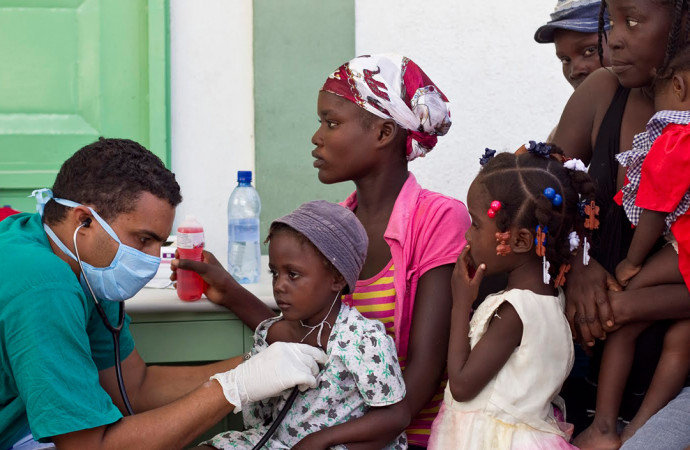
Tina wants to talk about her experience visiting the Caribbean Islands, especially, Haiti, a beautiful island full of kind and nice people who are suffering a drama after a drama without stopping.Hurricanes, floods, earthquakes are moulded the idiosincrasy and the character of Haitian people, the inhabitants of a country, which is the poorest in the American continent. Tina thinks that this is the real drama of the island: the poverty. If the International Community doesn't help Haitian population with honest and true intentions, Haiti will always be a poor country without resources which can not fight against the natural disasters with a minumum of guarantees.
Haiti is a sovereign state in the Western Hemisphere, North America. The country is located on the island of Hispaniola, in the Greater Antilles archipelago of the Caribbean. It occupies the western three-eighths of the island, which it shares with the Dominican Republic. Haiti is 27,750 square kilometres in size and has an estimated 10.6 million people, making it the most populous country in the Caribbean Community.
The name Haïti or Hayti comes from the indigenous Taíno language which was the native name given to the entire island of Hispaniola to mean, land of high mountains.
The region was originally inhabited by the indigenous Taíno people. Spain first discovered the island on 5 December 1492 during the first voyage of Christopher Columbus across the Atlantic. When Columbus initially landed in Haiti, he had thought he had found India or Asia. On Christmas Day 1492, Columbus' flagship the Santa Maria, ran aground north of what is now Limonade. As a consequence, Columbus ordered his men to salvage what they could from the ship, and he created the first European settlement in the Americas, naming it La Navidad after the day the ship was destroyed.
A Cuban doctor helping Haitian people
In the midst of the French Revolution (1789–1799), slaves and free people of colour revolted in the Haitian Revolution (1791–1804), culminating in the abolition of slavery and the defeat of Napoleon Bonaparte's army at the Battle of Vertières. Afterward the sovereign nation of Haiti was established on 1January 1804, the first independent nation of Latin America and the Caribbean, the second republic in the Americas.
The gene pool of Haiti is about 95.5% Sub-Saharan African, 4.3% European, with the rest showing some traces of East Asian genes; according to a 2010 autosomal genealogical DNA testing.
Vodou, a religion with African roots similar to those of Cuba and Brazil, originated during colonial times in which slaves were obliged to disguise their loa or spirits as Roman Catholic saints, an element of a process called syncretism and is still practiced by some Haitians today. Since the religious syncretism between Catholicism and Vodou, it is difficult to estimate the number of Vodouists in Haiti.
The two official languages of Haiti are French and Haitian Creole. French is the principal written and administratively authorized language, as well as the main language of the press, and is spoken by 42% of Haitians. It is spoken by all educated Haitians, is the medium of instruction in most schools, and is used in the business sector. It is also used in ceremonial events such as weddings, graduations and church masses.
Haiti is one of two independent nations in the Americas, along with Canada, to designate French as an official language; the other French-speaking areas are all overseas départements, or collectivités, of France. Haitian Creole, which has recently undergone a standardization, is spoken by virtually the entire population of Haiti. Haitian Creole is one of the French-based creole languages. Its vocabulary is 90% derived from French, but its grammar and influences are from some West African, Taino, Spanish, and Portuguese languages. Haitian Creole is related to the other French creoles, but most closely to Antillean Creole and Louisiana Creole variants.
We want to remember the figure of Isabel Solà, a Catalan nun who was living and working in Haiti until she was killed by robbers in Port-au-Prince.
Isabel Solà in Haiti
Isabel said:You think how is possible I'm still living in Haiti in the middle of poverty and misery, suffering earthquakes, hurricanes, floods and cholera. The only thing I could say is that Haiti is now the onlt place where I can be and heal my heart. Haiti is my home, my family, my work, my pain, my happiness, and my meeting with God. Last night, a new hurricane, Matthew,destroyed Haiti again and left hundreds of deaths. We hope a
strong and real action of the International Community to help Haitian
people who are alone again.
The first step in the evolution of ethics is a sense of solidarity
%20&%20The%20Grandma%20(I).jpg)