Showing posts with label Eurovision Song Contest. Show all posts

Saturday, 13 June 2020

DUNCAN LAURENCE & 'ARCADE', THE NETHERLANDS WIN

Duncan Laurence in Eurovision, 2019
Today, The Grandma has been talking with The Watsons about Duncan de Moor, the Dutch singer who won the last Eurovision Song Contest representing her country in 2019 singing Arcade.

This is the last day of The Grandma with The Watsons. They have been aisled during lots of weeks and now it is time to go out, with all the precautions and respect for others, and continue with their lives.

It is not a goodbye, it is only a break to give The Watsons the possibility of enjoying their relatives and friends again before continuing again with this Purchasing & Sales Course.

Duncan de Moor (born 11 April 1994), professionally known as Duncan Laurence, is a Dutch singer-songwriter.


He began his music career in 2014 and became a semi-finalist in the fifth season of The Voice of Holland.

Laurence represented the Netherlands in the Eurovision Song Contest 2019 with the song Arcade and went on to win the competition, giving the Netherlands its first Eurovision win since 1975.

Born in Spijkenisse, Laurence grew up in Hellevoetsluis. He has been writing his own songs since he was 13 years old, as an escape from being bullied. He started his musical career at the Rock Academy in Tilburg, playing in a number of school bands, including his own, The Slick and Suited.

Formed in 2013, the band went on to perform at Eurosonic Noorderslag. In an Instagram post in February 2020, he revealed he had oxygen deprivation at birth, and thus had a motor disorder affect his right hand.


Laurence participated in the fifth season of The Voice of Holland, choosing Ilse DeLange as his coach. He advanced to the Cross Battles/Semi Finals before being eliminated.

In March 2016, he decided to stop as lead singer of The Slick. Laurence graduated from the Rock Academy in 2017. He, with Jihad Rahmouni, wrote the song Closer on K-pop duo TVXQ's 2018 album New Chapter #1: The Chance of Love.

In January 2019, Laurence was internally selected to represent The Netherlands in the Eurovision Song Contest 2019. He was nominated by Ilse DeLange, with whom Laurence still had contact after The Voice. His song Arcade was first revealed in March 2019.

Duncan Laurence won Eurovision in 2019
On 18 May 2019, Duncan Laurence won the event in Tel Aviv, Israel with 498 points from 41 international juries and the public vote. The juries gave him 237 points, while the public vote gave him 261 points. He finished 26 points ahead of Italy and 128 points ahead of Russia, the two runners-up.

He is the fifth Dutch entrant to ever win the competition, and the first since Teach-In won the Eurovision Song Contest 1975 with the song Ding-a-dong. Laurence will tour The Netherlands and Europe in late 2019 with one concert also scheduled for Amsterdam in March 2020.

On 10 June 2019, he performed at the 50th anniversary Pinkpop Festival in Landgraaf, the first Dutch Eurovision winner to perform at the event. He replaced Swedish duo First Aid Kit on the bill, who dropped out due to health reasons.

On 23 October 2019, Laurence released his second single Love Don't Hate It. It was also announced that he signed a deal with Capitol Records.

In 2020, the artists' entrance at Rotterdam Ahoy was re-named Door Duncan in his honor.

On 29 April 2020, Laurence announced the release of his first EP, Worlds on Fire, it was released on 13 May 2020 and includes the singles Arcade, Love Don't Hate It and Someone Else.

More information: Twitter

Arcade is an English-language song by Dutch singer Duncan Laurence. It represented The Netherlands in the Eurovision Song Contest 2019 in Tel Aviv, Israel, which it won. The song was released as a digital download on 7 March 2019. The song was written by Duncan Laurence, Joel Sjöö, Wouter Hardy and Will Knox.

After the complete line-up of songs was announced, Arcade was the odds' favourite to win Eurovision, and had remained so until the contest ended. An acoustic version of the song was released on 19 July 2019.

In February 2020, Arcade won an Edison Award for best pop song of the year. 

In May 2020, Arcade was included on Duncan's debut extended play Worlds on Fire.

Duncan Laurence wrote the song while he attended the Tilburg Rock Academy. He worked on the song for over two years, predominantly while collaborating with Wouter Hardy, a former band member with Kovacs.

Duncan Laurence won Eurovision in 2019
The song is inspired by the heartbreak of a loved one of Duncan's who died. According to him, Arcade is a story about the search for the love of your life, and about the hope to reach something that seems unreachable.

The namesake lyric Smalltown boy in a big arcade refers to his experience, being from a small town, as a Rock Academy freshman entering the summer fair of Tilburg, the largest in The Netherlands. Throughout the song, the fair and its arcade games are used as a metaphor for love, addiction and gambling with relationships.

Arcade is inspired by film soundtracks and consists of 165 tracks. The song opens with four chords played on piano, accompanied by a simple piano riff and overdubbed vocals. The triple metre verses contrast with the 4/4 time signature of the rest of the song, giving it a distinct sound. Heavy emphasis is put on Duncan's vocals. After the soft verses, in which he expresses his sadness and vulnerability, the chorus kicks in with heavy drums, accompanied with a choir of backing vocals, to enhance the lyrics' expressions of anger and frustration.

On 28 January 2019, an allocation draw was held, which placed each country into one of the two semi-finals, as well as which half of the show they would perform in. The Netherlands were placed into the second semi-final, held on 16 May 2019, and were scheduled to perform in the second half of the show.


More information: Instagram

Once all the competing songs for the 2019 contest had been released, the running order for the semi-finals was decided by the show's producers rather than through another draw, so that similar songs were not placed next to each other. The Netherlands performed from starting position 16 and qualified for the final.

The performance of the song in Tel Aviv featured Duncan Laurence sitting behind an electric grand piano, with three backing vocalists supporting him offstage.

DeLange and the creative team decided that Duncan sit behind a piano on stage, because, him being a singer-songwriter, they wanted to portray him on stage as a musician. Surrounding Duncan and his piano, smoke and water effects, reminiscent of the official music video, and lighting effects accompanied the performance. Reactions to the simplistic performance were mixed.

In the Grand Final, Duncan Laurence was drawn to perform in the first half of the show, on spot 12. Arcade received 12 points from six national juries, and twice from national audiences. The Netherlands were closely followed by North Macedonia, Sweden and Italy during the jury vote and the latter during the televoting sequence, but ended up winning the Eurovision Song Contest with 498 points. It was the first Eurovision victory for the country since 1975, when Teach-In won for The Netherlands with Ding-a-dong.

More information: Nolala


I'm afraid of all I am
My mind feels like a foreign land
Silence ringing inside my head
Please, carry me, carry me, carry me home.


Duncan Laurence

Friday, 12 June 2020

P. HARRINGTON & C. McGETTIGAN, 'ROCK 'n' ROLL KIDS'

P. Harrington & C. McGettigan, Eurovision 1994
Today, The Grandma has been talking with The Watsons about Paul Harrington & Charlie McGettigan, the Irish singers who won the Eurovision Song Contest representing her country in 1994 singing Rock 'n' Roll Kids.

Ireland has participated in the Eurovision Song Contest 53 times since making its debut at the 1965 Contest in Naples, missing only two contests since then (1983 and 2002). The contest final is broadcast in Ireland on RTÉ One. Ireland is the most successful country in the contest, with a record total of seven wins, and is the only country to have won three times consecutively.

Before talking about Paul Harrington & Charlie McGettigan, The Grandma has offered a new Cambridge Key English Test A2 Example to The Watsons.


Paul Harrington (born Dublin, Republic of Ireland) is an Irish musician, who, with Charlie McGettigan, won the Eurovision Song Contest for Ireland in 1994.

Harrington first came to public attention with his debut album, What I'd Say, reaching the Top 10 in 1991. However, that attention reached new heights in 1994 when he represented Ireland and won the Eurovision Song Contest along with Charlie McGettigan.

In the late 1990s, Harrington was the performer of choice for many of the A-list celebrities that would frequent the VIP Room in Dublin's most prestigious nightspot. Here he would regularly entertain and be joined by, stars from the world of music, film, and television. He has performed for, amongst others, the Rolling Stones, Prince, and U2.

Harrington release A Collection in 2008, and after a stunning performance on The Late Late Show, the album entered Ireland's Top 20 reaching number 4.

More information: RTE

In 2009, he joined with his brothers as The Harrington Brothers to record Molly Malone with The Official Leinster Supporters Group. The song became the official anthem for the Leinster Rugby Team.

The song entered the Irish Charts in 2009 and was number one in the download charts. The Harrington Brothers performed Molly Malone live at The RDS Dublin just before Leinster played Edinburgh in the Heineken Cup.

Rock'n'Roll Kids
In 2010, Harrington released a live studio album, Songs, featuring his unique interpretations of some of the world's best-loved songs, and produced by Grammy nominees Chris O’Brien and Graham Murphy. The album also featured Bill Shanley, Sean Devitt, and Tony Molloy.

Harrington is expected to release a new live album in 2018 entitled Lights of Home. The album was recorded by Tim Martin at the Sugar Club Dublin, and features nine new songs.

Although this will be Harrington's first solo album in eight years, he has collaborated on other albums in that time, including a Christmas album featuring the Whitefriar Street Choir (O Holy Night) and a North American-Irish collaboration called Cape Spear.

Charles Joseph McGettigan (born 7 December 1950, Ballyshannon, County Donegal) is an Irish singer. He lives in Drumshanbo, Co. Leitrim.

Performing with Paul Harrington, he won the Eurovision Song Contest 1994 with the song Rock 'n' Roll Kids, words and music by Brendan Graham.

Harrington played piano and McGettigan played guitar. He made an appearance as a guest singer at Congratulations, the 50th anniversary concert of Eurovision.

In August 1998, McGettigan's only son, Shane McGettigan, was killed in a construction accident while working in Quincy, Massachusetts.
 In 2015, McGettigan wrote Anybody Got a Shoulder? for Kat Mahon, which was one of the five songs in Eurosong 2015, the national selection to select the Irish entry for Ireland in the Eurovision Song Contest 2015. The song finished 2nd.

More information: Irish Examiner

Rock 'n' Roll Kids was the winning song of the Eurovision Song Contest 1994, written by Brendan Graham and performed for Ireland by Paul Harrington and Charlie McGettigan.

The song was Ireland's sixth overall victory, and represented an unprecedented third consecutive time that the same country had won the Contest.

There was a myth among Irish media that the song was deliberately chosen not to win. As the Contest rules require the previous year's winner to host the next edition of the Contest, the argument runs that the Irish broadcaster was not prepared to do this for a third consecutive year, hence the selection, but this has never been proved factual.

Even when Ireland hosted the event in 1997, Irish entrant Marc Roberts confirmed that RTE wanted him to go out and win it, as they'd done a deal with BBC to host it the following year.

P. Harrington & C. McGettigan, Eurovision 1994
The song, however, won the contest and is popular among Eurovision fans, even being performed in part by McGettigan and Jakob Sveistrup at the Congratulations special in late 2005.

It was the first winning song ever to be performed without orchestral accompaniment, as McGettigan's guitar and Harrington's piano were the only instruments needed. It was also the first time in the contest when a song scored over 200 points.

Lyrically, the song originally had seven verses, representing the various decades including the 60s, the 70s, the 80s, and the 90s but on the advice of a DJ, Brendan dropped the last two verses as they felt the song was too long. Brendan got the inspiration for the title while attending a Fats Domino Concert in Dublin's National Stadium in 1991.

He entered it in 1992 and it didn't get through, and again in 1993, but it was third time lucky in 1994. According to Brendan, I saw the song as a small song, as a conversation in the kitchen, and I wanted the listeners to be drawn into that kitchen, and into that conversation.

The song was performed third on the night, following Finland's CatCat with Bye Bye Baby and preceding Cyprus' Evridiki with Ime Anthropos Ki Ego. At the close of voting, it had received 226 points, placing 1st in a field of 25.

The song was succeeded as winner in 1995 by Secret Garden representing Norway with Nocturne. It was succeeded as Irish representative at the 1995 Contest by Eddie Friel with Dreamin'.

To commemorate the 20th Anniversary of their victory, Paul & Charlie performed a gig in the Sugar Club in Dublin in 2014, and Brendan reminisced about the inspiration of the song while accepting his Eurovision trophy.

As I stood on the stage at the Point Depot, through the applause and the cheers, I heard a sound roll in over the Liffey Banks -the sound of a rollin', rumbling piano... and for a moment, I wasn't there. I was back in the Stadium on Bourbon Street, on that steamy Dublin night in 1991. Thank you Fats!

More information: Breaking News


We were the rock 'n' roll kids
Rock 'n' roll was all we did
And listenin' to those songs on the radio
I was yours and you were mine
That was once upon a time
Now we never seem to rock 'n' roll anymore.

 
Paul Harrington & Charles McGettigan

Thursday, 11 June 2020

MARIJA NAUMOVA SINGS 'I WANNA', LATVIA FIRST WIN

Marie N won Eurovision in 2002
Today, The Grandma has been talking with The Watsons about Marie N, the Latvian singer who won the Eurovision Song Contest representing her country in 2002 singing I Wanna.

Latvia has participated in the Eurovision Song Contest 20 times since making its debut at the contest in 2000, where the group Brainstorm finished third with the song My Star.


Before talking about Marie N, The Grandma has offered a new Cambridge Key English Test A2 Example to The Watsons.


Marija Naumova (born 23 June 1973 in Latvia) is a Latvian singer.

Under the stage name Marie N, she sings a broad range of music ranging from pop to musical theatre and jazz, and has recorded several albums, with songs in Latvian, French, English, Russian and Portuguese.

Naumova was discovered by famous Latvian musician Raimonds Pauls in 1994 and after a year she performed on TV in searches for talent. She never won, but was noticed by the audience.

In 2002, she won the Eurovision Song Contest for Latvia with her song I Wanna.

In 1998, she performed in a concert celebrating the 100 years jubilee of George Gershwin. In March 1998 she performed on stage in concerts with famous Latvian musicians, and one of those concerts was recorded on CD. That gave her career a boost and she began to participate in several music events, television and radio shows, and give interviews for Latvian newspapers.

Naumova's first solo album, which was completely in Russian, was released in 1999. In 2000 Latvia participated in the Eurovision Song Contest for the first time. Naumova was in the national finals but came second behind Brainstorm. 

In 2001, she again participated in the Latvian preselection, singing Hey Boy Follow Me, which was voted public favourite but was not chosen by the expert jury. Naumova had to wait another year before she was finally chosen to represent Latvia with I Wanna, for which she also wrote the music and co-wrote the lyrics.

More information: All Music

In the Eurovision Song Contest 2002, her performance of I Wanna won the competition and gave Latvia its first ever Eurovision win.

According to author and historian John Kennedy O'Connor in his book The Eurovision Song Contest-The Official History, despite its success at the contest, I Wanna gained the dubious distinction of being the first Eurovision winner that was not released outside of its own territory. Even in Latvia the single never reached the top 30.

In November of her victory year she recorded two new solo albums: one in English, and one in Latvian. She presented the albums to the audience with a tour throughout Latvia.

Marie N won Eurovision in 2002
Naumova co-hosted the Eurovision Song Contest 2003 along with Renars Kaupers of the Latvian band Brainstorm, who came 3rd in the contest in 2000.

In 2004, Marie N successfully combined her singing and acting talents in the lead role of The Sound of Music.

In December Marie N's latest album On My Own was released, with songs in Latvian, French, English and Portuguese. New compositions for Marie N are composed by Sergey Manoukyan, Ivar Must and Andrejs Jevsjukovs. Marie N has written several songs herself, as well. There are cover versions of several world-famous songs in the album -for example, two compositions which were originally written in French, but became very popular in English language.

Marija Naumova has a law degree from the University of Latvia. In 2005, she was chosen as the UNICEF goodwill envoy to Latvia.

As of 2012 she is on a musical hiatus to concentrate on her personal life. She is living in France with her family but still travels back and forth to Latvia.

I Wanna, also known in its original version as I Wonna, was the winning song in the Eurovision Song Contest 2002 performed in English by Marie N representing Latvia. With this victory, Latvia became the second Baltic state to win the Contest, Estonia had achieved the feat one year earlier.

The song was performed twenty-third on the night, following Slovenia's Sestre with Samo ljubezen and preceding Lithuania's Aivaras with Happy You. At the close of voting, it had received 176 points, placing 1st in a field of 24. The song, however, was a commercial failure both in Latvia and Europe.

Marie, along with Brainstorm lead singer Renārs Kaupers, would go on to host the Eurovision Song Contest 2003.

The song is particularly famous for Marie's performance. She began wearing a white suit and a trilby hat, which was removed by one of her dancers. As the song continued, other dancers removed her suit jacket and her dark shirt, revealing the top of a red dress. The suit trousers were then removed, revealing the bottom half of the short dress.

On the final beat of the song, the hem was pulled, revealing the dress to be much longer. This visual performance was also supported by a Salsa-style song, which made full use of the more up-beat tempos increasingly finding success in the Contest.

More information: Wiwi Blogs


Today you think you are the winner
Today you think you are the king
You make me sweat in my emotions
Under your fly-away, fly-away wing.

 
Marie N

Wednesday, 10 June 2020

LORDI SINGS 'ROCK HARD HALLELUJAH', FINLAND WINS

Lordi won Eurovision in 2006
Today, The Grandma has been talking with The Watsons about Lordi, the Finish band who won the Eurovision Song Contest representing her country in 2006 singing Hard Rock Hallelujah.

Finland has participated in the Eurovision Song Contest 53 times since its debut in 1961.


Finland won the contest for the first time in 2006 with Lordi's Hard Rock Hallelujah. The country's best result before then was achieved by Marion Rung with the song Tom Tom Tom in 1973, which placed sixth.

Lordi is a Finnish hard rock/heavy metal band, formed in 1992 by the band's lead singer, songwriter and costume maker, Mr Lordi (Tomi Petteri Putaansuu). In addition to their melodic metal music, Lordi are also known for wearing monster masks and using horror elements with pyrotechnics during concerts and music videos.


The band rose to fame in 2002 with their hit single Would You Love a Monsterman?, and won the Eurovision Song Contest 2006 with their song Hard Rock Hallelujah.

Before talking about Lordi, The Grandma has offered a new Cambridge Key English Test A2 Example to The Watsons.


Lordi has toured and recorded actively since 2002, and Mr Lordi upgrades the band's costumes and masks for each album. The band has gone through several line-up changes, but original members Mr Lordi and guitarist Amen are still active with the band.

Members of Lordi have stated their desire for their unmasked faces to remain private. 

Lordi was formed in 1992 as a solo project by Mr Lordi. Lordi's very first demo album Napalm Market was done in 1993.


After several failed attempts at obtaining a recording contract, Lordi signed a record deal with Bertelsmann Music Group (BMG) Finland in 2002. In July, the band released their first official single, Would You Love A Monsterman?, which rose to number one in Finland and spawned a music video.

At the beginning of 2004, Lordi began recording their next studio album. This time the album was produced by Hiili Hiilesmaa, with whom the band got along well. This second album was first released on 14 April 2004 as The Monsterican Dream. Two songs from the album, My Heaven Is Your Hell and Blood Red Sandman, have since been released as singles. 

Lordi won Eurovision in 2006
Lordi's third album The Arockalypse was released on May 1, 2006.

On 20 May 2006, Lordi made history by winning the Eurovision Song Contest held in Athens with the song Hard Rock Hallelujah, becoming the first Finnish group to win the contest and consequently the first Hard Rock/Heavy Metal band to win; Finland would then send Power Metal band Teräsbetoni in 2008.

Lordi's music is formed by hard rock and heavy metal music elements. The band's horror-related albums, the monster costumes worn by all band members, and the horror elements of their performances are hallmarks of shock rock. The band was mostly influenced by KISS, but also by Alice Cooper and Twisted Sister.
 

Hard Rock Hallelujah is a song by Finnish hard rock band Lordi. Hard Rock Hallelujah was released as a single in 2006, reaching the #1 spot in Finland and also peaking in the UK Top 40 at #25.

Lordi performed Hard Rock Hallelujah in the 2006 Eurovision Song Contest and won the contest with 292 points. It was voted as the most popular Finnish Eurovision entry in the forty years the country had participated. It held the record for most points until it was beaten by Fairytale by Alexander Rybak of Norway with 387 points three years later.

On 26 May 2006, the Finns broke a world record for karaoke songs, when about 80,000 people sang Hard Rock Hallelujah on Helsinki's Market Square.

More information: Eurovision TV

The song peaked at #1 in the Finland singles chart upon its release and in addition, released as a physical single during the week starting on 5 June 2006 in the United Kingdom, on the BMG label. Download sales for the previous week were therefore eligible to be counted for the 4 June 2006 Official UK Singles Chart, which led to the single to chart at #59.

The semifinal and final performances of Hard Rock Hallelujah at the 2006 Eurovision Song Contest were similar; the lead singer, Mr Lordi, stated before the final that the only planned changes were that We'll scream louder. And turn the amps up. The performance took place on a fairly bare Eurovision stage, with banks of video monitors in the back displaying abstract images of fire, and the band in their usual monster costumes.

The band brought a hat including flag of Finland to the performance, wore by Mr Lordi in the actual performance and by Amen during the encore after the winning. For the final performances Mr Lordi also used two of official stage props from Lordi's live concerts, two-headed battle axe and bat-like wings.


During the whole performance, the band members remained relatively stationary, with the exception of guitarist Amen, who hopped back and forth energetically.

More information: Finland Abroad


Kick up a row
We're the Supermonstars
We chant the anthem of the Phantoms
Deal out the blows
Like a Supermonstar
We are humble to none.

Lordi

Tuesday, 9 June 2020

TANEL PADAR SINGS 'EVERYBODY', ESTONIA FIRST WIN

Dave Benton & Tanel Padar
Today, The Grandma has been talking with The Watsons about Tanel Padar, the Estonian singer who won the Eurovision Song Contest representing her country in 2001 singing Everybody.

Estonia has participated in the Eurovision Song Contest 25 times since making its debut in 1994. Its first appearance would have taken place in 1993, however a qualification round was installed for seven former Eastern bloc countries hoping to make their debut in the contest, with Estonia failing to qualify.


Estonia has won the contest once, in 2001. Estonia's first participation in 1994 was unsuccessful, finishing 24th (out of 25). Estonia went on to finish in the top eight in six out of seven contests (1996–2002), with Maarja-Liis Ilus and Ivo Linna fifth (1996), Maarja-Liis Ilus returning to finish eighth (1997), Evelin Samuel and Camille sixth (1999) and Ines fourth (2000), before Tanel Padar, Dave Benton & 2XL gave Estonia its first victory in 2001.

This made Estonia the first former Soviet country to win the contest and the second eastern European country to win, after Yugoslavia in 1989. Sahlene then finished third for the hosts in Tallinn in 2002.

Since the introduction of the semi-final round in 2004, Estonia has failed to reach the final on nine occasions and has reached the top ten four times, with Urban Symphony sixth (2009), Ott Lepland sixth (2012), Elina Born and Stig Rästa seventh (2015) and Elina Nechayeva eighth (2018). Estonia's total of ten top ten results, is more than any other Baltic country.


Before talking about Tanel Padar, The Grandma has offered a new Cambridge Key English Test A2 Example to The Watsons.


Tanel Padar (born 27 October 1980) is an Estonian singer and songwriter. He is best known internationally for winning the Eurovision Song Contest 2001.

Padar became famous by winning the Kaks takti ette, a biennial televised competition for young Estonian singers, in 1999.

In 1999 Padar won Kaks takti ette a televised competition for young Estonian singers.

In 2000, Padar was one of the backing vocalists for Ines -who at the time was also his girlfriend- at the Eurovision Song Contest 2000.

In 2001, he, along with the boyband 2XL and Aruba born Dave Benton claimed the spotlight by winning the Eurovision Song Contest 2001 with the song Everybody.

In 2003 Padar started a rockband called Tanel Padar & The Sun, which is one of the most popular bands in Estonia.

In 2006, Tanel Padar & The Sun had the following positions in the Estonian 2006 chart (top 40): #1, #4, #12, #23, #29, #31. One of their songs also claimed the R2 Hit of the Year prize. The song Hopelessness You made it to the MTV World Chart Express.

Tanel Padar's older sister is singer Gerli Padar. He was married to Katarina Kalda from 2003 until 2007.

Everybody was the winner of the Eurovision Song Contest 2001, performed in English by Tanel Padar, Dave Benton and 2XL, representing Estonia. The song was performed twentieth on the night, following Germany's Michelle with Wer Liebe lebt and preceding Malta's Fabrizio Faniello with Another Summer Night. At the close of voting, it had received 198 points, with the win coming at the head of a 23-song field.

Estonia was the first Former Soviet Union country to win the Contest, with the second and third following shortly thereafter. Tanel had previously provided backing vocals for Estonia's 2000 entry, sung by Eda-Ines Etti, his then girlfriend.

Tanel and Dave were supported by a backing group of four, 2XL, Lauri Pihlap, Kaido Põldma, Sergei Morgun and Indrek Soom.

The song was followed as Estonian representative at the 2002 contest, held in the Estonian capital of Tallinn, by Sahlene with Runaway.

Lyrically, the song is simply an invitation to party, with the duo singing that every night's a Friday night. The song is famous for two major reasons. The first of these is that Benton is the oldest contestant to win the grand prize. The second is that he is the first black contestant to do so. Maarja-Liis Ilus has recorded a cover version.

More information: Instagram


Every night's a Friday night
Ladies, this sure feels right
The two of us will sing again
The heart is young and we know when
To kick the sadness out the door
And roll the carpet from the floor
Let the spirit hit the roof
The two of us still know the moves.

Tanel Padar

Monday, 8 June 2020

NOAMH KAVANAGH & 'IN YOUR EYES', IRELAND AGAIN

Niamh Kavanagh won Eurovision in 1993
Today, The Grandma has been talking with The Watsons about Niamh Kavanagh, the Irish singer who won the Eurovision Song Contest representing her country in 1993 singing In Your Eyes.

Ireland has participated in the Eurovision Song Contest 53 times since making its debut at the 1965 Contest in Naples, missing only two contests since then (1983 and 2002). The contest final is broadcast in Ireland on RTÉ One.

Ireland is the most successful country in the contest, with a record total of seven wins, and is the only country to have won three times consecutively.

This is the last week The Grandma is going to talk about Eurovision with The Watsons. She has offered them lots of information about artists, songs and constests to have enough material to work in a good candidature for Rennette Watson. After this week, The Watsons are going to finish their confinment and they are going to go out and enjoy the city again.

The Grandma will return with them next July. They deserve some free days to rest and return with more energy.

Before talking about Niamh Kavanagh, The Grandma has offered a new Cambridge Key English Test A2 Example to The Watsons.


Niamh Kavanagh (born 13 February 1968) is an Irish singer who sang the winning entry at the Eurovision Song Contest 1993.

The 1993 Eurovision Song Contest was held in Millstreet, County Cork, Republic of Ireland. She sang In Your Eyes to clinch a second consecutive win for Ireland in the Eurovision Song Contest.

The singer represented Ireland again in the Eurovision Song Contest 2010 in Oslo, with the song It's for You. She performed at the semi-final on 27 May 2010, finishing 9th in a field of 17 contestants, thus qualifying for the Grand Final on 29 May 2010. In the final, she finished 23rd in a field of 25 contestants, having received 25 points.

More information: Twitter

Kavanagh is highly regarded among fans of the Eurovision Song Contest, and the OGAE Ireland, official Eurovision fan club, president Diarmuid Furlong, said: A lot of us would regard Niamh as one of the best vocalists who's ever won the Eurovision Song Contest.

While she has enjoyed success in Europe Kavanagh remains relatively unknown in the United States. However, the singer recorded an album in that country following her initial Eurovision success.

Kavanagh was born in Glasnevin, Dublin, Ireland. Her father was a singer and a saxophonist. She often sang songs at family parties as a child. Her influences include Aretha Franklin, Ella Fitzgerald and Blood, Sweat and Tears, all of whom she listened to from a young age, as well as Bonnie Raitt.

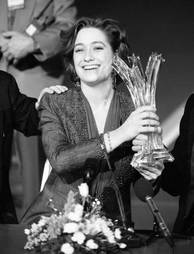
N. Kavanagh in Eurovision, 1993
Kavanagh performed as a lead and backing vocalist on the film soundtrack for The Commitments in songs such as Destination Anywhere and Do Right Woman, Do Right Man.

In spite of this, Kavanagh was not prepared for the boost in recognition she received for her later entries in the Eurovision Song Contest.

On 14 March 1993, twenty-five-year-old Kavanagh performed in RTÉ's National Song Contest, which selected the Irish entry for the larger Eurovision Song Contest, to be held in Millstreet, County Cork, later that spring.

Opening the show at Dublin's Point Theatre, Kavanagh performed In Your Eyes, lyrics and music by Jimmy Walsh. At the close of voting, Kavanagh handily won the National Song Contest with 118 points from the ten regional juries, a 39-point margin over the runner-up. This win meant Kavanagh and In Your Eyes would go on to represent Ireland on the Eurovision stage in Millstreet.

At the Eurovision on 15 May, Kananagh performed In Your Eyes near the middle of the show, as the fourteenth act out of twenty-five. This time, the voting was much closer, and Ireland exchanged the leading position with the United Kingdom several times throughout the announcement of the results.

With 187 points, a record at the time, Kavanagh went on to win the competition in a nail-biting finish, as the result was decided by the final maximum score awarded by the last country to vote.

In Your Eyes went on to be the best-selling single in Republic of Ireland for 1993, and reached number 24 in the UK Singles Chart. It went on to become a double-platinum success and Kavanagh was recognised by people on the street. She recorded an album in Nashville, Tennessee, United States, and this album was produced by John Jennings. She later left music to spend more time with her children.

More information: Extra

In Your Eyes is a ballad sung by Irish singer Niamh Kavanagh that won the Eurovision Song Contest in 1993 for Ireland with 187 points.

The song is a love song written and composed by Jimmy Walsh, where the singer tells how, after being lonely, she has found love and heaven in her lover's arms and how it had changed her.

In 1992, the writer Walsh, who was based in New York, recorded a demo of the song in a studio there. One of the engineers suggested a girl singer that he knew, who could record it. A then-unknown Idina Menzel came in and listened to the song. She suggested a key change for the chorus as she found it rather flat.

Walsh was concerned that this would make the song too difficult to sing, but Menzel insisted she could do it. She duly recorded the demo and this was sent out to Niamh Kavanagh, who was recommended to Walsh as being a singer who could handle the difficult ranges within the song.

N. Kavanagh in Eurovision, 1993
Kavanagh loved the song, but was unsure of wanting to compete in the Eurovision. Eventually, Walsh said that he would withdraw the song if she didn't do it, so she agreed to enter with it.

Kavanagh had a home win, since the contest took place in Ireland due to Linda Martin's win the previous year. It was the second of Ireland's three victories in a row in the early Nineties.


The song was performed fourteenth on the night, following Sweden's Arvingarna with Eloise and preceding Luxembourg's Modern Times with Donne-moi une chance. At the close of voting, it had received 187 points, placing 1st in a field of 25. Despite winning the Irish national song contest, Kavanagh found it difficult to find a record label willing to release the record due to its association with the contest. Eventually, she partly funded the recording of it herself and released it in limited numbers in Ireland under a made-up label name, Eureyes Music.

During the run up to the contest, she met with Simon Cowell, who was present with the UK entrant Sonia. He signed her up to Arista Records and the song was released internationally through them.

In Your Eyes became the best selling single in Ireland for 1993. It also reached No. 24 in the UK Singles Chart and became a minor hit in the Netherlands and Germany.

The song was succeeded as winner in 1994 by Paul Harrington and Charlie McGettigan, also representing Ireland, singing Rock'n'Roll Kids.

Niamh Kavanagh also returned to the Contest in 2010 with It's for You, which came 23rd out of 25 countries, with 25 points in the final.

It wasn't until 2017, during a documentary on the Irish winners, that Kavanagh learned that the singer on the demo she had heard all those years ago was a young Idina Menzel, who was by then internationally famous.

More information: The Sun


Showing no emotion, my feelings locked inside
I made myself an island, trying to take my heart and hide
I built a wall around me, afraid of letting go
But suddenly an open door I never saw before.

Niamh Kavanagh

Friday, 5 June 2020

MARIJA SERIFOVIC SINGS 'MOLITVA', SERBIA FIRST WIN

Marija Šerifović won Eurovision in 2007
Today, The Grandma has been talking with The Watsons about Marija Šerifović, the Serbian singer who won the Eurovision Song Contest representing her country in 2007 singing Molitva.

Serbia has participated in the Eurovision Song Contest 12 times since making its debut in 2007. 

Serbia previously participated as part of Yugoslavia (both the Socialist Federal Republic of Yugoslavia from 1961 to 1991 and the Federal Republic of Yugoslavia in 1992) and as Serbia and Montenegro (2004–2006).

Serbia won the contest on its debut as an independent country in 2007, with Molitva performed by Marija Šerifović. The country's only other top five result is their third place in 2012, with Nije ljubav stvar. Serbia's other top ten results are sixth place (2008) and tenth place (2015).

Before talking about Dana, The Grandma has offered a new Cambridge Key English Test A2 Example to The Watsons.


Marija Šerifović (born 14 November 1984) is a Serbian singer and record producer.

She is best known for winning the Eurovision Song Contest 2007 with Molitva, making her Serbia's first and only Eurovision winner to date. Šerifović is recognised for her powerful and emotional vocal performances.

Marija Šerifović was born on 14 November 1984 in Kragujevac in central Serbia. Her father, Rajko Šerifović, was a drummer, and her mother, Verica Šerifović, is a popular folk singer. She comes from a mixed marriage of a Muslim/Orthodox father and an Orthodox mother.

When Verica was nine months pregnant with Marija, her husband left her for another woman with whom he had a son, Danijel, who is also a singer and a vocal coach. Šerifović described her father as an abusive alcoholic who would regularly beat her mother.

Šerifović released her debut album Naj, Najbolja in 2003 under City Records. The following year she won at the Budva Music Festival with Bol do ludila. She also claimed victory at the Radio Festival in 2005 and released her sophomore record Bez Ljubavi in 2006. A year later she held her first concert in Sava Centar, Belgrade.

Marija Šerifović won Eurovision in 2007
In the search for the newly formed independent Serbia's entry for 2007 Eurovision Song Contest, Šerifović with Molitva was chosen winner according to the jury and the public vote.

On 10 May, she performed fifteenth, placing first with 298 points. Two days after, she claimed victory with 268 points, becoming Serbia's first and to date only Eurovision winner. Returning home, she was greeted by more than 70,000 people in front of the Civic Assembly of Belgrade. She also held a concert in her home town in front of 60,000 co-citizens.

The following year, Serbia hosted the Eurovision Song Contest 2008 in Belgrade, where Šerifović performed her winning song and handed over the title to Dima Bilan from Russia. She was also in the jury to choose the Irish entry for Eurovision Song Contest 2008 and Swedish for Eurovision Song Contest 2009. 

Molitva was included in the list of the 10 best Eurovision winners according to the SBS in 2016 and to The Independent in 2019, while The Eurovision Times, a fan blog, ranked it as the third best Eurovision song of all time.

In 2008, Šerifović released her third album titled Nisam anđeo, and a year later her fourth Anđeo. In May 2010, she held a concert in the Belgrade Arena. Her documentary series, Confession, was broadcast on Prva TV in 2013, in which she talked about her difficult childhood, rose to fame and coming out as a lesbian. In 2014 she released her fifth record, Hrabro.

In July 2015, Šerifović released single Pametna i luda. In September, she became a judge on the televised singing competition Zvezde Granda alongside Jelena Karleuša. While in October, Šerifović also saw success with Sama i nervozna.

More information: Eurovoix

In March the following year, she held a concert in Zetra Olympic Hall in Sarajevo. Then, Šerifovć released Svoja i tvoja in May. She ended the year with another single, Deo prošlosti.

In March of 2018, she also released Nije ljubav to. Šerifović then performed in the sold out Belgrade Arena and in July at the Koševo City Stadium in Sarajevo.

Between March and May of 2019, Šerifović embarked on a tour, titled Druga strana ploče, during which she covered her favorite songs from other artists as well as performed her own hits. It listed seven sold out shows, six of which were in Sava Centar in Belgrade and one concert in SPC Vojvodina in Novi Sad. Additionally, in June, Džejla Ramović, mentored by Šerifović, won the 13th season of Zvezde Granda.

Molitva is a song with music by Vladimir Graić, lyrics by Saša Milošević Mare, and sung by Serbian singer Marija Šerifović.

It was the winning song of the Eurovision Song Contest 2007. It was Serbia's Eurovision debut as an independent nation, the State Union of Serbia and Montenegro having dissolved in June 2006. The song was released as a CD single in nine different versions on 27 July 2007 by Connective Records. 

Marija Šerifović won Eurovision in 2007
Molitva also won the semi final in the 2007 competition, collecting 298 points, which was until the 2016 Russian entry the biggest number of points received in a semi final. However, the song achieved this under the new scoring system, which was introduced in the 2016 contest.

It was succeeded as the Serbian Representative by Oro by Jelena Tomašević and as the winning song by Believe by Dima Bilan from Russia.

Molitva was the first song containing no English language lyrics to win since Dana International's win for Israel in 1998 with Diva

Molitva was the last entirely non-English song to win the Contest until the 2017 edition, where Portugal's Salvador Sobral won with Amar pelos dois, as well as being the first time a ballad had won since televoting became the standard and the first one of the so-called Balkan Ballads that came to prominence since the late 1990s to win the contest.

The song is also notable for its stage presentation because it lacked dance routines, revealing or showy costumes, pyrotechnics and other gimmicks. The Eurovision Song Contest is often accused of concentrating on these things instead of the music itself. Many elements of Molitva contrasted with the previous winner, Hard Rock Hallelujah.

Marija's performance was complemented by the notable presence of the five backing singers, who joined together afterwards to form Beauty Queens. They later joined her with a Serbian flag at the end.

More information: ESC Bubble

The English version is titled Destiny, the Russian version is titled Молитва (Molitva), and The Finnish version is called Rukoilen and was performed by the Beauty Queens, not Marija. The song has also been released as a dance remix and a remix named Jovan Radomir mix by Swedish TV-presenter Jovan Radomir, who also wrote the English lyrics. The UK oompah band Oompah Brass recorded an instrumental version of Molitva on their album Oompocalypse Now (2008), premiered at the 2007 Belgrade Beer Festival.

Molitva has been often played for many successes Serbia has had in the year 2007. It was played at a welcome party for Serbia's tennis players after their French Open successes.

During Wimbledon 2007, Molitva was often used during clips displaying the courts and players on the BBC. It was mainly used before and after footage or interviews with the Serbian players.

At the final of the 2008 Eurovision Song Contest, which took place on 24 May, Šerifović sang Molitva as the opening.

The short 10 sec instrumental theme of the song can be heard even today on Radio Television of Serbia (RTS), between scheduled broadcasts as short intermezzo or when presenting RTS programme/image.

In 2012, Šerifović performed this song during the interval act of the second semi-final at the Eurovision Song Contest 2012 in Baku. She was accompanied by traditional Azeri musical instruments.

In 2015, the chorus of the song was played on Day 102 of the soap opera parody Kalyeserye of the Philippine noontime variety show Eat Bulaga!.

Molitva was included in the list of the 10 best Eurovision winners according to the SBS in 2016 and to The Independent in 2019, while The Eurovision Times, a fan blog, ranked it as the third best Eurovision song of all time.

More information: Wiwi Blogs


Ni oka da sklopim,
Postelja prazna tera san,
A život se topi
I nestaje brzo, k'o dlanom o dlan.


I'm wide awake
An empty bed drives my dreams away
Life melts like ice
Disappears in the twinkling of an eye.

 
 Marija Šerifović