Monday, 7 February 2022

'FALÒ DELLE VANITÀ', FLORENTINE BURN THEIR SINS

Today, The Grandma has been reading about falò delle vanità, a bonfire that occurred on a day like today in 1497 in Florence.
 
A bonfire of the vanities, in Italian falò delle vanità, is a burning of objects condemned by religious authorities as occasions of sin.

The phrase itself usually refers to the bonfire of 7 February 1497, when supporters of the Dominican friar Girolamo Savonarola collected and burned thousands of objects such as cosmetics, art, and books in the public square of Florence, Tuscany, on the occasion of Shrove Tuesday.

Francesco Guicciardini's The History of Florence gives a firsthand account of the 1497 Florentine bonfire of the vanities. The focus of this destruction was on objects that might tempt one to sin, including vanity items such as mirrors, cosmetics, fine dresses, playing cards, and musical instruments.

Other targets included books which Savonarola deemed immoral (such as works by Boccaccio), manuscripts of secular songs, and artworks, including paintings and sculpture.

Although often associated with Savonarola, such bonfires had been a common accompaniment to the outdoor sermons of San Bernardino di Siena in the first half of the 15th century.

Fra Girolamo Savonarola was a Dominican friar who was assigned to work in Florence in 1490, at the request of Lorenzo de' Medici -although within a few years Savonarola became one of the foremost enemies of the House of Medici and helped bring about their downfall in 1494.

More information: The Local

Savonarola campaigned against what he considered to be the artistic and social excesses of Renaissance Italy, preaching with great vigor against any sort of luxury. His power and influence grew so much that with time, he became the effective ruler of Florence, and had soldiers for his protection following him around.

Starting in February 1495, during the time in which the festival known as Carnival occurred, Savonarola began to host a regular bonfire of the vanities. He collected various objects that he considered to be objectionable: irreplaceable manuscripts, ancient sculptures, antique and modern paintings, priceless tapestries, and many other valuable works of art, as well as mirrors, musical instruments, and books on divination, astrology, and magic.

Anyone who tried to object found their hands being forced by teams of Savonarola supporters. These supporters called themselves Piagnoni Weepers after a public nickname that was originally intended as an insult.

Savonarola's influence did not go unnoticed by the higher church officials, however, and his actions came to the attention of Pope Alexander VI. He was excommunicated on 13 May 1497. The charges were heresy and sedition at the command of Pope Alexander VI.

Savonarola was executed on 23 May 1498, hanged on a cross and burned to death. His death occurred in the Piazza della Signoria, where he had previously held his bonfires of the vanities. Then the papal authorities gave word that anyone in possession of the friar's writings had four days to turn them over to a papal agent for destruction. Anyone who did not comply also faced excommunication.

More information: Smithsonian Magazine


E fu in quel tempo che io montai quassù,
e dissi che io non era mandato a predicarti
da uomo del mondo, né da signore alcuno,
ma da colui che è signore dei signori e dalla santa Trinità.

And it was at that time that I got up here,
and I said I was not sent to preach to you
as a man of the world, nor as any lord,
but from him who is lord of lords and from the holy Trinity.

Girolamo Savonarola

Sunday, 6 February 2022

KATE MCGARRIGLE, QUEBECER SINGER-SONGWRITER

Today, The Grandma is at home relaxing and listening to some music. She has chosen Kate McGarrigle, the Quebecer folk music singer-songwriter, who was born on a day like today in 1946.

Kate McGarrigle (February 6, 1946-January 18, 2010) was a Quebecer folk music singer-songwriter, who wrote and performed as a duo with her sister Anna McGarrigle.

She is the mother of singers Rufus Wainwright and Martha Wainwright from her marriage to American singer-songwriter Loudon Wainwright III, which ended in divorce.

Born in Montreal, Quebec, to Irish pianist Francis McGarrigle and French Canadian mother Gabrielle Latrémouille, the three McGarrigle sisters (Jane, Anna, and Kate, the youngest) grew up in the village of Saint-Sauveur-des-Monts, north of Montreal.

Their family was a musical one on both sides, often gathering around the piano and singing, allowing Kate and her sisters to absorb influences as varied as Gershwin, French Canadian folk songs, Stephen Foster, and composer-singers such as Wade Hemsworth and Edith Piaf. The sisters were formally introduced to music by taking piano lessons from the village nuns.

In the 1960s Kate and Anna established themselves in Montreal's burgeoning folk scene while they attended school. From 1963 to 1967, they teamed up with Jack Nissenson and Peter Weldon to form the folk group, the Mountain City Four.

Anna, who is 14 months older than Kate, studied painting at the École des Beaux-Arts de Montréal (now part of the Université du Québec à Montréal) in Montreal; McGarrigle studied engineering at McGill University. It was at this time that they began writing songs.

Although she sang mostly in English, according to Juan Rodriguez, she and Anna put Québécois folk music...on the global music map in 1980 with Complainte pour Ste. Catherine, Entre la jeunesse et la sagesse (commonly known as the French Record) and 2003's La vache qui pleure.

More information: NPR

The McGarrigle sisters' life has been chronicled in a book by Anna's husband, Dane Lanken, titled Kate and Anna McGarrigle: Songs and Stories.

Place Kate-McGarrigle was inaugurated on August 7, 2013 in Montreal's Outremont borough. It contains a sculpture by Robert Wilson in the form of a double chair. McGarrigle -a Montreal native- lived nearby before her death.

Her son, Rufus, says he discussed with McGarrigle the offer of his childhood friend, Lorca Cohen, for Rufus to sire her child. He says that McGarrigle strongly encouraged him to accept Cohen's offer, and that he regrets she didn't live long enough to see his daughter Viva Katherine Wainwright Cohen's birth.

Kate and Anna's 1976 self-titled debut album was chosen by Melody Maker as Best Record of the Year. Their albums Matapedia (1996) and The McGarrigle Hour (1998) won Juno Awards.

In 1993, she was made a Member of the Order of Canada.

In 1999, Kate and Anna received Women of Originality awards.

In 2006, Kate and Anna McGarrigle were the recipients of the Lifetime Achievement Award at the SOCAN Awards.

More information: The Guardian

McGarrigle was diagnosed with cancer in 2006 and established the Kate McGarrigle Fund at the McGill University Health Centre, which she set up in 2008 to raise awareness of sarcoma, a rare cancer that affects connective tissue such as bone, muscle, nerves and cartilage.

She died of clear-cell sarcoma on January 18, 2010, aged 63 at her home in Montreal.

She made her last public appearance, with Rufus and Martha Wainwright, at the Royal Albert Hall in London, just six weeks before her death.

On June 12, 2010, the Meltdown Festival staged a tribute concert in her honour, organised by Richard Thompson. The concert included performances by her daughter Martha Wainwright, son Rufus Wainwright, sister Anna McGarrigle, ex-husband Loudon Wainwright III, Neil Tennant, Nick Cave, Emmylou Harris, Richard and Linda Thompson, and longtime friends and musical collaborators Chaim Tannenbaum and Joel Zifkin. Her close friend Emmylou Harris wrote the song Darlin' Kate in her memory, which appears on her album Hard Bargain.

A Celebration of Kate McGarrigle was held on May 12 and 13, 2011, at New York City's Town Hall. Among the participating artists honoring her at these concerts were Martha Wainwright, Rufus Wainwright, Anna McGarrigle, Emmylou Harris, Lisa Hannigan, Norah Jones, Antony Hegarty, Jimmy Fallon, Krystle Warren, Justin Vivian Bond, Teddy Thompson, Jenni Muldaur, writer Michael Ondaatje and longtime friends and McGarrigle sidemen Chaim Tannenbaum and Joel Zifkin.

The celebration was curated by Joe Boyd and filmed by Lian Lunson. Sing Me the Songs That Say I Love You: A Concert for Kate McGarrigle was released in June 2013; Sing Me the Songs: Celebrating the Works of Kate McGarrigle served as the film's soundtrack.

More information: The Guardian


 La belle s'est endormie sur un beau lit de roses
Blanche comme la neige belle comme le jour.

Kate McGarrigle

Saturday, 5 February 2022

AD 62, POMPEII AND HERCULANEUM EARTHQUAKE

Today, The Grandma has been reading about one of her greatest passions: Naples. She has learnt more things about the earthquake that occurred in Pompeii and Herculaneum on a day like today AD 62.

On 5 February AD 62, an earthquake of an estimated magnitude of between 5 and 6 and a maximum intensity of IX or X on the Mercalli scale struck the towns of Pompeii and Herculaneum, severely damaging them.

The earthquake may have been a precursor to the eruption of Mount Vesuvius in AD 79, which destroyed the same two towns.

The contemporary philosopher and dramatist Seneca the Younger wrote an account of the earthquake in the sixth book of his Naturales quaestiones, entitled De Terrae Motu (Concerning Earthquakes).

The epicentre of the earthquake lies within a zone of active extensional faulting, but close to the southern flank of Vesuvius. Analysis of focal mechanisms from the area around Vesuvius indicates that active faulting in the area involves NW-SE and NE-SW trending oblique-slip normal faults and E-W trending normal faults, part of the zone of active extension that extends the full length of the Apennines mountain chain, associated with continued opening of the Tyrrhenian Sea.

An association between earthquakes in the central Apennines and eruptions of Vesuvius has been proposed, but is not yet proven.

More information: Napoli Unplugged

There is some uncertainty regarding the year of this earthquake. Seneca, who was writing soon after the event, describes the earthquake as occurring during the consulship of Memmius Regulus and L. Virginius Rufus, which would suggest the year was AD 63. In contrast Tacitus, who was writing some forty years later, describes it as occurring during the consulship of P. Marius Celsus and L.Asinius Gallus, which indicates AD 62. The page for this event in the online Catalogue of Strong Earthquakes in Italy (BC 461-1977) discusses this discrepancy and considers that AD 62 is the more likely date.

The extent of damage has been used to estimate the magnitude of the earthquake. Estimates lie in the range from about 5 to 6.1. The maximum felt intensity is estimated to have been in the range IX to X, and the area of highest intensity was elongated roughly WNW-ESE. Shaking was reported to have continued for several days, presumably referring to a sequence of aftershocks. The focal depth is estimated to have been in the range 5–6 km.

The earthquake is likely to have been a precursor to the renewed activity of Vesuvius in AD 79, following a long dormant period.

More information: The New York Times

The towns of Pompeii and Herculaneum both suffered major damage, with damage to some buildings also reported from Naples and Nuceria. Seneca reported the death of a flock of 600 sheep that he attributed to the effects of poisonous gases.

The damage caused by the mainshock and the subsequent series of tremors was at least partly repaired in both Pompeii and Herculaneum by the time of the AD 79 eruption. A pair of bas-reliefs, probably from the lararium in the house of Lucius Caecilius Iucundus in Pompeii, are interpreted as depicting the effects of the earthquake on structures including the Temple of Jupiter, the Aquarium of Cesar, and the Vesuvius Gate.

The earthquake led Roman philosopher, statesman and dramatist Seneca the Younger to devote the sixth book of his Naturales quaestiones to the subject of earthquakes, describing the event of 5 February and giving the cause of earthquakes as the movement of air.

More information: The Atlantic


As seismologists gained more experience from earthquake records,
it became obvious that the problem could not
be reduced to a single peak acceleration.
In fact, a full frequency of vibrations occurs.

Charles Francis Richter

Friday, 4 February 2022

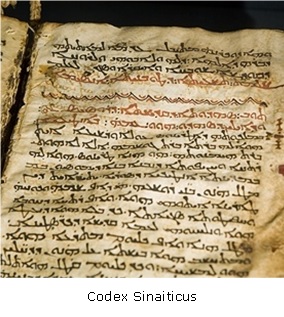
1859, THE CODEX SINAITICUS IS DISCOVERED IN EGYPT

Today, The Grandma has been reading about the Codex Sinaiticus, one of the four great uncial codices that was discovered in Egypt on a day like today in 1859.

The Codex Sinaiticus or Sinai Bible, is one of the four great uncial codices, ancient, handwritten copies of a Christian Bible in Greek. The codex is a historical treasure.

The codex is an Alexandrian text-type manuscript written in uncial letters on parchment and dated paleographically to the mid-4th century

Scholarship considers the Codex Sinaiticus to be one of the most important Greek texts of the New Testament, along with the Codex Vaticanus. Until Constantin von Tischendorf's discovery of the Sinaiticus text in 1844, the Codex Vaticanus was unrivaled.

The Codex Sinaiticus came to the attention of scholars in the 19th century at Saint Catherine's Monastery in the Sinai Peninsula, with further material discovered in the 20th and 21st centuries. Although parts of the codex are scattered across four libraries around the world, most of the manuscript is held today in the British Library in London, where it is on public display. Since its discovery, study of the Codex Sinaiticus has proven to be useful to scholars for critical studies of biblical text.

While large portions of the Old Testament are missing, it is assumed that the codex originally contained the whole of both Testaments. About half of the Greek Old Testament or Septuagint survived, along with a complete New Testament, the entire Deuterocanonical books, the Epistle of Barnabas and portions of The Shepherd of Hermas.

The codex consists of parchment, originally in double sheets, which may have measured about 40 by 70 cm. The whole codex consists, with a few exceptions, of quires of eight leaves, a format popular throughout the Middle Ages.

Each line of the text has some twelve to fourteen Greek uncial letters, arranged in four columns (48 lines per column) with carefully chosen line breaks and slightly ragged right edges.

 More information: Codex Sinaiticus

When opened, the eight columns thus presented to the reader have much the same appearance as the succession of columns in a papyrus roll. The poetical books of the Old Testament are written stichometrically, in only two columns per page. The codex has almost 4,000,000 uncial letters.

Throughout the New Testament of Sinaiticus the words are written continuously in the style that comes to be called biblical uncial or biblical majuscule. The parchment was prepared for writing lines, ruled with a sharp point. The letters are written on these lines, without accents or breathings. A variety of types of punctuation are used: high and middle points and colon, diaeresis on initial iota and upsilon, nomina sacra, paragraphos: initial letter into margin.

The work was written in scriptio continua with neither breathings nor polytonic accents. Occasional points and a few ligatures are used, though nomina sacra with overlines are employed throughout. Some words usually abbreviated in other manuscripts, such as πατηρ and δαυειδ, are in this codex written in both full and abbreviated forms. The following nomina sacra are written in abbreviated forms: ΘΣ ΚΣ ΙΣ ΧΣ ΠΝΑ ΠΝΙΚΟΣ ΥΣ ΑΝΟΣ ΟΥΟΣ ΔΑΔ ΙΛΗΜ ΙΣΡΛ ΜΗΡ ΠΗΡ ΣΩΡ.

Each rectangular page has the proportions 1.1 to 1, while the block of text has the reciprocal proportions, 0.91 (the same proportions, rotated 90°). If the gutters between the columns were removed, the text block would mirror the page's proportions. Typographer Robert Bringhurst referred to the codex as a subtle piece of craftsmanship

The folios are made of vellum parchment primarily from calf skins, secondarily from sheep skins. Most of the quires or signatures contain four sheets, save two containing five. It is estimated that the hides of about 360 animals were employed for making the folios of this codex. As for the cost of the material, time of scribes and binding, it equals the lifetime wages of one individual at the time.

The portion of the codex held by the British Library consists of 346½ folios, 694 pages (38.1 cm x 34.5 cm), constituting over half of the original work. Of these folios, 199 belong to the Old Testament, including the apocrypha (deuterocanonical), and 147½ belong to the New Testament, along with two other books, the Epistle of Barnabas and part of The Shepherd of Hermas. The apocryphal books present in the surviving part of the Septuagint are 2 Esdras, Tobit, Judith, 1 and 4 Maccabees, Wisdom, and Sirach.

The books of the New Testament are arranged in this order: the four Gospels, the epistles of Paul (Hebrews follows 2 Thess.), the Acts of the Apostles, the General Epistles, and the Book of Revelation. The fact that some parts of the codex are preserved in good condition while others are in very poor condition suggests they were separated and stored in several places.

Little is known of the manuscript's early history. The codex has been dated paleographically to the mid-4th century. It could not have been written before 325 because it contains the Eusebian Canons, which is a terminus post quem. The terminus ante quem is less certain, but, according to Milne and Skeat, is not likely to be much later than about 360.

More information: The British Library

The Codex may have been seen in 1761 by the Italian traveller, Vitaliano Donati, when he visited the Saint Catherine's Monastery at Sinai in Egypt.

In the early 20th century Vladimir Beneshevich (1874-1938) discovered parts of three more leaves of the codex in the bindings of other manuscripts in the library of Mount Sinai. Beneshevich went on three occasions to the monastery (1907, 1908, 1911) but does not tell when or from which book these were recovered. These leaves were also acquired for St. Petersburg, where they remain.

The codex is now split into four unequal portions: 347 leaves in the British Library in London (199 of the Old Testament, 148 of the New Testament), 12 leaves and 14 fragments in the Saint Catherine's Monastery, 43 leaves in the Leipzig University Library, and fragments of 3 leaves in the Russian National Library in Saint Petersburg.

Saint Catherine's Monastery still maintains the importance of a letter, handwritten in 1844 with an original signature of Tischendorf confirming that he borrowed those leaves.

More information: Tanach Online

The Bible was written by fallible human beings.

Richard Dawkins

Thursday, 3 February 2022

RAMON BERENGUER III, BARCELONA & PROVENCE STATES

Today, The Grandma has been visiting the Gothic quartier of Barcelona. it is a beautiful place full of history that demonstrates the importance of the city in the European history.

She has visited the statue of Ramon Berenguer III, the count whose marriage united the fortunes of two states: Catalan counties & Provence, on a day like today in 1112.

Ramon Berenguer III the Great was the count of Barcelona, Girona, and Ausona from 1086 (jointly with Berenguer Ramon II and solely from 1097), Besalú from 1111, Cerdanya from 1117, and count of Provence in the Holy Roman Empire, from 1112, all until his death in Barcelona in 1131. As Ramon Berenguer I, he was Count of Provence in right of his wife.

Born on 11 November 1082 in Rodez, Viscounty of Rodez, County of Toulouse, he was the son of Ramon Berenguer II. He succeeded his father to co-rule with his uncle Berenguer Ramon II. He became the sole ruler in 1097, when Berenguer Ramon II was forced into exile.

Responding to increased raids into his lands by the Almoravids in 1102, Ramon counter-attacked, assisted by Ermengol V, Count of Urgell, but was defeated and Ermengol killed at the battle of Mollerussa.

During his rule Catalan interests were extended on both sides of the Pyrenees. By marriage or vassalage he incorporated into his realm almost all of the Catalan counties (except Urgell and Peralada). He inherited the counties of Besalú (1111) and Cerdanya (1117) and in between married Douce, heiress of Provence (1112). His dominions then stretched as far east as Nice.

More information: Britannica

In alliance with the Count of Urgell, Ramon Berenguer conquered Barbastro and Balaguer. He also established relations with the Italian maritime republics of Pisa and Genoa, and in 1114 and 1115 attacked with Pisa the then-Muslim islands of Majorca and Ibiza.

They became his tributaries and many Christian slaves there were recovered and set free. Ramon Berenguer also raided mainland Muslim dependencies with Pisa's help, such as Valencia, Lleida and Tortosa. In 1116, Ramon travelled to Rome to petition Pope Paschal II for a crusade to liberate Tarragona.

By 1118 he had captured and rebuilt Tarragona, which became the metropolitan seat of the church in Catalonia, before that, Catalans had depended ecclesiastically on the archbishopric of Narbonne.

In 1127, Ramon Berenguer signed a commercial treaty with the Genoese.

On July 14, 1130, toward the end of his life, he became an associate member of the Templars. He gave his five Catalan counties to his eldest son Ramon Berenguer IV and Provence to the younger son Berenguer Ramon.

He died on 23 January/19 July 1131 and was buried in the Santa Maria de Ripoll monastery.

More information: Barcelona Low Down


Medieval learning was really advanced.

Terry Jones

Wednesday, 2 February 2022

GRAND CENTRAL TERMINAL OPENS IN NEW YORK CITY

Today, The Grandma has been reading about one of the most beautiful train stations, Grand Central Terminal in New York, the terminal that was opened on a day like today in 1913.

Grand Central Terminal, also referred to as Grand Central Station or simply as Grand Central, is a commuter rail terminal located at 42nd Street and Park Avenue in Midtown Manhattan, New York City.

Grand Central is the southern terminus of the Metro-North Railroad's Harlem, Hudson and New Haven Lines, serving the northern parts of the New York metropolitan area. It also contains a connection to the New York City Subway at Grand Central-42nd Street station. The terminal is the second-busiest train station in North America, after New York Penn Station.

The distinctive architecture and interior design of Grand Central Terminal's station house have earned it several landmark designations, including as a National Historic Landmark. Its Beaux-Arts design incorporates numerous works of art.

Grand Central Terminal is one of the world's ten most visited tourist attractions, with 21.6 million visitors in 2018, excluding train and subway passengers. The terminal's Main Concourse is often used as a meeting place, and is especially featured in films and television.

Grand Central Terminal contains a variety of stores and food vendors, including upscale restaurants and bars, two food halls, and a grocery marketplace.

Grand Central Terminal was built by and named for the New York Central Railroad; it also served the New York, New Haven and Hartford Railroad and, later, successors to the New York Central.

More information:

Opened in 1913, the terminal was built on the site of two similarly-named predecessor stations, the first of which dates to 1871. Grand Central Terminal served intercity trains until 1991, when Amtrak began routing its trains through nearby Penn Station. The East Side Access project, which will bring Long Island Rail Road service to a new station beneath the terminal, is expected to be completed in late 2022.

Grand Central covers 19 ha and has 44 platforms, more than any other railroad station in the world. Its platforms, all below ground, serve 30 tracks on the upper level and 26 on the lower.

In total, there are 67 tracks, including a rail yard and sidings; of these, 43 tracks are in use for passenger service, while the remaining two dozen are used to store trains. Another eight tracks and four platforms are being built on two new levels deep underneath the existing station as part of East Side Access.

Grand Central Terminal was named by and for the New York Central Railroad, which built the station and its two predecessors on the site. It has always been more colloquially and affectionately known as Grand Central Station, the name of its immediate predecessor that operated from 1900 to 1910.

The name Grand Central Station is also shared with the nearby U.S. Post Office station at 450 Lexington Avenue  and, colloquially, with the Grand Central-42nd Street subway station next to the terminal.

Grand Central Terminal was designed and built with two main levels for passengers: an upper for intercity trains and a lower for commuter trains. This configuration, devised by New York Central vice president William J. Wilgus, separated intercity and commuter-rail passengers, smoothing the flow of people in and through the station. After intercity service ended in 1991, the upper level was renamed the Main Concourse and the lower the Dining Concourse.

More information: Rockettes

The original plan for Grand Central's interior was designed by Reed and Stem, with some work by Whitney Warren of Warren and Wetmore.

Grand Central Terminal was designed in the Beaux-Arts style by Reed and Stem, which was responsible for the overall design of the terminal, and Warren and Wetmore, which mainly made cosmetic alterations to the exterior and interior. Various elements inside the terminal were designed by French architects and artists Jules-Félix Coutan, Sylvain Salières, and Paul César Helleu.

Grand Central has both monumental spaces and meticulously crafted detail, especially on its facade. The facade is based on an overall exterior design by Whitney Warren.

The terminal is widely recognized and favorably viewed by the American public. In America's Favorite Architecture, a 2006-07 public survey by the American Institute of Architects, respondents ranked it their 13th-favorite work of architecture in the country, and their fourth-favorite in the city and state after the Empire State Building, Chrysler Building, and St. Patrick's Cathedral.

In 2013, historian David Cannadine described it as one of the most majestic buildings of the twentieth century. The terminal is also recognized by the American Society of Civil Engineers as a Historic Civil Engineering Landmark, added in 2013.

As proposed in 1904, Grand Central Terminal was bounded by Vanderbilt Avenue to the west, Lexington Avenue to the east, 42nd Street to the south, and 45th Street to the north. It included a post office on its east side. The east side of the station house proper is an alley called Depew Place, which was built along with the Grand Central Depot annex in the 1880s and mostly decommissioned in the 1900s when the new terminal was built.

The station house measures 240 m along Vanderbilt Avenue, 91 m on 42nd Street, and 32 m tall.

More information: Untapped New York I & II


The zodiac is painted upside down on the ceiling of Grand Central.
They said it was to give the perspective of God,
but they'd simply hired a bunch of drunks.

M.E. Henry Morgan

Tuesday, 1 February 2022

FOUNTAINS VALLEY & GROENKLOOF NATURE RESERVE, ZA

Today, The Grandma has received wonderful news of one of her closest friends, Tina Picotes who is spending some days in Pretoria, South Africa. She has visited Fountains Valley, the oldest nature reserve in Africa, that was proclaimed on a day like today in 1895.

The Fountains Valley is a recreational resort at the southern entrance to Pretoria in South Africa

It was proclaimed as a nature reserve by President Paul Kruger on 1 February 1895. Consequently, this 60 ha reserve, along with the contiguous Groenkloof Nature Reserve, constitute the oldest nature reserves on the African continent.

The Apies River flows through the resort, and there are two natural water sources in the area. The resort has various recreational facilities such as a caravan park, swimming pool, lapa, playground and barbecue facilities.

The historic ruins of the house of Lucas Cornelius Bronkhorst (1795-1875) is located near the resort. The Bronkhorst family was part of Hendrik Potgieter's trek party during the Great Trek, and were the first owners of the farms in the district where Pretoria was later established.

The Groenkloof Nature Reserve, located adjacent to the Fountains Valley at the southern entrance to Pretoria, was the first game sanctuary in Africa. The reserve of 600 ha is managed by the Department of Nature Conservation.

The National Heritage Monument is located within the reserve. It is flanked by Christina de Wit Avenue and Nelson Mandela Drive, that separate it from the Voortrekker Monument and Klapperkop Nature Reserves. In aggregate these reserves conserve some 1,400 ha of bankenveld vegetation which is threatened in Gauteng.

More information: Groenkloof Nature Reserve

This valley on the southern outskirts of Pretoria was proclaimed a game sanctuary by President Paul Kruger on 25 February 1895.

Its main purpose was to protect the shy and timid oribi, which occurred there, and other game that were being depleted by hunters.

For many years however, the reserve was leased for exotic timber plantation, to supply wood and paper. A memorial wall is to be seen beside traces of the homestead of the early pioneer Lucas Bronkhorst, who settled here around 1839.

In April 2015 the head of the reserve, David Boshoff, was suspended and evicted from his council home by the Tshwane metro HR manager. The eviction came in the fifth month of a strike by the majority of the reserve's workers, who reportedly negated their agreement with management to return to work in February.

When the reserve was reproclaimed in 1994, the plantations were removed to allow the natural vegetation to regenerate. Open grassland occurs along the Apies valley and the higher plateau. Native trees occur at varying densities on the hillsides and in the lower valley. These include white stinkwood, hook-thorn, mountain karee, velvet bushwillow, wild pear and puzzle bush.

More information: All Trails

Since 1999 the reserve was stocked with various game species. These include zebra, blesbok, impala, kudu, blue wildebeest, red hartebeest (since 2002), giraffe (2002), sable (2003) and ostrich. Jackal, duiker and rock hyrax are also resident.

Over 120 bird species have been recorded in the reserve and the adjacent Fountains Valley. Game birds include guineafowl, Swainson's spurfowl and crested francolin. The grassy floodplain of the Apies river and its riparian vegetation provide breeding habitat for a number of weaver, bishop and widow species, while the open woodlands on the lower hill slopes provide breeding territories for bushshrike and tchagra species.

Special invertebrates of the reserve include Gunning's rock scorpion, golden-starburst baboon spider, the violin spider L. speluncarum which is endemic to caves of the Pretoria area, and the purse-web spider, Calommata transvaalica, which is severely threatened by urbanization in Gauteng.

More information: Show Me


South Africa gives me a perspective
of what's real and what's not real.
So I go back to South Africa to both
lose myself and gain awareness of myself.
Every time I go back, it doesn't take long for me
to get caught into a very different thing.
A very different sense of myself.

Dave Matthews