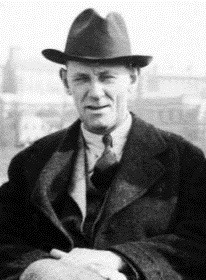
Today, The Grandma has visited the FBI Headquarters in New York to meet IsobelCastille and her team.
FBI is an American crime drama television series created by Dick Wolf and Craig Turk that airs on CBS, where it premiered on September 25, 2018.
The series is produced by Wolf Entertainment, CBS Studios, and Universal Television, with Dick Wolf, Arthur W. Forney, Peter Jankowski, and Turk serving as executive producers.
The series features an ensemble cast including Missy Peregrym, Zeeko Zaki, Jeremy Sisto, Ebonée Noel, Sela Ward, Alana de la Garza, John Boyd and Katherine Renee Turner. FBI received a straight-to-series commission for 13 episodes on September 20, 2017.
In May 2020, CBS renewed the series for a third season. The third season premiered on November 17, 2020.
In March 2021, CBS renewed the series for a fourth season, which premiered on September 21, 2021.
In May 2022, CBS renewed the series for a fifth and sixth season.
The series centers on inner workings of the New York office criminal division of the Federal Bureau of Investigation (FBI). This elite unit brings to bear all their talents, intellect, and technical expertise on major cases in order to keep New York and the country safe.
Born into a multi-generational law enforcement family, Special Agent Maggie Bell commits deeply to the people she works with as well as those she protects. Her partner is Special Agent Omar Adom "O. A." Zidan, a West Point graduate from Queens who spent two years undercover for the DEA before being cherry-picked by the FBI.
Overseeing them is Special Agent in Charge Dana Mosier, who operates under intense pressure and has undeniable command authority. The team also includes Assistant Special Agent in Charge Jubal Valentine, the nerve center of the office whose ability to easily relate to and engage with both superiors and subordinates makes him a master motivator.
Kristen Chazal is the team's most valued resource, a brilliant analyst recruited straight out of college who can piece together the big picture faster than anyone. These first-class agents tenaciously investigate cases including terrorism, organized crime, and counterintelligence.
Starting in season 2, Stuart Scola, a former Wall Street trader-turned-Special Agent joins the team and is partnered with Kristen, who transitions into field work at the same time. Also, Isobel Castille takes Mosier's place as team supervisor following the latter's retirement. At the start of season 3, Kristen transfers to Dallas, Texas, and is replaced by Tiffany Wallace, a former NYPD officer and White Collar Division agent.
Today, The Grandma is relaxing at home. She has decided to read about the Camden 28, a group of Catholic left anti-Vietnam War activists who in 1971 planned and executed a raid on a Camden.Twenty members of the Camden 28 were arrested on a day like today in 1971 by the FBI.
Vietnam War was one of the most terrifying moments of our closest history, a conflict in Vietnam, Laos, and Cambodia from 1 November 1955 to the fall of Saigon on 30 April 1975.
It was the second of the Indochina Wars and was officially fought between North Vietnam and South Vietnam.
North Vietnam was supported by the Soviet Union, China, and other communist allies; South Vietnam was supported by the United States, South Korea, the Philippines, Australia, Thailand, and other anti-communist allies.
The war, considered a Cold War-era proxy war by some, lasted 19 years, with direct U.S. involvement ending in 1973, and included the Laotian Civil War and the Cambodian Civil War, which ended with all three countries becoming communist in 1975.
Lots of voices rose up in the USA against this war and the story of the Camden28 is one of these thousands of stories of people who claimed the end of this war.
The Camden 28 were a group of Catholic left anti-Vietnam War activists who in 1971 planned and executed a raid on a Camden, New Jersey draft board.
The raid resulted in a high-profile criminal trial of the activists
that was seen by many as a referendum on the Vietnam War and as an
example of successful use of jury nullification.
The goal of the group was to make a bold statement in opposition to the war in Vietnam by way of sabotaging the portion of the draft process that was administered through the local draft board in Camden.
Their plan was to break into the draft board offices at night and search for, collect, and either destroy or remove the records of all Class 1-A status draft registrants. It was to be both a symbolic and real blow to the process through which tens of thousands of young American men were being drafted and sent to fight in Vietnam.
Some members of the Camden 28 arrested, 1971
Not all of the group's
members were students or hippies, the stereotypical anti-Vietnam War
activists.
The mostly Catholic group also included four priests and a
Protestant minister, people working in education or legal and social
services, veterans, and middle-aged parents. One notable member was Frank Pommersheim.Members of the Citizens' Commission to Investigate the FBI were also involved.
One group member, Bob Hardy, was opposed to the war but was also secretly opposed to the group's plans to break the law with this action. Feeling torn between loyalty to his friends in the group and his strict law-and-order personal philosophy, Hardy approached the local FBI with his concerns.
The FBI encouraged Hardy to remain with the group so that he could pass along information about their activities. Hardy agreed to become an informant, allegedly only after receiving assurances from his FBI handlers that none of the group would ever spend any time in jail for the raid against the draft board. The FBI agreed to finance much of Hardy's role within the group.
As an FBI informant, Hardy became heavily involved with the group from a planning and training perspective. As he was a hands-on carpenter and handyman, he helped devise the plan whereby the group could break into the Federal office building within which the draft board was located.
He supplied tools,
mostly paid for by the FBI, expertise and training. Ladders would be
used, windows would be cut with glass cutters and alarms would be bypassed. 2-way radios were supplied by the FBI so that the activists could
better communicate and coordinate their actions when the raid was to
finally occur.
The raid was planned for the early hours of Sunday, August 22, 1971. With the activists all in their positions the raid commenced. Unknown to the activists, the raid was being carefully monitored and documented from the shadows by more than 40 FBI agents. The FBI agents held back and watched as the activists broke into the draft board office and commenced destroying and bagging thousands of draft-related documents.
After a significant amount of time passed during which thousands of documents had been handled, the hidden FBI agents were ordered to spring into action and arrest everyone involved. Those arrested, including two Catholic priests and a Protestant minister, became known as the Camden 28. The fact that BobHardy had betrayed the activists became readily apparent as the night wore on.
By the time that the Camden 28 were brought to trial in the Spring of 1973, their case was viewed by many as a referendum on the Vietnam War. Each of the 28 faced seven felony charges stemming from the raid and more than 40 years in prison if convicted. The 28 chose to be tried together.
Some members of the Camden 28
Immediately prior to the trial they were offered a plea-bargain whereby they would each plead guilty to a single misdemeanor charge and the rest of the charges would be dropped.
After intense discussion the28 decided that they would not take the plea and that as political activists they preferred to be put on trial. Historian Howard Zinn was brought in to testify on behalf of the defendants.
Unfortunately for the prosecution, its star witness Bob Hardy was feeling that he had been betrayed by the government. Hardy maintained that from the start of his interaction with the FBI he sought and received assurances that none of his co-conspirators in the raid would see any jail time. Now, as the trial loomed ahead, each of the 28 was facing more than 40 years in prison.
For the FBI and the prosecution, the cost of betraying Hardy in this fashion was to lose him as a friendly witness. Scorned, Hardy would now, in fact, testify extensively for the defense. Hardy would testify regarding the extent to which the FBI encouraged and enabled the raid on the draft board to take place.
Through Hardy's testimony, the raid came across as being funded and driven by the FBI, and the defense was able to argue effectively that through the FBI,the government "over-reached" in its zeal to arrest and prosecute this particular set of anti-war activists.
Additionally, it became apparent that the FBI had enabled the plot to form and develop because it believed the Camden group might have been connected to the theft and publication of FBI documents in Media, PA several months prior.
In fact, at least two of the Camden defendants (Keith Forsyth and RobertWilliamson) had been involved in the Media burglary, though this was not revealed until they stepped forward in 2014.
Those documents had revealed the COINTELPRO program, and the Camden defendants essentially used their own trial to publicize and question FBI methods.
On May 20, 1973, the jury returned not guilty verdicts for all counts against all 28 defendants, acquitting them. Howard Zinn had testified at the trial and recommended civil disobedience and jury nullification. Nearly 50 years after breaking into the Camden draft board and destroying records to protest the war in Vietnam, members of the Camden 28 took to the stand in the federal courtroom where they were tried.
Supreme Court Justice William Brennan called the trial, one of the great trials of the 20th century. Father Michael Doyle, one of the 28 who was a Catholic priest at Sacred Heart Church in Camden at the time, remains a priest and community leader there today. The church, led by Doyle, continues to campaign for peace, equality, and social justice and holds an annual PeaceGathering.
Today, The Grandma has been watching TV at home. She has chosen an interesting film titled TheHouse on Carroll Streetdirected by Peter Yates and with Kelly McGillis, Jeff Daniels and Mandy Patinkin.
After watching it, TheGrandma has remembered a story very similar to the story explained in the movie. It is the story about The Duquesne Spy Ring, the largest espionage case in the United States history that ended in convictions by The Federal Bureau of Investigation (FBI) on a day like today in 1942.
The Duquesne Spy Ring is the largest espionage case in the United States history that ended in convictions.
A total of 33 members of a German espionage network headed by Frederick "Fritz" Joubert Duquesne were convicted after a lengthy investigation by the Federal Bureau of Investigation (FBI).
Of those indicted, 19 pleaded guilty. The remaining 14 were brought to jury trial in Federal District Court, Brooklyn, New York, on September 3, 1941; all were found guilty on December 13, 1941. On January 2, 1942, the group was sentenced to serve a total of over 300 years in prison.
The agents who formed the Duquesne Ring were placed in key jobs in the United States to get information that could be used in the event of war and to carry out acts of sabotage: one opened a restaurant and used his position to get information from his customers; another worked on an airline so that he could report Allied ships that were crossing the Atlantic Ocean; others worked as delivery people as a cover for carrying secret messages.
William G. Sebold, who had been blackmailed into becoming a spy for Germany, became a double agent and helped the FBI gather evidence. For nearly two years, the FBI ran a shortwave radio station in New York for the ring. They learned what information Germany was sending its spies in the United States and controlled what was sent to Germany. Sebold's success as a counterespionage agent was demonstrated by the successful prosecution of the German agents.
Fritz Joubert Duquesne
One German spymaster later commented the ring's roundup delivered the death blow to their espionage efforts in the United States.
FBI director J. Edgar Hoover called his concerted FBI swoop on Duquesne's ring the greatest spy roundup in U.S. history. The 1945 film The House on 92nd Street was a thinly disguised version of the Duquesne Spy Ring saga of 1941.
After the Duquesne Spy Ring convictions, Sebold was provided with a new identity and started a chicken farm in California. Impoverished and delusional, he was committed to Napa State Hospital in 1965. Diagnosed with manic-depression, he died there of a heart attack five years later at 70. His life story as a doubleagent was first told in the 1943 book Passport to Treason: The Inside Story of Spies in America by Alan Hynd.
Special Agent Jim Ellsworth was assigned as Sebold's handler or body man, responsible for shadowing his every move during the sixteen-month investigation.
William Gustav Friedemann was a principal witness in the Duquesne case. He began working for the FBI as a fingerprint analyst in 1935 and later became an agent after identifying a crucial fingerprint in a kidnapping case.
After World War II, he was assigned to Puerto Rico, where he pinpointed the group behind the assassination attempt on President Harry Truman. Friedemann died of cancer on August 23, 1989 in Stillwater, Oklahoma.
Frederick "Fritz" Joubert Duquesne (21 September 1877-24 May 1956; sometimes Du Quesne) was a South African Boer and German soldier, big-game hunter, journalist, and a spy.
He fought on the side of the Boers in the Second Boer War and as a secret agent for Germany during both World Wars. He gathered human intelligence, led spy rings and carried out sabotage missions as a covert field asset in South Africa, Great Britain, Central and South America, and the United States. He went by many aliases, fictionalized his identity and background on multiple occasions, and operated as a conman.
As a Boer spy he was known as the Black Panther, in World War II he operated under the code name DUNN, and in FBI files he is frequently referred to as TheDuke. He was captured, convicted, and escaped several prisons.
During the Second Boer War, from 1899 to 1902, Duquesne was captured and imprisoned three times by the British and once by the Portuguese, and each time he escaped. On one occasion he infiltrated the British army, became a British officer, and led an attempt to sabotage Cape Town and to assassinate the commander-in-chief Lord Kitchener, only his team was given up by an informant and all were captured and sentenced to death. After a failed attempt to escape prison in Cape Town, he was sent to prison in Bermuda, but he escaped to the United States and became an American citizen.
William G. Sebold
In World War I, he became a spy and ring leader for Germany and during this time he sabotaged British merchant ships in South America with concealed bombs and destroyed several. He sometimes purchased insurance on merchandise he shipped on the vessels he sabotaged and then filed claims for damages. He became known as the man who killed Kitchener since he claimed to have guided a German U-boat to sink HMS Hampshire on which Lord Kitchener was en route to Russia in 1916, although forensics of the ship do not support this claim.
After he was caught by federal agents in New York in 1917, he feigned paralysis for two years and cut the bars of his cell to make his escape, thereby avoiding deportation to England where he faced execution for the deaths of British sailors. In 1932, he was again captured in New York by federal agents and charged with both homicide and for being an escaped prisoner, only this time he was set free after Britain declined to pursue the wartime crimes.
The last time he was captured and imprisoned was in 1941 when he and 32 other members of the Duquesne Spy Ring were caught by William G. Sebold, a double agent with the FBI, and later convicted in the largest espionage conviction in the history of the United States.
Between wars, Duquesne
served as an adviser on big game hunting to U.S. President Theodore
Roosevelt, as a publicist in the movie business, as a journalist, as a
fictional Australian war hero, and as head of the New Food Society in
New York.
During the Boer war he had been under orders to kill Frederick Russell Burnham, Chief of Scouts in the British Army, but in 1910 he worked with both Burnham and then Rep. Robert Broussard to lobby the U.S. Congress to fund the importation of hippopotamuses into the Louisiana bayous to solve a severe meat shortage. Duquesne often took on many identities, reinvented his past at will, attached his ancestry to aristocratic clans, granted himself military titles and medals, and spoke of many people, some fact and some fictional.
After meeting a German-American industrialist in the Midwest around 1914, Duquesne became a German spy. He was sent to Brazil as FrederickFredericks under the disguise of doing scientific research on rubber plants. As an agent for Naval Intelligence in South America, he was assigned to disrupt commercial traffic to countries at war with Germany. Duquesne received and delivered communiques through German embassies, and he was responsible for numerous explosions on British merchant ships.
On 28 June 1941, following a two-year investigation, the FBI arrestedDuquesne and 32 German spies on charges of relaying secret information on U.S. weaponry and shipping movements to Germany.
He was sentenced to 18 years in prison, with a 2-year concurrent sentence and $2,000 fine for violation of the Foreign Agents Registration Act. He began his sentence in Leavenworth Federal Penitentiary in Kansas, along with fellow German spy Hermann Lang.
In 1945, Duquesne was transferred to the Medical Center for Federal Prisoners in Springfield, Missouri, due to his failing physical and mental health. In 1954, he was released owing to ill health, having served 14 years.
Fritz Duquesne died at City Hospital on Welfare Island, now Roosevelt Island, in New York City on 24 May 1956 at the age of 78 years.
Carolina Bean was a happy woman. She was in New
York, where she arrived before Christmas, with her family. Although she hadn't
accompanied them in the last trips around the city, she felt they were closer
to her. She had explained to The Grandma that she wanted to stay some days
visiting Central Park to take pictures and sceneries for her new graphic novel.
The Grandma accepted the proposal because she knew how important her job was
for Carol.
It seemed a normal day except for one fact: nobody had sent her a WhatsApp the last 48 hours and she hadn't
seen them because she arrived to the hotel too late and she left it too early.
Suddenly, the telephone rang:
-Hi! It's Carol Bean. Who's calling?
-Good morning, Mrs. Bean. I'm CSI Stella Bonasera from the New York Office. I would like to talk to you. It's about
your family.
-My family! What happens? Are they ok?
-Don't worry, Mrs. Bean. They're fine. They are
in the Mount Sinai Hospital waiting for your arrival to do the papers. Don't
worry. I've phoned you because my partners, Mac Taylor and Don Flack, are going to take you in Central Park and carry you to the hospital.
-Wow! Ok. I'm astonished. I know where the hospital is. If you don't mind, I will come by public transport. I want to stay alone before visiting my family.
-Ok Mrs. Bean. See you later in the hospital
then, but if you need something, please, don't doubt to phone us.
CSI Stella Bonasera was one of the best members
of the CSI New York Team. She was working in the case of the mysterious sinking
in Liberty Island. They hadn't got enough answers to know what happened exactly
in that boat and what the real cause of the tragedy was.
They had revised all
the protocols of labour risk prevention and the boat has passed all the legal
controls. The technicians hadn't got any explanation about the origin of the
accident. The boat has a great hole on the right side but they hadn't
discovered what caused that hole.
Thanks to the work of Lt. Theo Kojak and the
CSI Team, the most part of the victims had been rescued, except one. They had
identified the name of the missing woman. She was Nereyda Bean, a young
dark-skin woman with long black hair who wore air hostess uniform the last time
that someone saw her. They were searching in the main places of the
river paying attention to the flow.
Caroline Bean arriving to the Mount Sinai Hospital
If Nereyda Bean didn't appear in the next 48
hours they would call the FBI because the possibilities of finding her in
another state, because of the force of the flow, were higher.
Carolina Bean had arrived to the Mount Sinai Hospital. She was ready to identified every member of her family and taking profit of the visit she was going to try to meet one of the best cardiologist of the world who works in this hospital: Doctor Valentí Fuster Carulla.
.jpg)