Showing posts with label Cyprus. Show all posts

Saturday, 12 May 2018

ELI JONES: CYPRIOT RESILIENCE FOR GREAT SUCCESS

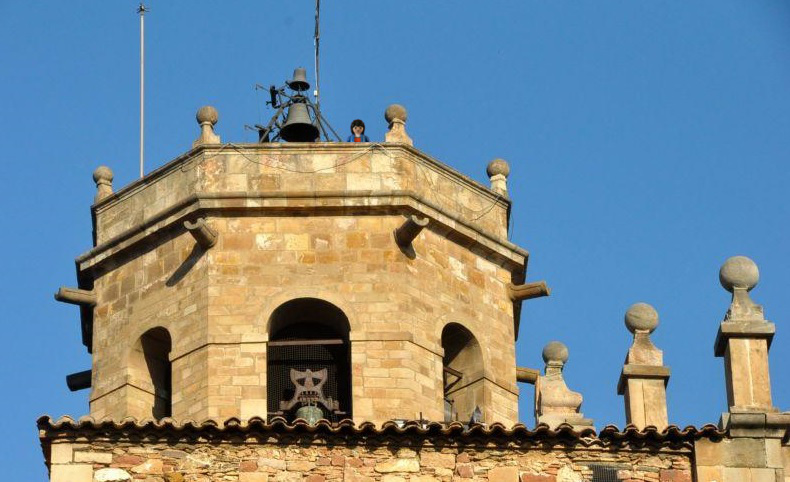
Eli Jones & The Bells of Sant Baldiri Church, Sant Boi
Eli Jones. Bell Maker. Cyprus.

I was born in Nicosia, the capital Cyprus, Pygmalion's country, an incredible Mediterranean country which is a cultural border between Occident and Orient. It's not easy living in an island and the most part of its inhabitants emigrate to search a better future. It's not my case. I search fortune in my land because I'm a bell maker and I've found the most precious treasures here: the Cypriots. I like churches and temples, of course, because you can find bells inside them.


-Good morning, Eli Jones, and thanks to attend us.

-Thanks. It's an honour.

-Well, to start with our interview, I would like to ask you if you can explain what is a bell maker.

-Yes, of course. A bell maker is a person who makes bells. A bell has been a basic element in churches and temples since the 12th century because population used it to communicate between towns and villages.

-Communicate?

-Yes. The bells have their own language and with them population created alarm codes to warn about fires, invaders or weather conditions.

-What's the work of a bell maker in the 21st century?

-Basically to restore old bells because nowadays there aren't a lot of churches under construction, although I'm having a lot of work with the Sagrada Família in Barcelona.

-What do you think people know about bell makers?

-I don't know, but I suppose that they think that we work in a job without future because technology is killing artists and manufacturers.

-Is a bell maker a profession of risk?

-All works have risk. Risk zero doesn't exist in life but I have a lot of studies in occupational hazards. They are necessary if you want to work avoiding risks.

-Have you put your life in danger working like a bell maker?

-No, I haven't. Although is not easy to install a bell in a bell tower.

-Which is your favourite bell?

-Well, it's very difficult to choose only one. They are historic bells like Liberty Bell in Philadelphia, the Great Bell of Kyoto, or the Tsar Bell in Moscow but I prefer the Bell of Sant Baldiri Church in Sant Boi. It's a historic bell which was very important during the War of the Spanish Succession in the 18th century and during the Siege of Barcelona between 1713 and 1714. I also love the bells of the Church of Sant Climent de Taüll in the Vall de Boí. In fact, both towns are connected, but in the case of Sant Boi I like, especially, because the city has a bell in its shield.

-How do you feel being a member of The Jones family?

-I feel very well. We're a fantastic family with open minds and a great sense of respect and collaboration, something very important for surviving like a group.

-How is a normal day with The Jones?

-I don't know if we can talk about normal days because first of all we must define normal. If normal means that you're always doing the same routines, well, we aren't a normal family, then. We like innovation, creativity and we have tons of imagination.

-How long have you been studying English?

-Since the school. Cyprus was under British control from 1878 to 1960 when it becomes an independent state. English is a part of our recent culture and although British left the island, we kept their language because it was interesting for us. Remember, English is the world communication language.

-Is English difficult to learn for a Cypriot?

-No, it isn't. In Cyprus, we speak four languages: Greek, Armenian, Arabian and Turkish. As you know, the island is divided in two different zones, two languages, two cultures, two religions... but Cyprus is an important geopolitical place in the Mediterranean Sea and we have been occupied by Mycenae, Egyptians, Phoenician, Greek, Assyrian, Persian, Roman, Byzantine, Arabian, Venetian and British.

-What can you explain about your life with The Jones?

-For me has been a great experience. It has been beautiful share time and experiences with this family and thanks to this I have discovered my sinister origin and how my surname can determinate my origins.

-Which is your best memory with the family?

-A lot of memories but the best was when I came back with my family again after being missing during some days after a boat sinking. It was a terrible experience and be with them again was very excited.

-What's your favourite book?

-I haven't got a favourite one. It's impossible but now I'm reading one about dogs. I want to adopt one and I must learn how to take care of them before having it.

-What do you think about dogs?

-I think they are incredible animals. They are very intelligent and loyal and as the legend says, they are the best man's friend.

-What's your favourite film?

-Well, I have more than one but thanks to our Japanese travel and because I like dogs, I would like to talk about
Hachiko: A Dog’s Story.

-Which the plot?

-Hachi is a story of love and devotion between a dog and a man. It's based on the true story of Hachikō, which was an Akita dog born on a farm near the city of Ōdate. In 1924, Hidesaburō Ueno, a professor at the Tokyo Imperial University, took Hachikō as a pet and brought him to live in Shibuya, Tokyo. Ueno would commute daily to work, and Hachikō would leave the house to greet him at the end of each day at the nearby Shibuya Station. The pair continued the daily routine until the day when Ueno did not return. The professor had suffered a cerebral haemorrhage, while he was giving a lecture, and died without ever returning to the train station in which Hachikō waited. Each day, for the next nine years, nine months and fifteen days, Hachikō awaited Ueno's return, appearing precisely when the train was due at the station.

-It's a sad story.

-It's a story about love and loyalty, two of the most important things you obtain from a dog. I would like to obtain the same from people...

-(Laughs) Thank you very much, Eli Jones.

-You're welcome.


You have found him, or he has found you. 
Who knows. It is destiny.

Ken Fujiyoshi, Hachiko: A Dog’s Story

Friday, 9 March 2018

NEREYDA BEAN: CYPRIOT RESILIENCE TO SURVIVE

Nereyda Bean inside a regular flight to Cyprus
Nereyda Bean. Flight Attendant. Cyprus.

I'm Nereyda Bean. I was born in Dali, a little town in Cyprus, an incredible Mediterranean country which is a cultural border between Occident and Orient. It's not easy living in an island and the most part of its inhabitants emigrate to search a better future. During this travel with my family, I have discovered my ancestors came from Dominican Republic to Cyprus, from island to island. I'm very hard worker and a little shy the most common characteristics of islanders.


-Good morning, Nereyda Bean, and thanks to attend us.

-Thanks. It's an honour.

-Well, to start with our interview, I would like to ask you if you can explain something about your job.

-Yes, of course. I'm a flying attendant, a person who attends people in a plane and take care of them. It's an amazing job that I love although it's sometimes a little horrible.

-Why was horrible?

-Because I'm scared to fly. The most terrible moments for me are when the plane is lifting off or landing. After these movements, I can work without any kind of problem because the plane is stabilized.

-How have you got over these fears?

-With a lot of effort and being conscious that you can be stronger than your own fears. Everybody has his/her demons in her/his life but we must fight against them or learn to live with them. There isn't another option.

-What do you think people know about flight attendants?

-Well, some years ago it was one of the best jobs you could have. The salary was excellent, the breaks allowed you to visit some places and it was a job with high levels of reputation. With the arrival of low cost companies all has changed. Salaries have decreased in an incredible way, you must work lots of hours without breaks and the labour conditions are worse than never but when you love your job you try to not think in disadvantages and enjoy the advantages.

-Is a flight a profession of risk?

-All works have risk. Risk zero doesn't exist in life but it's obviously that there's a great risk although flights are now more secure than never.

-Have you put your life in danger working like a flight attendant?

-No, I haven't. I only remember a time when I put my life in danger and it was because a passenger started to joke about security inside the plane and the rest of the crew and passengers believed him. You must pay attention with jokes because you can create panic situations and these kinds of situations are very difficult to control.

-How do you feel being a member of The Beans?

-I feel very well. We're a fantastic family with open minds and a great sense of respect and collaboration, something very important for surviving like a group.

-How is a normal day with The Beans?

-I don't know if we can talk about normal days because first of all we must define normal. If normal means that you're always doing the same routines, well, we aren't a normal family, then. We like innovation, creativity and we have tons of imagination.

-How long have you been studying English?

-Since the school. Cyprus was under British control from 1878 to 1960 when it becomes an independent state. English is a part of our recent culture and although British left the island, we kept their language because it was interesting for us. Remember, English is the world communication language.

-Is English difficult to learn for a Cypriot?

-No, it isn't. In Cyprus, we speak four languages: Greek, Armenian, Arabian and Turkish. As you know, the island is divided in two different zones, two languages, two cultures, two religions... but Cyprus is an important geopolitical place in the Mediterranean Sea and we have been occupied by Mycenae, Egyptians, Phoenician, Greek, Assyrian, Persian, Roman, Byzantine, Arabian, Venetian and British.

-What can you explain about your life with The Beans?

-For me has been a great experience. It has been beautiful share time and experiences with this family and thanks to this I have discovered my sinister origin and how my surname can determinate my origins. I know I was born in Dali but my origins are Dominican. It has been a great discovery.

-Which is your best memory with the family?

-A lot of memories but I remember especially two of them: the first was when I talked to my family about my ancestor origins in Dominican Republic; and the second was when I decided to make some Dominican food to my family. It was delicious and all of them appreciated it.

-And the worst?

-Well, without any kind of doubt when I disappear in Hudson Bay in New York. It was horrible. The family went to visit the Liberty Statue and our boat sunk. I don't remember anything, only water and water and nothing more. It was a terrible experience. I spent terrible moments but I think that being an islander helped me to survive. Sea respected me.

-What title would you choose for your family?

-Flying to reach our dreams.

-Do you like this message?

-Yes, I do. You must try to reach your dreams and fly as far as you can but you mustn't forget that as high as you fly, as hard the landing can be. Follow your dreams but with honesty and remember your origins. Don't live in a cloud, live in the real world, where things really happen.

-Thank you very much, Nereyda Bean.

-You're welcome.


It's only when you're flying above it that you realize 
how incredible the Earth really is. 

Philippe Perrin

Tuesday, 21 March 2017

JOANJO BOND: FLY A LOT AND LAND AS YOU CAN

Joanjo Bond with some prospectors
Joanjo Bond. Prospector. Cyprus.

I was born in Nicosia, the capital Cyprus, Pygmalion's country, an incredible Mediterranean country which is a cultural border between Occident and Orient. It's not easy living in an island and the most part of its inhabitants emigrate to search a better future. It's not my case. I search fortune in my land because I'm a prospector and I've found the most precious treasures here: the Cypriots. I like books and animals.

 
-Good morning, Joanjo Bond, and thanks to attend us.

-Thanks. It's an honour.

-Well, to start with our interview, I would like to ask you if you can explain what is a prospector?

-Yes, of course. A prospector is a person who searches fortune and good opportunities. During the 19th century, the most famous prospectors were the people who searched gold in the American rivers during the Conquest of the Far West, one of the most terrible moments in our contemporany history.

-Why was horrible?

-Because you can not arrive to a place where there are people living, occupy it and say to the native inhabitants that they must accept your culture and your lifestyle. This is a terrible mistake and, sadly, our history is full of moments like this.

-What's the work of a prospector in the 21st century?

-Searching fortune. The idea is the same. Gold, silver or diamonds in the past centuries and work and opportunities nowadays. Searching for a job is something very difficult and if you have the help of professional people like the prospectors is not as difficult as if you try to do it alone.

-What do you think people know about prospectors?

-I don't know, but I suppose that they remember San Francisco, year 1850 when Levi Strauss made some resistent trousers from the blue sailcloth, imported from France, for the prospectors.

-Is a prospector a profession of risk?

-All works have risk. Risk zero doesn't exist in life.

-Have you put your life in danger working like a prospector?

-No, I haven't. I only remember a time when I put my life in danger. I crossed one of the most dangerous streets in Barcelona to save my dog. 

-How do you feel being a member of The Bond's family?

-I feel very well. We're a fantastic family with open minds and a great sense of respect and collaboration, something very important for surviving like a group.

-How is a normal day with The Bonds?

-I don't know if we can talk about normal days because first of all we must define normal. If normal means that you're always doing the same routines, well, we aren't a normal family, then. We like innovation, creativity and we have tons of imagination.

-How long have you been studying English?

-Since the school. Cyprus was under British control from 1878 to 1960 when it becomes an independent state. English is a part of our recent culture and although British left the island, we kept their language because it was interesting for us. Remember, English is the world communication language.

-Is English difficult to learn for a Cypriot?

-No, it isn't. In Cyprus, we speak four languages: Greek, Armenian, Arabian and Turkish. As you know, the island is divided in two different zones, two languages, two cultures, two religions... but Cyprus is an important geopolitical place in the Mediterranean Sea and we have been occupied by Mycenae, Egyptians, Phoenician, Greek, Assyrian, Persian, Roman, Byzantine, Arabian, Venetian and British.

-What can you explain about your life with The Bonds?

-For me has been a great experience. It has been beautiful share time and experiences with this family and thanks to this I have discovered my sinister origin and how my surname can determinate my procedence. I thought I was Cypriot but now I know I was born in Nicosia but my origins are Occitan.

-Which is your best memory with the family?

-A lot of memories but the best, the day that M.José Bond and I represented my country in the Eurovision Song Festival and we won. It was an incredible experience. I felt like Céline Dion.

-What's your favourite book?

-I haven't got a favourite one. It's impossible but now I'm reading one about Christopher Columbus, when he arrived to Spain to sail to the west and how he believed that the Earth was round. After ten weeks, he saw a bird. They arrived to an island and he called it San Salvador. I like this biography because, although I think there's a lot of legend in this story, in fact, Columbus was a prospector because he wanted to search his own treasure and I like especially the scene of the bird because a bird has been always a metaphor of freedom and adventures.

-Do you think Columbus was a great example of success?

-He had success but, sadly, he was the beginning of a disaster. We remember Columbus everytime we talk about colonization. This is his legacy and it's not a good one.

-What title would you choose for this biography?

-Fly a lot and land as you can.

-Do you like this message?

-Yes, I do. You must try to reach your dreams and fly as far as you can but you mustn't forget that as high as you fly, as hard the landing can be. Follow your dreams but with honesty and remember your origins. Don't live in a cloud, live in the real world, where things really happen.

-Thank you very much, Joanjo Bond.

-You're welcome.


No matter where you’re going.
No matter where you’ll be.
Wherever the wind is blowing,
let me be your gravity.
Hovig

Thursday, 23 February 2017

JOANJO BOND & M.JOSÉ BOND: FLY, FLY, FLY TO WIN

The Bonds flying to Kiev, Ukraine
Today, The Bonds are in Kiev, the capital of Ukraine. They are arriving there to participate in the Eurovision Song Contest.

Before starting to sing, the family has been talking about Some, Any and No compounds and have practised some exercises about Present Perfect vs. Past Simple.

After doing this, The Bonds have demonstrated their best skills playing incredible songs with all their heart. They've introduced themselves and their countries and they have played the songs.

More information: Some, Any and No Compounds

Finally, after a votation full of suprises, Joanjo Bond has won the Contest with his song Fly, fly, fly. Joanjo is from Cyprus and this is the first time that this country wins this Contest, then you can imagine Juanjo's emotion and feelings when he has realized he was going to have this fantastic honour, but Juanjo hasn't done it alone. 

A day in Eurovision with The Bonds
Eurovision is a Contest where is very important having allies and good friends and in this case, Juanjo has received the unforgettable help of M.José Bond, from Norway

They have offered a complete show with all the ingredients: vocal quality, deep lyrics, synchronized choreography and great tones of happiness and sense of humour.

The Bonds have dedicated this prize to David and Irene Bond, from Croatia and Poland, two members of this nice family who had to stay in Paris for laboural reasons.

Tonight, the family is flying to Tenerife in Canary Islands where they want to enjoy the Carnival and celebrate this Eurovision's Prize.


 I started at 5 years old in the kitchen table with my family supporting me. PedroJuanjoI know where I'm from and I know exactly where I'm going.

Céline Dion

Friday, 1 May 2015

MÓNICA: CYPRIOTE PERSISTENCE

Mónica Addams
Mónica was born in Nicosia, the capital of Cyprus. She shares nationality with Eva Cyprus, one of the members of The Collins Family. Perhaps, because she was born in an island, she loves sailing and he has been travelling around the world since she was a child.

As a good Cypriot, she loves culture and art and she has been always interested in searching. This is the main reason of her work: finding gold for creating art. When The Addams Family decided to go to San Francisco in California, she was excited because she wanted to follow the ancient way of the American prospectors.

Maybe, she hasn’t paid attention but she already has got some gold ingots with an untold value: The Addams who love and protect her.


Dhendron bu lia men do fuase j’ en ispazi.

Don’t fear for the tree that leans for it won’t break.

Cypriot Proverb

Saturday, 31 January 2015

GEMMA & CAMBRIDGE EXAMS

Last Thursday, we reviewed Future Continuous, some connectors and Zero Conditional. We created a new composition about Occitan Poetry and Gipsy’s tarot and we worked with the W- questions. MJ visited us and talked about the next Cambridge Exams (KET and PET) and their date: 16 May. We talked about online education and some methods of knowledge.


The Collins Family has continued Gemma’s searching. She’s missing since the boat, where all the family was sailing, sunk in the middle of the Mediterranean Sea. It seems that Gemma is fine because the family has received some tweets located in an unknown spot. 


In the middle of the river
I found your heart.

If you want to give me your life

Give me it, give me it, baby!

Give me it, give me it, baby!


Eva C., Karen & Montse Pottery (Cyprus, Ukraine and Germany)

Tuesday, 13 January 2015

THE GRANDMA'S FAMILY TRAVELS TO CYPRUS

Cyprus
Yesterday, we reviewed Present Continuous and we talked about Imperatives (Affirmative and Negative form) and State Verbs.

It has been a hard day because we have had to prepare a rescue plan for helping Eva who is trapped in Cyprus without passport, visa and money. It’s a great logistic operation with a lot of transports and all the family working very hard for doing their works correctly.

More information: Present Continuous & Imperatives

Trust on us! We’re going to rescue her!

Sorry for posting this so late but we’ve just arrived to Nicosia and we’re exhausted after a terrible flying in and old plane. 


To be continued…

Monday, 5 January 2015

EVA, MELISSA SCULLY & UNESCO WORLD HERITAGE

Melinda McGraw
Eva, our architect, lives in Nicosia, the capital of Cyprus in the Mediterranean Eastern. Cyprus is an island shared by two ancestral cultures: Greek and Turkish. It’s plenty of ancient ruins and paintings and three of them, Choirokoitia, The Painted Churches in the Troodos Region and Paphos are inscribed on the UNESCO World Heritage List. This is the main reason because of Eva is still in Nicosia. Her hometown is a source of inspiration for her job. 

Eva is one of the most popular citizens of Cyprus. She’s very admired and respected and as popular as Melinda McGraw, another famous Cypriote. Melinda is an American actress, who was born in Nicosia, and became very popular in the 90’s playing the role of Dana Scully’s sister, Melissa, in the famous TV series The X Files.


You don't know how your life is going to change 
or how you're going to change the life of others.


Melissa Scully