Showing posts with label Agatha Christie. Show all posts

Sunday, 24 May 2026

AGATHA CHRISTIE'S POIROT, A BRITISH MYSTERY DRAMA

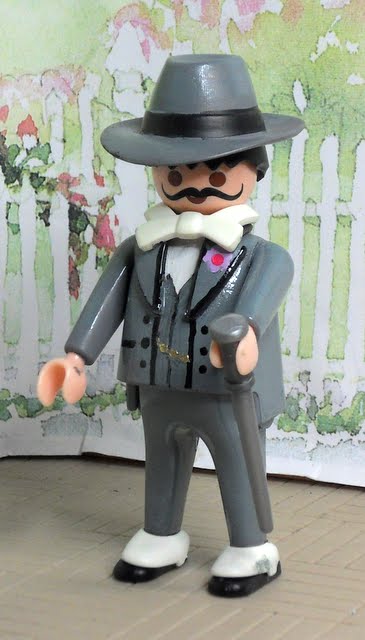
Today, The Morgans have contacted Hercule Poirot to ask for his help in their goal of finding out where The Grandma is, who has been missing for more than 96 hours.  

Poirot (also known as Agatha Christie's Poirot) is a British mystery drama television programme that aired on ITV from 8 January 1989 to 13 November 2013.

David Suchet starred as the eponymous detective, Agatha Christie's fictional Hercule Poirot.

Initially produced by LWT, the series was later produced by ITV Studios. The series also aired on VisionTV in Canada and on PBS and A&E in the United States. The programme ran for 13 series and 70 episodes in total; each episode was adapted from a novel or short story by Christie that featured Poirot, and consequently in each episode Poirot is both the main detective in charge of the investigation of a crime, usually murder, and the protagonist who is at the centre of most of the episode's action.

At the programme's conclusion, which finished with Curtain: Poirot's Last Case (based on the 1975 novel Curtain, the final Poirot novel), every major literary work by Christie that featured the title character had been adapted.

Clive Exton in partnership with producer Brian Eastman adapted the pilot. Together, they wrote and produced the first eight series. Exton and Eastman left Poirot after 2001, when they began work on Rosemary & Thyme. Michele Buck and Damien Timmer, who both went on to form Mammoth Screen, were behind the revamping of the series.

The episodes aired from 2003 featured a radical shift in tone from the previous series. The humour of the earlier series was downplayed with each episode being presented as serious drama and saw the introduction of gritty elements not present in the Christie stories being adapted.

Recurrent motifs in the additions included drug use, sex, abortion, homosexuality, and a tendency toward more visceral imagery. Story changes were often made to present female characters in a more sympathetic or heroic light, at odds with Christie's characteristic gender neutrality. 

More information: Agatha Christie

The visual style of later episodes was correspondingly different: particularly, an overall darker tone; and austere modernist or Art Deco locations and decor, widely used earlier in the series, being largely dropped in favour of more lavish settings (epitomised by the re-imagining of Poirot's home as a larger, more lavish apartment).

The series logo was redesigned (the full opening title sequence had not been used since series 6 in 1996), and the main theme motif, though used often, was usually featured subtly and in sombre arrangements; this has been described as a consequence of the novels adapted being darker and more psychologically driven. However, a more upbeat string arrangement of the theme music is used for the end credits of Hallowe'en Party, The Clocks and Dead Man's Folly. In flashback scenes, later episodes also made extensive use of fisheye lens, distorted colours, and other visual effects.

Series 9-12 lack Hugh Fraser, Philip Jackson and Pauline Moran, who had appeared in the previous series (excepting series 4, where Moran is absent).

Series 10 (2006) introduced Zoë Wanamaker as the eccentric crime novelist Ariadne Oliver and David Yelland as Poirot's dependable valet, George -a character that had been introduced in the early Poirot novels but was left out of the early adaptations to develop the character of Miss Lemon. The introduction of Wanamaker and Yelland's characters and the absence of the other characters is generally consistent with the stories on which the scripts were based. Hugh Fraser and David Yelland returned for two episodes of the final series (The Big Four and Curtain), with Philip Jackson and Pauline Moran returning for the adaptation of The Big Four. Zoë Wanamaker also returned for the adaptations of Elephants Can Remember and Dead Man's Folly.

Clive Exton adapted seven novels and fourteen short stories for the series, including The ABC Murders and The Murder of Roger Ackroyd, which received mixed reviews from critics. 

Anthony Horowitz was another prolific writer for the series, adapting three novels and nine short stories, while Nick Dear adapted six novels. Comedian and novelist Mark Gatiss wrote three episodes and also guest-starred in the series, as have Peter Flannery and Kevin Elyot. Ian Hallard, who co-wrote the screenplay for The Big Four with Mark Gatiss, appears in the episode and also Hallowe'en Party, which was scripted by Gatiss alone.

Florin Court in Charterhouse Square, London, was used as Poirot's fictional London residence, Whitehaven Mansions. The final episode to be filmed was Dead Man's Folly in June 2013 on the Greenway Estate, which was Agatha Christie's home, broadcast on 30 October 2013. Most of the locations and buildings where the episodes were shot were given fictional names.

Suchet was recommended for the part by Christie's family, who had seen him appear as Blott in the TV adaptation of Tom Sharpe's Blott on the Landscape.

Suchet, a method actor, said that he prepared for the part by reading all the Poirot novels and every short story, and copying out every piece of description about the character.

Suchet told The Strand Magazine: What I did was, I had my file on one side of me and a pile of stories on the other side and day after day, week after week, I ploughed through most of Agatha Christie's novels about Hercule Poirot and wrote down characteristics until I had a file full of documentation of the character. And then it was my business not only to know what he was like, but to gradually become him. I had to become him before we started shooting.

During the filming of the first series, Suchet almost left the production during an argument with a director, insisting that Poirot's odd mannerisms (in this case, putting a handkerchief down before sitting on a park bench) be featured; he later said there's no question [Poirot's] obsessive-compulsive.

According to many critics and enthusiasts, Suchet's characterisation is considered to be the most accurate interpretation of all the actors who have played Poirot, and the closest to the character in the books.

More information: The Guardian

In 2007, Suchet spoke of his desire to film the remaining stories in the canon and hoped to achieve this before his 65th birthday in May 2011. Despite speculation of cancellation early in 2011, the remaining books were ultimately adapted into a thirteenth series, adapted in 2013 into 5 episodes, from which Curtain aired last on 13 November. 

A 2013 television special, Being Poirot, centred on Suchet's characterisation and his emotional final episode.

In 2013, Suchet revealed that Christie's daughter Rosalind Hicks had told him she was sure Christie would have approved of his performance.

Agatha Christie's grandson Mathew Prichard commented: Personally, I regret very much that she [Agatha Christie] never saw David Suchet. I think that visually he is much the most convincing and perhaps he manages to convey to the viewer just enough of the irritation that we always associate with the perfectionist, to be convincing!

In 2008, the series was described by some critics as going off piste, though not negatively, from its old format. It was praised for its new writers, more lavish productions and a greater emphasis on the darker psychology of the novels. Significantly, it was noted for Five Little Pigs, adapted by Kevin Elyot, bringing out a homosexual subtext of the novel. Nominations for twenty BAFTAs were received between 1989 and 1991 for series 1-3.

More information: The Guardian

 One must seek the truth within -not without.

Hercule Poirot

Saturday, 23 May 2026

AGATHA CHRISTIE, THE CRITICISM OF BRITISH SOCIETY

Today, The Morgans have contacted Agatha Christie. The Grandma is still disappeared. The family is worried and has asked Agatha to contact Hercule Poirot, the famous Belgian detective.
 
Dame Agatha Mary Clarissa Christie, Lady Mallowan, DBE (née Miller; 15 September 1890-12 January 1976) was an English writer. She is known for her 66 detective novels and 14 short story collections, particularly those revolving around her fictional detectives Hercule Poirot and Miss Marple. Christie also wrote the world's longest-running play, a murder mystery, The Mousetrap, and, under the pen name Mary Westmacott, six romances. In 1971 she was appointed a Dame Commander of the Order of the British Empire (DBE) for her contribution to literature.

More information: Agatha Christie

Christie was born into a wealthy upper-middle-class family in Torquay, Devon. Before marrying and starting a family in London, she had served in a Devon hospital during the First World War, tending to troops coming back from the trenches. She was the youngest of three children born to Frederick Alvah Miller, an affluent American stockbroker, and his British-born wife Clara Miller née Boehmer.

She was initially an unsuccessful writer with six consecutive rejections, but this changed when The Mysterious Affair at Styles, featuring Hercule Poirot, was published in 1920. During the Second World War, she worked as a pharmacy assistant at University College Hospital, London, acquiring a good knowledge of poisons which feature in many of her novels.

Agatha's mother Clara had been born in Belfast in 1854 to Captain Frederick Boehmer and Mary Ann West as the couple's only daughter. Boehmer was killed in a riding accident while stationed on Jersey in April 1863, leaving his widow to raise the children alone on a meagre income. In that same year, 1863, Mary Ann's sister Margaret married a wealthy American, Nathaniel Frary Miller, and the couple settled in Southbourne, West Sussex.

Christie described her childhood as very happy. She was surrounded by a series of strong and independent women from an early age. Her time was spent alternating between her home in Devon, her step-grandmother and aunt's house in Ealing, West London, and parts of Southern Europe, where her family would holiday during the winter.

More information: The Guardian

Agatha was raised in a household with various esoteric beliefs and, like her siblings, believed that her mother Clara was a psychic with the ability of second sight. Agatha's sister Margaret had been sent to Roedean in Sussex for her education, but their mother insisted that Agatha receive a home education. As a result, her parents were responsible for teaching her to read and write and to master basic arithmetic, a subject she particularly enjoyed. They also taught her music, and she learned to play both the piano and the mandolin.

In 1902, she was sent to receive a formal education at Miss Guyer's Girls School in Torquay but found it difficult to adjust to the disciplined atmosphere.

In 1905, she was sent to Paris where she was educated in three pensions, the last of which served primarily as a finishing school.

Christie returned to England in 1910 to find that her mother Clara was ill. They decided to spend time together in the warmer climate of Cairo, then a regular tourist destination for wealthy Britons; they stayed for three months at the Gezirah Palace Hotel.

Christie attended many social functions in search of a husband. She visited ancient Egyptian monuments such as the Great Pyramid of Giza, but did not exhibit the great interest in archaeology and Egyptology that became prominent in her later years. Returning to Britain, she continued her social activities, writing and performing in amateur theatricals. She also helped put on a play called The Blue Beard of Unhappiness with female friends. Her writing extended to both poetry and music. Some early works saw publication, but she decided against focusing on writing or music as future professions.

Christie wrote her first short story, The House of Beauty, an early version of her later-published story The House of Dreams, while recovering in bed from an undisclosed illness.

More information: Thought

Christie had long been a fan of detective novels, having enjoyed Wilkie Collins's The Woman in White and The Moonstone, as well as Sir Arthur Conan Doyle's early Sherlock Holmes stories. She wrote her own detective novel, The Mysterious Affair at Styles, featuring Hercule Poirot, a former Belgian police officer noted for his twirly large magnificent moustaches and egg-shaped head. Poirot had taken refuge in Britain after Germany invaded Belgium.  

Christie's inspiration for the character stemmed from real Belgian refugees who were living in Torquay and the Belgian soldiers whom she helped to treat as a volunteer nurse in Torquay during the First World War. She began working on The Mysterious Affair at Styles in 1916, writing most of it on Dartmoor.

In late 1926, Archie asked Agatha for a divorce. He had fallen in love with Nancy Neele, who had been a friend of Major Belcher, director of the British Empire Mission, on the promotional tour a few years earlier.

On 3 December 1926, the Christies quarrelled, and Archie left their house, which they named Styles, in Sunningdale, Berkshire, to spend the weekend with his mistress in Godalming, Surrey.

That same evening, around 9:45 pm, Christie disappeared from her home, leaving behind a letter for her secretary saying that she was going to Yorkshire. On 14 December 1926, she was found at the Swan Hydropathic Hotel, now the Old Swan Hotel, in Harrogate, Yorkshire, registered as Mrs Teresa Neele, the surname of her husband's lover, from Cape Town.

In 1928, Christie left England for Istanbul and subsequently for Baghdad on the Orient Express. Late in this trip, in 1930, she met a young archaeologist 13 years her junior, Max Mallowan, whom she married in September 1930. Their marriage was happy and lasted until Christie's death in 1976. In a 1977 interview, Mallowan recounted his first meeting with Christie, when he took her and a group of tourists on a tour of his expedition site in Iraq.


Christie frequently used settings that were familiar to her for her stories. She often accompanied Mallowan on his archaeological expeditions, and her travels with him contributed background to several of her novels set in the Middle East. Other novels, such as And Then There Were None, were set in and around Torquay, where she was raised.

Christie's 1934 novel Murder on the Orient Express was written in the Pera Palace Hotel in Istanbul, Turkey, the southern terminus of the railway. The hotel maintains Christie's room as a memorial to the author.

During the Second World War, Christie worked in the pharmacy at University College Hospital, London, where she acquired a knowledge of poisons that she put to good use in her post-war crime novels.

Around 1941–42, the British intelligence agency MI5 investigated Christie after a character called Major Bletchley appeared in her 1941 thriller N or M?, which was about a hunt for a pair of deadly fifth columnists in wartime England. MI5 was afraid that Christie had a spy in Britain's top-secret codebreaking centre, Bletchley Park. The agency's fears were allayed when Christie told her friend, the codebreaker Dilly Knox, I was stuck there on my way by train from Oxford to London and took revenge by giving the name to one of my least lovable characters.

In honour of her many literary works, she was appointed Commander of the Order of the British Empire (CBE) in the 1956 New Year Honours. The next year, she became the President of the Detection Club. In the 1971 New Year Honours, she was promoted to Dame Commander of the Order of the British Empire (DBE). Three years after her husband had been knighted for his archaeological work in 1968. They were one of the few married couples where both partners were honoured in their own right. From 1968, owing to her husband's knighthood, Christie could also be styled Lady Mallowan.

Dame Agatha Christie died on 12 January 1976 at age 85 from natural causes at her home Winterbrook House which was located in Winterbrook, Wallingford, Oxfordshire.

More information: English Club


Crime is terribly revealing. 
Try and vary your methods as you will, 
your tastes, your habits, your attitude of mind, 
and your soul is revealed by your actions.

Agatha Christie

Friday, 17 April 2026

'THE MOUSETRAP,' AGATHA CHRISTIE'S MURDER MYSTERY

Today, The Morgans & The Grandma has bought some tickets to see The Mousetrap
in London's West End, a play written by Agatha Christie that opened at the Ambassadors Theatre in London in 1952.

The Mousetrap is a murder mystery play by Agatha Christie.

The Mousetrap opened in London's West End in 1952 and ran continuously until 16 March 2020, when the stage performances had to be discontinued due to the COVID-19 pandemic.

The longest-running West End show, it has by far the longest initial run of any play in history, with its 27,500th performance taking place on 18 September 2018.

The play has a twist ending, which the audience are traditionally asked not to reveal after leaving the theatre. The play began life as a short radio play written as a birthday present for Queen Mary, the consort of King George V. It was broadcast on 30 May 1947 under the name Three Blind Mice starring Barry Morse. The story drew from the real-life case of Dennis O'Neill, who died after he and his brother Terence suffered extreme abuse while in the foster care of a Shropshire farmer and his wife in 1945.

The play is based on a short story, itself based on the radio play, but Christie asked that the story not be published as long as it ran as a play in the West End of London. The short story has still not been published within the United Kingdom, but it has appeared in the United States in the 1950 collection Three Blind Mice and Other Stories.

When she wrote the play, Christie gave the rights to her grandson Matthew Prichard as a birthday present. In the United Kingdom, only one production of the play in addition to the West End production can be performed annually, and under the contract terms of the play, no film adaptation can be produced until the West End production has been closed for at least six months.

The play had to be renamed at the insistence of Emile Littler who had produced a play called Three Blind Mice in the West End before the Second World War. The suggestion to call it The Mousetrap came from Christie's son-in-law, Anthony Hicks.

More information: The Mousetrap

In Shakespeare's play Hamlet, The Mousetrap is Hamlet's answer to Claudius's inquiry about the name of the play whose prologue and first scene the court has just observed (III, ii). The play is actually The Murder of Gonzago, but Hamlet answers metaphorically, since the play's the thing in which he intends to catch the conscience of the king. Three Blind Mice or its tune is heard a few times during the play.

The play's longevity has ensured its popularity with tourists from around the world. In 1997, at the initiative of producer Stephen Waley-Cohen, the theatrical education charity Mousetrap Theatre Projects was launched, helping young people experience London's theatre.

The play's storyline is set at the present, which presumably means England as it was around the time when the play came out in 1952, including postwar continuation of World War II rationing.

Tom Stoppard's 1968 play The Real Inspector Hound parodies many elements of The Mousetrap, including the surprise ending.

As a stage play, The Mousetrap had its world premiere at the Theatre Royal, Nottingham on 6 October 1952.

It was originally directed by Peter Cotes, elder brother of John and Roy Boulting, the film directors. Its pre-West End tour then took it to the New Theatre Oxford, the Manchester Opera House, the Royal Court Theatre, Liverpool, the Theatre Royal, Newcastle, the Grand Theatre Leeds and the Alexandra Theatre in Birmingham before it began its run in London on 25 November 1952 at the Ambassadors Theatre.

It ran at this theatre until Saturday, 23 March 1974 when it immediately transferred to the larger St Martin's Theatre, next door, where it reopened on Monday, 25 March thus keeping its initial run status. The London run has now exceeded 26,000 performances. The director of the play for many years has been David Turner.

Christie herself did not expect The Mousetrap to run for such a long time. In her autobiography, she reports a conversation that she had with Peter Saunders: Fourteen months I am going to give it, says Saunders. To which Christie replies, It won't run that long. Eight months, perhaps. Yes, I think eight months. When it broke the record for the longest run of a play in the West End in September 1957, Christie received a mildly grudging telegram from fellow playwright Noël Coward: Much as it pains me, I really must congratulate you...

In 2011, by which time The Mousetrap had been running for almost 59 years, this long-lost document was found by a Cotswold furniture maker who was renovating a bureau purchased by a client from the Christie estate. By the time of Christie's death in 1976 the play made more than £3 million.

More information: The Guardian

The original West End cast included Richard Attenborough as Detective Sergeant Trotter and his wife Sheila Sim as Mollie Ralston.

Since the retirement of Mysie Monte and David Raven, who each made history by remaining in the cast for more than 11 years, in their roles as Mrs Boyle and Major Metcalf, the cast has been changed annually. The change usually occurs around late November around the anniversary of the play's opening, and was the initiative of Sir Peter Saunders, the original producer. There is a tradition of the retiring leading lady and the new leading lady cutting a Mousetrap cake together.

The play has also made theatrical history by having an original cast member survive all the cast changes since its opening night. The late Deryck Guyler can still be heard, via a recording, reading the radio news bulletin in the play to this present day. The set was changed in 1965 and 1999, but one prop survives from the original opening -the clock, which sits on the mantelpiece of the fireplace in the main hall.

In May 2001, during the London production's 49th year, and to mark the 25th anniversary of Christie's death, the cast gave a semi-staged Sunday performance at the Palace Theatre, Westcliff-on-Sea as a guest contribution to the Agatha Christie Theatre Festival 2001, a twelve-week history-making cycle of all of Agatha Christie's plays presented by Roy Marsden's New Palace Theatre Company.

Performances at the St. Martin's Theatre were halted on 16 March 2020 with all other West End shows due to the COVID-19 pandemic in the United Kingdom. 

The Mousetrap re-opened on 17 May 2021 after 14 months without performances.

More information: Official London Theatre


Crime is terribly revealing.
Try and vary your methods as you will,
your tastes, your habits, your attitude of mind,
and your soul is revealed by your actions.

Agatha Christie

Saturday, 24 February 2024

'THE MOUSETRAP' BY AGATHA CHRISTIE, A MUST IN LDN

Today, The Grandma has bought some tickets to see The Mousetrap in London's West End, a play written by Agatha Christie that opened at the Ambassadors Theatre in London in 1952.

The Mousetrap is a murder mystery play by Agatha Christie.

The Mousetrap opened in London's West End in 1952 and ran continuously until 16 March 2020, when the stage performances had to be discontinued due to the COVID-19 pandemic.

It then re-opened on 17 May 2021. The longest-running West End show, it has by far the longest run of any play in the world, with its 29,277th performance having taken place as of September 2023. Attendees at St Martin's Theatre often get their photo taken beside the wooden counter (showing a count of the number of performances) in the theatre foyer. As of 2022 the play has been seen by 10 million people in London.

The play has a twist ending, which the audience are traditionally asked not to reveal after leaving the theatre. The play began life as a short radio play written as a birthday present for Queen Mary, the consort of King George V. It was broadcast on 30 May 1947 under the name Three Blind Mice starring Barry Morse. The story drew from the real-life case of Dennis O'Neill, who died after he and his brother Terence suffered extreme abuse while in the foster care of a Shropshire farmer and his wife in 1945.

The play is based on a short story, itself based on the radio play, but Christie asked that the story not be published as long as it ran as a play in the West End of London. The short story has still not been published within the United Kingdom, but it has appeared in the United States in the 1950 collection Three Blind Mice and Other Stories.

When she wrote the play, Christie gave the rights to her grandson Matthew Prichard as a birthday present. In the United Kingdom, only one production of the play in addition to the West End production can be performed annually, and under the contract terms of the play, no film adaptation can be produced until the West End production has been closed for at least six months.

The play had to be renamed at the insistence of Emile Littler who had produced a play called Three Blind Mice in the West End before the Second World War. The suggestion to call it The Mousetrap came from Christie's son-in-law, Anthony Hicks.

More information: The Mousetrap

In Shakespeare's play Hamlet, The Mousetrap is Hamlet's answer to Claudius's inquiry about the name of the play whose prologue and first scene the court has just observed (III, ii). The play is actually The Murder of Gonzago, but Hamlet answers metaphorically, since the play's the thing in which he intends to catch the conscience of the king. Three Blind Mice or its tune is heard a few times during the play.

The play's longevity has ensured its popularity with tourists from around the world. In 1997, at the initiative of producer Stephen Waley-Cohen, the theatrical education charity Mousetrap Theatre Projects was launched, helping young people experience London's theatre.

The play's storyline is set at the present, which presumably means England as it was around the time when the play came out in 1952, including postwar continuation of World War II rationing.

Tom Stoppard's 1968 play The Real Inspector Hound parodies many elements of The Mousetrap, including the surprise ending.

As a stage play, The Mousetrap had its world premiere at the Theatre Royal, Nottingham on 6 October 1952.

It was originally directed by Peter Cotes, elder brother of John and Roy Boulting, the film directors. Its pre-West End tour then took it to the New Theatre Oxford, the Manchester Opera House, the Royal Court Theatre, Liverpool, the Theatre Royal, Newcastle, the Grand Theatre Leeds and the Alexandra Theatre in Birmingham before it began its run in London on 25 November 1952 at the Ambassadors Theatre.

It ran at this theatre until Saturday, 23 March 1974 when it immediately transferred to the larger St Martin's Theatre, next door, where it reopened on Monday, 25 March thus keeping its initial run status. The London run has now exceeded 26,000 performances. The director of the play for many years has been David Turner.

Christie herself did not expect The Mousetrap to run for such a long time. In her autobiography, she reports a conversation that she had with Peter Saunders: Fourteen months I am going to give it, says Saunders. To which Christie replies, It won't run that long. Eight months, perhaps. Yes, I think eight months. When it broke the record for the longest run of a play in the West End in September 1957, Christie received a mildly grudging telegram from fellow playwright Noël Coward: Much as it pains me, I really must congratulate you...

In 2011, by which time The Mousetrap had been running for almost 59 years, this long-lost document was found by a Cotswold furniture maker who was renovating a bureau purchased by a client from the Christie estate. By the time of Christie's death in 1976 the play made more than £3 million.

More information: The Guardian

The original West End cast included Richard Attenborough as Detective Sergeant Trotter and his wife Sheila Sim as Mollie Ralston.

Since the retirement of Mysie Monte and David Raven, who each made history by remaining in the cast for more than 11 years, in their roles as Mrs Boyle and Major Metcalf, the cast has been changed annually. The change usually occurs around late November around the anniversary of the play's opening, and was the initiative of Sir Peter Saunders, the original producer. There is a tradition of the retiring leading lady and the new leading lady cutting a Mousetrap cake together.

The play has also made theatrical history by having an original cast member survive all the cast changes since its opening night. The late Deryck Guyler can still be heard, via a recording, reading the radio news bulletin in the play to this present day. The set was changed in 1965 and 1999, but one prop survives from the original opening -the clock, which sits on the mantelpiece of the fireplace in the main hall.

In May 2001, during the London production's 49th year, and to mark the 25th anniversary of Christie's death, the cast gave a semi-staged Sunday performance at the Palace Theatre, Westcliff-on-Sea as a guest contribution to the Agatha Christie Theatre Festival 2001, a twelve-week history-making cycle of all of Agatha Christie's plays presented by Roy Marsden's New Palace Theatre Company.

Performances at the St. Martin's Theatre were halted on 16 March 2020 with all other West End shows due to the COVID-19 pandemic in the United Kingdom. 

The Mousetrap re-opened on 17 May 2021 after 14 months without performances.

More information: Official London Theatre


 Crime is terribly revealing.
Try and vary your methods as you will,
your tastes, your habits, your attitude of mind,
and your soul is revealed by your actions.

Agatha Christie

Thursday, 30 December 2021

AGATHA CHRISTIE'S POIROT, A BRITISH MYSTERY DRAMA

Today, The Grandma is relaxing at home. She has decided to watch some TV series and she has chosen Agatha Christie's Poirot, one of her favourite ones.

Poirot (also known as Agatha Christie's Poirot) is a British mystery drama television programme that aired on ITV from 8 January 1989 to 13 November 2013.

David Suchet starred as the eponymous detective, Agatha Christie's fictional Hercule Poirot.

Initially produced by LWT, the series was later produced by ITV Studios. The series also aired on VisionTV in Canada and on PBS and A&E in the United States. The programme ran for 13 series and 70 episodes in total; each episode was adapted from a novel or short story by Christie that featured Poirot, and consequently in each episode Poirot is both the main detective in charge of the investigation of a crime, usually murder, and the protagonist who is at the centre of most of the episode's action.

At the programme's conclusion, which finished with Curtain: Poirot's Last Case (based on the 1975 novel Curtain, the final Poirot novel), every major literary work by Christie that featured the title character had been adapted.

Clive Exton in partnership with producer Brian Eastman adapted the pilot. Together, they wrote and produced the first eight series. Exton and Eastman left Poirot after 2001, when they began work on Rosemary & Thyme. Michele Buck and Damien Timmer, who both went on to form Mammoth Screen, were behind the revamping of the series.

The episodes aired from 2003 featured a radical shift in tone from the previous series. The humour of the earlier series was downplayed with each episode being presented as serious drama and saw the introduction of gritty elements not present in the Christie stories being adapted.

Recurrent motifs in the additions included drug use, sex, abortion, homosexuality, and a tendency toward more visceral imagery. Story changes were often made to present female characters in a more sympathetic or heroic light, at odds with Christie's characteristic gender neutrality. 

More information: Agatha Christie

The visual style of later episodes was correspondingly different: particularly, an overall darker tone; and austere modernist or Art Deco locations and decor, widely used earlier in the series, being largely dropped in favour of more lavish settings (epitomised by the re-imagining of Poirot's home as a larger, more lavish apartment).

The series logo was redesigned (the full opening title sequence had not been used since series 6 in 1996), and the main theme motif, though used often, was usually featured subtly and in sombre arrangements; this has been described as a consequence of the novels adapted being darker and more psychologically driven. However, a more upbeat string arrangement of the theme music is used for the end credits of Hallowe'en Party, The Clocks and Dead Man's Folly. In flashback scenes, later episodes also made extensive use of fisheye lens, distorted colours, and other visual effects.

Series 9-12 lack Hugh Fraser, Philip Jackson and Pauline Moran, who had appeared in the previous series (excepting series 4, where Moran is absent).

Series 10 (2006) introduced Zoë Wanamaker as the eccentric crime novelist Ariadne Oliver and David Yelland as Poirot's dependable valet, George -a character that had been introduced in the early Poirot novels but was left out of the early adaptations to develop the character of Miss Lemon. The introduction of Wanamaker and Yelland's characters and the absence of the other characters is generally consistent with the stories on which the scripts were based. Hugh Fraser and David Yelland returned for two episodes of the final series (The Big Four and Curtain), with Philip Jackson and Pauline Moran returning for the adaptation of The Big Four. Zoë Wanamaker also returned for the adaptations of Elephants Can Remember and Dead Man's Folly.

Clive Exton adapted seven novels and fourteen short stories for the series, including The ABC Murders and The Murder of Roger Ackroyd, which received mixed reviews from critics. 

Anthony Horowitz was another prolific writer for the series, adapting three novels and nine short stories, while Nick Dear adapted six novels. Comedian and novelist Mark Gatiss wrote three episodes and also guest-starred in the series, as have Peter Flannery and Kevin Elyot. Ian Hallard, who co-wrote the screenplay for The Big Four with Mark Gatiss, appears in the episode and also Hallowe'en Party, which was scripted by Gatiss alone.

Florin Court in Charterhouse Square, London, was used as Poirot's fictional London residence, Whitehaven Mansions. The final episode to be filmed was Dead Man's Folly in June 2013 on the Greenway Estate, which was Agatha Christie's home, broadcast on 30 October 2013. Most of the locations and buildings where the episodes were shot were given fictional names.

Suchet was recommended for the part by Christie's family, who had seen him appear as Blott in the TV adaptation of Tom Sharpe's Blott on the Landscape.

Suchet, a method actor, said that he prepared for the part by reading all the Poirot novels and every short story, and copying out every piece of description about the character.

Suchet told The Strand Magazine: What I did was, I had my file on one side of me and a pile of stories on the other side and day after day, week after week, I ploughed through most of Agatha Christie's novels about Hercule Poirot and wrote down characteristics until I had a file full of documentation of the character. And then it was my business not only to know what he was like, but to gradually become him. I had to become him before we started shooting.

During the filming of the first series, Suchet almost left the production during an argument with a director, insisting that Poirot's odd mannerisms (in this case, putting a handkerchief down before sitting on a park bench) be featured; he later said there's no question [Poirot's] obsessive-compulsive.

According to many critics and enthusiasts, Suchet's characterisation is considered to be the most accurate interpretation of all the actors who have played Poirot, and the closest to the character in the books.

More information: The Guardian

In 2007, Suchet spoke of his desire to film the remaining stories in the canon and hoped to achieve this before his 65th birthday in May 2011. Despite speculation of cancellation early in 2011, the remaining books were ultimately adapted into a thirteenth series, adapted in 2013 into 5 episodes, from which Curtain aired last on 13 November. 

A 2013 television special, Being Poirot, centred on Suchet's characterisation and his emotional final episode.

In 2013, Suchet revealed that Christie's daughter Rosalind Hicks had told him she was sure Christie would have approved of his performance.

Agatha Christie's grandson Mathew Prichard commented: Personally, I regret very much that she [Agatha Christie] never saw David Suchet. I think that visually he is much the most convincing and perhaps he manages to convey to the viewer just enough of the irritation that we always associate with the perfectionist, to be convincing!

In 2008, the series was described by some critics as going off piste, though not negatively, from its old format. It was praised for its new writers, more lavish productions and a greater emphasis on the darker psychology of the novels. Significantly, it was noted for Five Little Pigs, adapted by Kevin Elyot, bringing out a homosexual subtext of the novel. Nominations for twenty BAFTAs were received between 1989 and 1991 for series 1-3.

More information: The Guardian


One must seek the truth within -not without.

Hercule Poirot

Thursday, 25 November 2021

AGATHA CHRISTIE'S 'THE MOUSETRAP,' 68 YEARS IN LDN

Today, The Grandma has bought some tickets to see The Mousetrap in London's West End, a play written by Agatha Christie that opened at the Ambassadors Theatre in London on a day like today in 1952.

The Mousetrap is a murder mystery play by Agatha Christie.

The Mousetrap opened in London's West End in 1952 and ran continuously until 16 March 2020, when the stage performances had to be discontinued due to the COVID-19 pandemic.

The longest-running West End show, it has by far the longest initial run of any play in history, with its 27,500th performance taking place on 18 September 2018.

The play has a twist ending, which the audience are traditionally asked not to reveal after leaving the theatre. The play began life as a short radio play written as a birthday present for Queen Mary, the consort of King George V. It was broadcast on 30 May 1947 under the name Three Blind Mice starring Barry Morse. The story drew from the real-life case of Dennis O'Neill, who died after he and his brother Terence suffered extreme abuse while in the foster care of a Shropshire farmer and his wife in 1945.

The play is based on a short story, itself based on the radio play, but Christie asked that the story not be published as long as it ran as a play in the West End of London. The short story has still not been published within the United Kingdom, but it has appeared in the United States in the 1950 collection Three Blind Mice and Other Stories.

When she wrote the play, Christie gave the rights to her grandson Matthew Prichard as a birthday present. In the United Kingdom, only one production of the play in addition to the West End production can be performed annually, and under the contract terms of the play, no film adaptation can be produced until the West End production has been closed for at least six months.

The play had to be renamed at the insistence of Emile Littler who had produced a play called Three Blind Mice in the West End before the Second World War. The suggestion to call it The Mousetrap came from Christie's son-in-law, Anthony Hicks.

More information: The Mousetrap

In Shakespeare's play Hamlet, The Mousetrap is Hamlet's answer to Claudius's inquiry about the name of the play whose prologue and first scene the court has just observed (III, ii). The play is actually The Murder of Gonzago, but Hamlet answers metaphorically, since the play's the thing in which he intends to catch the conscience of the king. Three Blind Mice or its tune is heard a few times during the play.

The play's longevity has ensured its popularity with tourists from around the world. In 1997, at the initiative of producer Stephen Waley-Cohen, the theatrical education charity Mousetrap Theatre Projects was launched, helping young people experience London's theatre.

The play's storyline is set at the present, which presumably means England as it was around the time when the play came out in 1952, including postwar continuation of World War II rationing.

Tom Stoppard's 1968 play The Real Inspector Hound parodies many elements of The Mousetrap, including the surprise ending.

As a stage play, The Mousetrap had its world premiere at the Theatre Royal, Nottingham on 6 October 1952.

It was originally directed by Peter Cotes, elder brother of John and Roy Boulting, the film directors. Its pre-West End tour then took it to the New Theatre Oxford, the Manchester Opera House, the Royal Court Theatre, Liverpool, the Theatre Royal, Newcastle, the Grand Theatre Leeds and the Alexandra Theatre in Birmingham before it began its run in London on 25 November 1952 at the Ambassadors Theatre.

It ran at this theatre until Saturday, 23 March 1974 when it immediately transferred to the larger St Martin's Theatre, next door, where it reopened on Monday, 25 March thus keeping its initial run status. The London run has now exceeded 26,000 performances. The director of the play for many years has been David Turner.

Christie herself did not expect The Mousetrap to run for such a long time. In her autobiography, she reports a conversation that she had with Peter Saunders: Fourteen months I am going to give it, says Saunders. To which Christie replies, It won't run that long. Eight months, perhaps. Yes, I think eight months. When it broke the record for the longest run of a play in the West End in September 1957, Christie received a mildly grudging telegram from fellow playwright Noël Coward: Much as it pains me, I really must congratulate you...

In 2011, by which time The Mousetrap had been running for almost 59 years, this long-lost document was found by a Cotswold furniture maker who was renovating a bureau purchased by a client from the Christie estate. By the time of Christie's death in 1976 the play made more than £3 million.

More information: The Guardian

The original West End cast included Richard Attenborough as Detective Sergeant Trotter and his wife Sheila Sim as Mollie Ralston.

Since the retirement of Mysie Monte and David Raven, who each made history by remaining in the cast for more than 11 years, in their roles as Mrs Boyle and Major Metcalf, the cast has been changed annually. The change usually occurs around late November around the anniversary of the play's opening, and was the initiative of Sir Peter Saunders, the original producer. There is a tradition of the retiring leading lady and the new leading lady cutting a Mousetrap cake together.

The play has also made theatrical history by having an original cast member survive all the cast changes since its opening night. The late Deryck Guyler can still be heard, via a recording, reading the radio news bulletin in the play to this present day. The set was changed in 1965 and 1999, but one prop survives from the original opening -the clock, which sits on the mantelpiece of the fireplace in the main hall.

In May 2001, during the London production's 49th year, and to mark the 25th anniversary of Christie's death, the cast gave a semi-staged Sunday performance at the Palace Theatre, Westcliff-on-Sea as a guest contribution to the Agatha Christie Theatre Festival 2001, a twelve-week history-making cycle of all of Agatha Christie's plays presented by Roy Marsden's New Palace Theatre Company.

Performances at the St. Martin's Theatre were halted on 16 March 2020 with all other West End shows due to the COVID-19 pandemic in the United Kingdom. 

The Mousetrap re-opened on 17 May 2021 after 14 months without performances.

More information: Official London Theatre

Crime is terribly revealing.
Try and vary your methods as you will,
your tastes, your habits, your attitude of mind,
and your soul is revealed by your actions.

Agatha Christie

Tuesday, 29 September 2020

INVEST IN NEW PROPIERTIES, COMPARE PROS & CONS

The Stones are spending their last days in ManchesterThe Grandma has bought some new properties and they are deciding what to do with them. They have had enough time to review some English Grammar. They have studied Present Simple vs. Present Continuous, Object Pronouns and The Comparative.

All the properties have emotional meaning for The Grandma and although it is impossible to choose only one, she wants to talk about a beautiful cottage acquired in St Mary Mead where lives one of the most famous grannies of the world, Miss Marple.

St Mary Mead is a fictional village created by popular crime fiction author Dame Agatha Christie.

The quaint, sleepy village was home to the renowned detective spinster Miss Marple. However, Agatha Christie first described a village of that name prior to Marple's introduction, in the 1928 Hercule Poirot novel The Mystery of the Blue Train. In that novel, St Mary Mead is home to the book's protagonist Katherine Grey. The village was first mentioned in a Miss Marple book in 1930, when it was the setting for the first Marple novel, The Murder at the Vicarage.

Miss Marple's St Mary Mead is described in The Murder at the Vicarage as being in the fictional county of Downshire, but in the later novel The Body in the Library Downshire has become Radfordshire.

In the BBC Miss Marple TV adaptation of Nemesis, a letter from Mr Rafiel's solicitors indicate that St Mary Mead is located in the also fictional county of Middleshire. The St Mary Mead of Katherine Grey is in Kent.

More information: Present Simple vs. Present Continuos

Miss Marple lives in Danemead Cottage, the last cottage in Old Pasture Lane. Her telephone number is three five on a manual exchange.

Once it has been fully established as Miss Marple's home village, St Mary Mead is supposed to be in South East England, 40 km from London. It is just outside the town of Much Benham and is close to Market Basing, which appears as a name of a town in many of Agatha Christie's novels and short stories, 19 km from the fashionable seaside resort of Danemouth, and also 19 km from the coastal town of Loomouth.

Other towns said to be close by include Brackhampton, Medenham Wells, and Milchester. The neighbourhood of St Mary Mead is served by trains arriving at Paddington railway station, indicating a location west or south west of London. 

It has been suggested that Market Basing is Basingstoke and Danemouth is Bournemouth. In the BBC Miss Marple television adaptations the Hampshire village of Nether Wallop was used as the setting for St Mary Mead. Brackhampton could be Bracknell, just north of Basingstoke.

Before World War II, the village itself was not particularly large. The only road of significance passing through the village was High Street. Here were the well-established purveyances of Mr Petherick, the solicitors; Mrs Jamieson, the hairdressers; Mr Thomas's basket-weavers; The Blue Boar Pub; Mr Footit's butchers, Mr Jim Armstrong's dairies, Mr Berks's bakers and Mr Baker's grocery shop.

The little-trafficked railway station, featured in the book The Murder at the Vicarage, is also located at the very end of High Street; though the station may have closed by the time of the novel 4.50 from Paddington as Mrs McGillicuddy has a taxi arranged for the 14 km from Milchester station to Miss Marple's house. Then, slightly further up Lansham Road, was the fine Victorian structure of Gossington Hall. Until the 1950s, this was home to the pompous retired military man, Colonel Arthur Bantry and his wife Mrs Dolly Bantry, Miss Marple's best friends in the village.

However, after Colonel Bantry died, Mrs Bantry sold the estate, but continued to live on in the grounds in the East Lodge. The Hall was later after one or two changes of ownership purchased by the film star Marina Gregg. One mile down Lansham Road was a very modern cottage called Chatsworth. It was also known as the Period Piece and Mr Booker's new house. It was bought in the early 1930s by Basil Blake, a member of the art department at Lemville film studios. It was also inhabited by Basil's wife, Dinah Lee an actress.

At the other end of Lansham Road, a small lane called Old Pasture Lane broke away from the main street. Nestled in this lane were three Queen Anne or Georgian houses, which belonged to three spinsters. The first house belonged to the long-nosed, gush and excitable Miss Caroline Wetherby. The second was Miss Amanda Hartnell, a proud, decent woman with a deep voice. The last cottage was called Danemead Cottage and it belonged to Miss Jane Marple, the famous spinster who solved countless cases between 1930 and 1976. The Post Office, and the dressmakers belonging to Mrs Politt, are located in front of the lane.

More information: The Comparative

The centre of the village was the Vicarage, the very grand Victorian structure at the end of the Lane. The Vicarage was home to The Vicar Leonard Clement and his pretty young wife, Griselda with their nephew: Dennis, and later their two sons, Leonard and David.

Near the gardens of the Vicarage was a back lane which led to a small cottage called Little Gates. Until 1930, it was inhabited by an Anglo-Indian colonel who moved away and briefly rented it out to Mrs Lestrange.

Beyond the Vicarage were two more houses. The first was the residence of the village GP, Doctor Gerard Haydock. He continued to live on in the village beyond 1960. The other cottage was much larger than Dr Haydock's. It belonged to Mrs Martha Price-Ridley, a rich and dictatorial widow, and the most vicious gossip of all the old ladies in the village.

There was also a large estate, Old Hall, belonging to the despised local magistrate, Colonel Lucius Protheroe. He was murdered in 1930 in Mr Clement's study in the Vicarage. After his death, the mansion was turned into a block of flats, to the great disapproval of the villagers.

More information: Object Pronouns

The flats housed Mrs Carmichael, a rich and eccentric old lady who was bullied by her maid, the Larkins, two sisters by the name of Skinner, one of whom was a supposed hypochondriac, and a young married couple, and a robbery was later committed by the Skinner sisters.

Finally, just beyond the home of the dreaded Price-Ridley, as she is known by other villagers, was a small stream, leading to the fields of Farmer Giles. 

However, the Second World War took its toll on the village, and soon after the war Farmer Giles's fields were bought and tarmacked over; and a new housing estate was built upon it. This was referred to as The Development by the villagers who survived the war.

A very large hospital was also built near, manned by many doctors and nurses. As well as this there were some very large hotels and three film studios: Lemville, Elstree and Hellingforth.

More information: The Guardian


Everybody in St Mary Mead knew Miss Marple; 
fluffy and dithery in appearance,
but inwardly as sharp and as shrewd as they make them.

Agatha Christie

Thursday, 15 September 2016

AGATHA CHRISTIE: LOVE, MYSTERY, CRIME & CRITICISM

Hercule Poirot
Dame Agatha Mary Clarissa Christie, Lady Mallowan, DBE (née Miller; 15 September 1890 – 12 January 1976) was an English crime novelist, short story writer and playwright. She also wrote six romances under the name Mary Westmacott including Giant's Bread, but she is best known for the 66 detective novels and 14 short story collections that she wrote under her own name, most of which revolve around the investigative work of such characters as Hercule Poirot, Jane Marple, Parker Pyne, Ariadne Oliver, Harley Quin/Mr Satterthwaite and Tommy and Tuppence Beresford

She wrote the world's longest-running play, a murder mystery, The Mousetrap. In 1971 she was made a Dame for her contribution to literature. Christie was born into a wealthy upper-middle-class family in Torquay, Devon. She served in a hospital during the First World War before marrying and starting a family in London. She was initially unsuccessful at getting her work published, but in 1920 The Bodley Head press published her novel The Mysterious Affair at Styles, featuring the character of Hercule Poirot.

This launched her literary career. The Guinness Book of World Records lists Christie as the best-selling novelist of all time. Her novels have sold roughly 2 billion copies, and her estate claims that her works come third in the rankings of the world's most-widely published books, behind only William Shakespeare's works and the Bible.

More information: Agatha Christie Official Web


I married an archaeologist because the older I grow,
the more he appreciates me.
 Agatha Christie