Thursday, 10 October 2019

ROJAVA, BETWEEN ETERNAL CONFLICTS & BETRAYALS

Kurdistan
Today is one of the most difficult days to write a post. Last news talk about a Turkish invasion over Rojava in Kurdistan.

The Grandma is upset. How is possible to betray the Kurds again? How is possible to not help this community that has suffered all the negative effects of British colonization and eternal wars.

The Grandma could the opportunity of visiting Syria in 1999 after war (1994-1998). She visited Damascus and Aleppo, and she travelled to the north to visit the Syrian Kurdistan. She stayed in Rojava and met the Kurdish population, an ancient nation divided in four new nations after the British decolonization.

She arrived to Syria to study the legacy of the Templar Knights and she could visit the Krak des Chevaliers, also known as the Castle of the Kurds, a crusade castle.

Nowadays, she remembers this travel with a lot of sadness because the Kurds are going to be victims of their geographical situation and international interests that seem much more important than people and their cultures.

The Grandma wants to talk about Rojava and the Kurdish people who deserve our help and our support in these difficult moments.

More information: Kurdistan 24

The Autonomous Administration of North and East Syria (NES), often referred to as Rojava, is a de facto autonomous region in northeastern Syria. It consists of self-governing sub-regions in the areas of Afrin, Jazira, Euphrates, Raqqa, Tabqa, Manbij and Deir Ez-Zor. The region gained its de facto autonomy in 2012 in the context of the ongoing Rojava conflict and the wider Syrian Civil War, in which its official military force, the Syrian Democratic Forces (SDF), has taken part.

While entertaining some foreign relations, the region is not officially recognized as autonomous by the government of Syria or any international state or organization. Northeastern Syria is polyethnic and home to sizeable ethnic Kurdish, Arab and Assyrian populations, with smaller communities of ethnic Turkmen, Armenians and Circassians.

The supporters of the region argue that it is an officially secular polity with direct democratic ambitions based on a libertarian socialist ideology promoting decentralization, gender equality, environmental sustainability and pluralistic tolerance for religious, cultural and political diversity, and that these values are mirrored in its constitution, society, and politics, claiming it to be a model for a federalized Syria as a whole, rather than outright independence.

Rojava
Some of the criticism against the region has included opposition to conscription, and claims of authoritarianism, ban on critical journalists, the promotion of an anti-capitalist ideology, Kurdification, and influence from the Kurdistan Workers' Party, commonly known as PKK.

Much of northern Syria is considered to be Western Kurdistan, in Kurdish Rojavayê Kurdistanê‎ or Rojava, one of the four parts of Greater Kurdistan, and parts of northeastern Syria are considered by Syriac-Assyrians as Gozarto, part of the historical Assyrian homeland.

On 17 March 2016, its de facto administration self-declared the establishment of a federal system of government as the Democratic Federation of Rojava-Northern Syria, in Kurdish Federaliya Demokratîk a Rojava-Bakurê Sûriyê‎.

The updated December 2016 constitution of the polity uses the name Democratic Federation of Northern Syria (DFNS), in Kurdish Federaliya Demokratîk a Bakûrê Sûriyê‎.

Since 6 September 2018, the Syrian Democratic Council has adopted a new name for the region, naming it the Autonomous Administration of North and East Syria (NES), in Kurdish Rêveberiya Xweser a Bakur û Rojhilatê Sûriyeyê‎, also sometimes translated into English as the Self-Administration of North and East Syria, encompassing the Euphrates, Afrin, and Jazira regions as well as the local civil councils in the regions of Raqqa, Manbij, Tabqa, and Deir ez-Zor.

More information: The Kurdish Project

The region's administration is sometimes also referred to as the Democratic Autonomous Administration (DAA).

The region lies to the west of the Tigris along the Turkish border and borders Iraqi Kurdistan to the southeast. The region is at latitude approximately 36°30' north and mostly consists of plains and low hills, however there are some mountains in the region such as Mount Abdulaziz as well as the western part of the Sinjar Mountain Range in the Jazira Region.

In terms of governorates of Syria, the region is formed from parts of the al-Hasakah, Raqqa, Deir ez-Zor and the Aleppo governorates.

Northern Syria is part of the Fertile Crescent, and includes archaeological sites dating to the Neolithic, such as Tell Halaf. In antiquity, the area was part of the Mitanni kingdom, its centre being the Khabur river valley in modern-day Jazira Region. It was then part of Assyria, with the last surviving Assyrian imperial records, from between 604 BC and 599 BC, were found in and around the Assyrian city of Dūr-Katlimmu.

Kurdish people
Later it was ruled by different dynasties and empires -the Achaemenids of Iran, the Hellenes who succeeded Alexander the Great, the Artaxiads of Armenia, Rome, the Iranian Parthians and Sasanians, then by the Byzantines and successive Arab Islamic caliphates.

Kurdish settlement in Syria goes back to before the Crusades of the 11th century. A number of Kurdish military and feudal settlements from before this period have been found in Syria. Such settlements have been found in the Alawite and north Lebanese mountains and around Hama and its surroundings. The Crusade fortress of Krak des Chevaliers, which is known in Arabic as Hisn al-Akrad (Castle of the Kurds), was originally a Kurdish military settlement before it was enlarged by the French Crusaders. Similarly, the Kurd-Dagh (Kurdish Mount) has been inhabited by Kurds for more than a millennium.

During the Ottoman Empire (1516–1922), large Kurdish-speaking tribal groups both settled in and were deported to areas of northern Syria from Anatolia. The demographics of this area underwent a huge shift in the early part of the 20th century. Some Circassian, Kurdish and Chechen tribes cooperated with the Ottoman (Turkish) authorities in the massacres of Armenian and Assyrian Christians in Upper Mesopotamia, between 1914 and 1920, with further attacks on unarmed fleeing civilians conducted by local Arab militias. 

More information: Smithsonian

Many Assyrians fled to Syria during the genocide and settled mainly in the Jazira area. Starting in 1926, the region saw another immigration of Kurds following the failure of the Sheikh Said rebellion against the Turkish authorities. While many of the Kurds in Syria have been there for centuries, waves of Kurds fled their homes in Turkey and settled in Syria, where they were granted citizenship by the French Mandate authorities. In the 1930s and 1940s, the region saw several failed autonomy movements.

Under Syrian rule, policies of Arab nationalism and attempts at forced Arabization have been widespread in Northern Syria, to a large part directed against the Kurdish population.

The region received little investment or development from the central government and laws discriminated against Kurds owning property, driving cars, working in certain professions and forming political parties. Property was routinely confiscated by government loansharks. Kurdish language education was forbidden, compromising Kurdish students' education. Hospitals lacked equipment for advanced treatment and instead patients had to be transferred outside the region. Numerous place names were arabized in the 1960s and 1970s.

More information: Middle East 4 Change

In his report for the 12th session of the UN Human Rights Council titled Persecution and Discrimination against Kurdish Citizens in Syria, the United Nations High Commissioner for Human Rights held that Successive Syrian governments continued to adopt a policy of ethnic discrimination and national persecution against Kurds, completely depriving them of their national, democratic and human rights -an integral part of human existence. The government imposed ethnically-based programs, regulations and exclusionary measures on various aspects of Kurds’ lives- political, economic, social and cultural.

Some women and children in Rojava
In many instances, the Syrian government arbitrarily deprived ethnic Kurdish citizens of their citizenship. The largest such instance was a consequence of a census in 1962, which was conducted for exactly this purpose. 120,000 ethnic Kurdish citizens saw their citizenship arbitrarily taken away and became stateless. Kurdish private schools were banned. This status was passed to the children of a stateless Kurdish father. In 2010, the Human Rights Watch (HRW) estimated the number of such stateless Kurdish people in Syria at 300,000.

In 1973, the Syrian authorities confiscated 750 square kilometres of fertile agricultural land in Al-Hasakah Governorate, which was owned and cultivated by tens of thousands of Kurdish citizens, and gave it to Arab families brought in from other provinces.

In 2007, in the Al-Hasakah Governorate, 600 square kilometres around Al-Malikiyah were granted to Arab families, while tens of thousands of Kurdish inhabitants of the villages concerned were evicted. These and other expropriations was part of the so-called Arab Belt initiative which aimed to change the demographic fabric of the resource-rich region.

More information: The Conversation

In 2012, in the early stages of the Syrian Civil War, Syrian government forces withdrew from three mainly Kurdish areas, leaving control to local militias. Existing underground Kurdish political parties, namely the Democratic Union Party (PYD) and the Kurdish National Council (KNC), joined to form the Kurdish Supreme Committee (KSC) and the People's Protection Units (YPG) militia was established to defend Kurdish-inhabited areas in northern Syria.

In July 2012, the YPG established control in the towns of Kobanî, Amuda and Afrin, and the Kurdish Supreme Committee established a joint leadership council to administer the towns. Soon YPG also gained control of the cities of Al-Malikiyah, Ras al-Ayn, al-Darbasiyah, and al-Muabbada and parts of Hasakah and Qamishli.

Kurdish people
The political system of the region is based on its adopted constitution, officially titled Charter of the Social Contract.

The constitution was ratified on 9 January 2014; it provides that all residents of the region shall enjoy fundamental rights such as gender equality and freedom of religion. It also provides for property rights. The region's system of community government has direct democratic aspirations.

Regarding the status of different languages in the autonomous region, its Social Contract stipulates that all languages in Northern Syria are equal in all areas of life, including social, educational, cultural, and administrative dealings. Every people shall organize its life and manage its affairs using its mother tongue.

In practice, Arabic and Kurmanji are predominantly used across all areas and for most official documents, with Syriac being mainly used in the Jazira Region with some usage across all areas while Turkish and Circassian are also used in the region of Manbij.

More information: IDS Bulletin

The four main languages spoken in Northern Syria are the following, and are from three different language families:

-Kurdish (in Northern Kurdish dialect), a Northwestern Iranian language from the Indo-European language family.

-Arabic (in North Mesopotamian Arabic dialect, in writing Modern Standard Arabic), a Central Semitic language from the Semitic language family

-Syriac-Aramaic mainly in the Surayt/Turoyo and Assyrian Neo-Aramaic varieties (mainly Classical Syriac in writing), Northwest Semitic languages from the Semitic language family

-Turkish (in Syrian Turkmen dialect), from the Turkic language family

For these four languages, three different scripts are in use in Northern Syria:

-The Latin alphabet for Kurdish and Turkish

-The Arabic alphabet (abjad) for Arabic

-The Syriac alphabet for Syriac-Aramaic

Most ethnic Kurdish and Arab people in Northern Syria adhere to Sunni Islam, while ethnic Assyrian people generally are Syriac Orthodox, Chaldean Catholic, Syriac Catholic or adherents of the Assyrian Church of the East. There are also adherents to other religions, such as Yazidism. The dominant PYD party and the political administration in the region are decidedly secular and laicist.

More information: The Intercept


The Kurds had always had a bad time.
They were oppressed by the Ottoman empire.
Then, at the end of the First World War,
they were promised a homeland,
but the new Turkish state refused to give them any land,
while the British went and created the new state of Iraq
and sent aircraft to bomb the Kurds there into submission.

Adam Curtis

Wednesday, 9 October 2019

MURA, TALAMANCA & SANT LLORENÇ DEL MUNT I L'OBAC

Mayte visits Mura, Bages
Today, The Grandma has visited Talamanca, a beautiful village near Barcelona that was very important during the War of Succession in the 16th century.

The Grandma has arrived to Talamanca after visiting Mura, another beautiful village near Talamanca. There, The Grandma has joined her closer friend Mayte who had been spending some days visiting and taking some photos of this wonderful zone.

Both friends have visited Sant Llorenç de Munt i l'Obac Natural Park, an amazing natural place full of beautiful views, incredible places and historical buildings.

During the travel from Barcelona to Mura, The Grandma has started to read a new novel titled The Garden Party and Other Stories and written by Katherine Mansfield.

Mura is a village, head of the municipality of the same name, in the south-east of the Bages county, already in contact with the Moianès and the Vallès Occidental. Located 454 m above sea level, it is one of the main entrance doors to the Sant Llorenç del Munt and l'Obac Natural Park.
 
The municipality of Mura has a territory broken by ranges with abundant woods of pine trees, holm oaks and oaks, numerous fountains and picturesque places. The town is grouped mostly in the village of Mura, presided over by the Sant Martí church, Romanesque and well restored, from which the apses stand out for their ornate arcades with capitals.

Mura forms a pleasant set of pavilions and paved streets, and stone houses, many of which have been prepared for holidays or weekend stays, due to the interest of the surroundings and the possibilities it offers the immediate natural park. Near Mura, in a framework of scattered farmhouses, stands out the unusual place of the hill of the Balma, with buildings built in a large rock that houses a small museum and an agrotourism center.

On the outskirts of the village is the Romanesque style church of Santa Creu de Palou.

More information: Ajuntament de Mura

Talamanca is a village, head of the municipality of the same name, in the Bages county. Old town, with narrow streets and slopes, and old houses well restored. Situated on a hill at 552 m above sea level and in the middle of Rossinyol Range.


Mayte visits Mura, Bages
Although remains of an Iberian site have been found, the first documented news is from 960, when Comte Sala (Count), founder of the monastery of Sant Benet de Bages, donated land, houses and land in the term of the castle of Talamanca.

With Saracen invasions (711-715), the Bages had almost completely depopulated, and it was not until the repopulations carried out by the Comtes Borrell d'Osona (799-820) and Guifré el Pelós (878-897) that originating peasants from the north they settled around castles and churches looking for the double military and spiritual protection.

This should also be the function of the castle of Talamanca and the church of Santa Maria de Talamanca, which is already mentioned in 1038. Between the church and the castle were built houses that would form the town of Talamanca.
 
At the end of the 12th century, the feudal domain of the castle of Talamanca passed into the hands of the Talamanca, which was linked to the history of the town during the entire Middle Ages and began with Bernat de Talamanca and his wife Dolça (1186- 1209). The Talamanca were masters of the whole term. They bought, sold, granted farms and wilves as lords, not only of the land but also of men, who were sold all in the same lot.

More information: Talamanca

Later, the Talamanca began to establish relationships with the small nobility and the surrounding castles, and thus became associated with the Santa Coloma or Llavinera nobility.

An example of the prototype of the gentleman and feudal knight was Berenguer de Talamanca. He awarded honors, donated and participated in acts of violence against Guillem de Calders, in which King Jaume el Just even had to intervene. 

The Grandma visits Talamanca, Bages
In 1325 his white wife erected a sarcophagus that we can still admire inside the church of Santa Maria. The mausoleum has a lying knight, a mesh dress with a dog on his feet and a funeral inscription between six shields of the lineage, with heraldry of silver and synople leaflets.

In those years, the Calders family came into crisis and in 1336 the castle of Calders was sold to the Talamanca family. From the middle of the fourteenth century, with the great crisis of feudalism, the decay of the Talamanca began, coinciding with the ravages caused by black plague and the bad uses in the field. The Talamanca then came into contact with other families, such as the Planella (1675), the Eimeric or Aymerich, and finally, in the 18th century, the castle passed into the hands of the Marquesos of Castellbell (Marquisos).

In the area of ​​the municipality between the town and the Mussarra range took place, between the days 13 and 14 of August of 1714, the battle of Talamanca, between the Austrians, under the orders of the Marquès del Poal, and the Bourbon , led by the Comte de Montemar. This episode of the War of Succession was the last success of the Austrians in Catalonia, before the final capitulations of Barcelona and Cardona during the following month of September.

More information: Fem Turisme

Sant Llorenç del Munt is a largely rocky mountain massif in central Catalonia. The highest summit, where the Monestir de Sant Llorenç del Munt is located, has an elevation of 1,104.2 metres above sea level and is known as La Mola.


Montcau, with 1,056.8 metres, is another important peak of the massif. On the massif, there is a protected area under the name Sant Llorenç del Munt i l'Obac National Park.

More information: Diputació de Barcelona


A national park is not a playground.
It's a sanctuary for nature and for humans
who will accept nature on nature's own terms.

Michael Frome

Tuesday, 8 October 2019

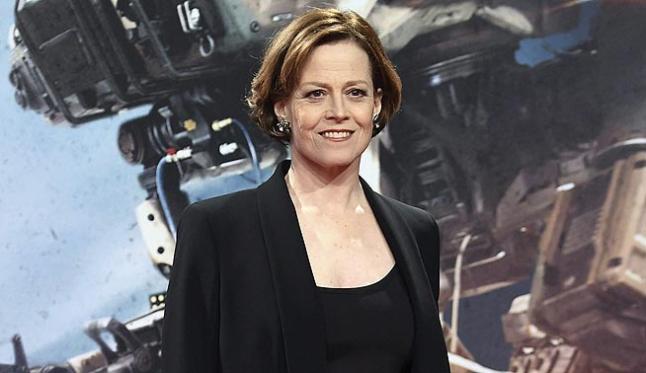
SIGOURNEY WEAVER, PIONEER HEROIN & SCI-FI QUEEN

Sigourney Weaver
Today, The Grandma has been at home watching some films of one of her favourite actresses, Sigourney Weaver, who was born on a day like today in 1949 and who is considered to be a pioneer of action heroines in science fiction films

The Grandma wants to homage Sigourney on her birthday remembering her life and career. 

The Grandma loves all Sigourney's roles, especially Ellen Ripley in Alien saga, Dian Fossey in Gorillas in the Mist and Dana Barrett in Ghostbusters saga. She also remembers her wonderful roles in movies like Copycat, Death and the Maiden, Dave and The Year of Living Dangerously.
 
Susan Alexandra "Sigourney" Weaver (born October 8, 1949) is an American actress. Dubbed The Sci-Fi Queen, Weaver is considered to be a pioneer of action heroines in science fiction films. She is primarily known for her role as Ellen Ripley in the Alien franchise. The role earned her an Academy Award nomination in 1986 and is often considered one of the most significant female protagonists in all of cinema.

Weaver received a Tony Award nomination for the 1984 Broadway play Hurlyburly. A seven-time Golden Globe Award nominee, in 1988 she won both Best Actress in Drama and Best Supporting Actress for her work in the films Gorillas in the Mist and Working Girl, becoming the first person to win two acting Golden Globes in the same year. She also received Academy Award nominations for both films. For her role in the film The Ice Storm (1997), she won the BAFTA Award for Best Actress in a Supporting Role.

Weaver's other popular works include Ghostbusters (1984), Ghostbusters II (1989), Galaxy Quest (1999), Holes (2003), WALL-E (2008), Avatar (2009), Prayers for Bobby (2009), Paul (2011), The Cabin in the Woods (2012), A Monster Calls (2016), and The Defenders (2017).

Sigourney Weaver
Weaver was born in Manhattan, New York City, the only daughter of Elizabeth Inglis, an actress, and NBC television executive and television pioneer Sylvester "Pat" Weaver (1908-2002). Her uncle, Doodles Weaver (1911-1983), was a comedian and actor. Her mother was English, from Colchester, Essex, and her father, who was American, had English, Scottish, Scots-Irish, and Dutch ancestry, including roots in New England. Weaver began using the name Sigourney Weaver in 1963 after a minor character (Mrs. Sigourney Howard, Jordan Baker's aunt) in Chapter 3 of F. Scott Fitzgerald's novel The Great Gatsby.

Weaver attended the Ethel Walker School, a girls' preparatory school in Simsbury, Connecticut. She also attended The Chapin School and The Brearley School. Sigourney was reportedly 179 cm tall by the age of 14, although she only grew another inch during her teens to her adult height of 182 cm. In 1967, at the age of 18, Weaver visited Israel and volunteered on a kibbutz for several months.

Weaver attended Sarah Lawrence College. In 1972, she graduated with a B.A. in English from Stanford University, where she first began her involvement in acting by living in Stanford's co-ed Beta Chi Community for the Performing Arts. 

More information: Just Fun Facts

Weaver earned her Master of Fine Arts degree at the Yale University School of Drama in 1974, where one of her appearances was in the chorus in a production of Stephen Sondheim's musical version of The Frogs, and another was as one of a mob of Roman soldiers alongside Meryl Streep in another production.

Weaver later acted in original plays by her friend and classmate Christopher Durang. She later appeared in an Off-Broadway production of Durang's comedy Beyond Therapy in 1981, which was directed by the up-and-coming director Jerry Zaks.

Weaver's first role is often said to be in Woody Allen's comedy Annie Hall (1977) playing a non speaking role opposite Allen.

Sigourney Weaver as Ellen Ripley in Alien
Weaver appeared two years later as Warrant Officer / Lieutenant Ripley in Ridley Scott's blockbuster film Alien (1979), in a role initially designated to co-star British-born actress, Veronica Cartwright, until a late change in casting. Cartwright stated to World Entertainment News Network (WENN) that she was in England ready to start work on Alien when she discovered that she would be playing the navigator Lambert in the project, and Weaver had been given the lead role of Ripley.

She reprised the role in the three sequels of the Alien movie franchise, Aliens, Alien 3 and Alien Resurrection. Ty Burr of The Boston Globe states, One of the real pleasures of Alien is to watch the emergence of both Ellen Ripley as a character and Sigourney Weaver as a star.

In the sequel Aliens directed by James Cameron, critic Roger Ebert wrote, Weaver, who is onscreen almost all the time, comes through with a very strong, sympathetic performance: She's the thread that holds everything together. She followed the success of Alien appearing opposite Mel Gibson in The Year of Living Dangerously released to critical acclaim and as Dana Barrett in Ghostbusters and Ghostbusters II.

By the end of the decade, Weaver appeared in two of her most memorable and critically acclaimed performances. In 1988, she starred as Dian Fossey in Gorillas in the Mist. The same year, she appeared opposite Harrison Ford in a supporting role as Katharine Parker in the film Working Girl.

More information: Daily Mail

Weaver won Golden Globe Awards for Best Actress and Best Supporting Actress for her two roles that year. She received two Academy Award nominations in 1988, for Best Supporting Actress for her role in Working Girl and Best Actress for Gorillas in the Mist.

She gave birth to her daughter Charlotte Simpson (born on April 13, 1990) taking a few years' break from the movie business and focusing on her family. She returned to the big screen with Alien 3 (1992) and Ridley's Scott's 1492: Conquest of Paradise (1992) in which she played the role of Queen Isabella. In the early 1990s, Weaver appeared in several films including Dave opposite Kevin Kline and Frank Langella.

In 1994, she starred in Roman Polanski's drama Death and the Maiden as Paulina Escobar. She played the role of agoraphobic criminal psychologist Helen Hudson in the movie Copycat (1995).

Sigourney Weaver
Throughout the 1990s decade, Weaver also concentrated on smaller and supporting roles such as Jeffrey (1994) with Nathan Lane and Patrick Stewart.

In 1997, she appeared in Ang Lee's The Ice Storm. Her role in The Ice Storm as Janey Carver, earned her another Golden Globe nomination for Best Supporting Actress (1997), and won her a BAFTA Award for Actress in a Supporting Role. In 1999, she co-starred in the science fiction comedy Galaxy Quest and the drama A Map of the World, earning her another Golden Globe nomination for Best Actress, for the latter film.

In 2001, Weaver appeared in the comedy Heartbreakers playing the lead role of a con-artist alongside Jennifer Love Hewitt, Ray Liotta, Gene Hackman and Anne Bancroft. She appeared in several films throughout the decade including Holes (2003), the M. Night Shyamalan horror film The Village (2004), Vantage Point (2008), and Baby Mama (2008).

In 2003, Weaver was voted Number 20 in Channel 4's countdown of the 100 Greatest Movie Stars of All Time, being one of only two women in the Top 20, the other was Audrey Hepburn at Number 13.

In 2007, Weaver returned to Rwanda for the BBC special Gorillas Revisited, in which Weaver reunites with the Rwandan apes from the film Gorillas in the Mist, some 20 years later.

More information: Parade

In 2009, Weaver starred as Mary Griffith in her first made-for-TV movie, Prayers for Bobby, for which she was nominated for an Emmy Award, Golden Globe Award, and Screen Actors Guild Award. She also made a rare guest appearance on television playing herself in season 2 episode of the television series Eli Stone in the fall of 2008. She reunited with Aliens director James Cameron for his film Avatar (2009), with Weaver playing a major role as Dr. Grace Augustine, leader of the AVTR (avatar) program on the film's fictional moon Pandora.

Weaver has done voice work in various television series and in animated feature films. In February 2002, she featured as a guest role in the Futurama episode Love and Rocket, playing the female Planet Express Ship.

In 2006, she was the narrator for the American version of the BBC Emmy Award-winning nature documentary series Planet Earth, with the original British series version was narrated by David Attenborough.

In 2008, Weaver was featured as the voice of the ship's computer in the Pixar and Disney release, WALL•E. In 2008, she voiced a narrating role in the computer-animated film, The Tale of Despereaux (2008), based on the novel by Kate DiCamillo. The film opens with Weaver as narrator recounting the story of the pastel-hued Kingdom of Dor.

Weaver as Dian Fossey in Gorillas in the Mist
Weaver has hosted two episodes of the long-running NBC sketch show Saturday Night Live: once on the 12th-season premiere in 1986, and again, on a season 35 episode in January 2010.

In March 2010, she was cast for the lead role as Queen of the Vampires in Amy Heckerling's Vamps. She was honored at the 2010 Scream Awards earning The Heroine Award which honored her work in science fiction, horror and fantasy films.

In May 2010, there were reports that Weaver had been cast for the lead role Margaret Matheson in the Spanish thriller film Red Lights.

In September 2011, it was confirmed that Weaver will be returning to Avatar 2, with James Cameron stating that no one ever dies in science fiction.

In 2014, he revealed that she would be featured in all three sequels. Weaver reprised the role of Ripley for the first time in 17 years by voicing the character in the video game Alien: Isolation. Her character has a voice cameo in the main story, and has a central role in the two DLCs set during the events of Alien, with most of the original cast voicing their respective characters.

Weaver appeared in the film Exodus: Gods and Kings (2014) playing Tuya, directed by Ridley Scott, alongside Christian Bale, Joel Edgerton and Ben Kingsley.

More information: The Guardian I & II

In 2015, she co-starred in Neill Blomkamp's science-fiction film Chappie, and stated that she would agree to appear in an Alien sequel, provided that Blomkamp directs. On February 18, 2015, it was officially announced that an Alien sequel will be made, with Blomkamp slated to direct. On February 25, 2015, Weaver confirmed that she would reprise her role as Ellen Ripley in the new Alien film.

On January 21, 2017, in response to a fan question on Twitter asking what the chances were of his Alien project actually happening, Blomkamp responded slim.

Principal photography for Avatar 2 and Avatar 3 started on September 25, 2017, with Weaver returning; however, she stated that she would portray a different, currently unknown character. She had to learn both free-diving and scuba diving for the film.

On June 7, 2019, Weaver confirmed that she will be reprising her role as Dana Barrett in Ghostbusters 2020 which is due for release in July 2020.

On September 23, 2019 Variety reported that Sigourney Weaver and Kevin Klein are set to reunite once more, after Dave and The Ice Storm, for The Good House, a drama from Steven Spielberg’s Amblin Partners and Universal Pictures.
 
After making Gorillas in the Mist, she became a supporter of the Dian Fossey Gorilla Fund and is now its honorary chairwoman. She was honored by the Explorers Club for this work. Weaver is considered to be an environmentalist.

In October 2006, she drew international attention through a news conference at the start of a United Nations General Assembly policy deliberation. She outlined the widespread threat to ocean habitats posed by deep-sea trawling, an industrial method for catching fish.

More information: The Telegraph


As an actor, the second and last ones were interesting for me.
Because those parts had the most change in playing someone
who was both light and dark, sort of Jekyl and Hyde.

Sigourney Weaver

Monday, 7 October 2019

EDGAR ALLAN POE, ROMANTICISM IN TERROR STORIES

Edgar Allan Poe
Today, The Grandma has received the visit of Jordi Santanyí, a closer friend. He is a great writer and they like talking together about Literature and authors.

Jordi has been explaining some interesting stories about Edgar Allan Poe, one of the best writers of the Universal Literature, who died on a day like today in 1849.

Edgar Allan Poe is best known for his poetry and short stories, particularly his tales of mystery and the macabre. The Grandma loves his novels and his writing style and she has searching some Poe's novels and audios to share with Jordi.

Edgar Allan Poe (born Edgar Poe; January 19, 1809-October 7, 1849) was an American writer, editor, and literary critic.

Poe is best known for his poetry and short stories, particularly his tales of mystery and the macabre. He is widely regarded as a central figure of Romanticism in the United States and of American literature as a whole, and he was one of the country's earliest practitioners of the short story.

He is generally considered the inventor of the detective fiction genre and is further credited with contributing to the emerging genre of science fiction. He was the first well-known American writer to earn a living through writing alone, resulting in a financially difficult life and career.

Poe was born in Boston, the second child of actors David and Elizabeth Arnold Hopkins Poe. His father abandoned the family in 1810, and his mother died the following year. Thus orphaned, the child was taken in by John and Frances Allan of Richmond, Virginia. They never formally adopted him, but he was with them well into young adulthood.

Tension developed later as John Allan and Edgar Poe repeatedly clashed over debts, including those incurred by gambling, and the cost of Poe's secondary education. He attended the University of Virginia but left after a year due to lack of money. Edgar Poe quarreled with John Allan over the funds for his education and enlisted in the Army in 1827 under an assumed name.

Edgar Allan Poe
It was at this time that his publishing career began with the anonymous collection Tamerlane and Other Poems (1827), credited only to a Bostonian.

Edgar Poe and John Allan reached a temporary rapprochement after the death of Frances Allan in 1829. Poe later failed as an officer cadet at West Point, declaring a firm wish to be a poet and writer, and he ultimately parted ways with John Allan.

Poe switched his focus to prose and spent the next several years working for literary journals and periodicals, becoming known for his own style of literary criticism. His work forced him to move among several cities, including Baltimore, Philadelphia, and New York City. He married his 13-year-old cousin, Virginia Clemm, in 1836. In January 1845, Poe published his poem The Raven to instant success, but Virginia died of tuberculosis two years after its publication.

Poe planned for years to produce his own journal The Penn, later renamed The Stylus, but he died before it could be produced. He died in Baltimore on October 7, 1849, at age 40; the cause of his death is unknown and has been variously attributed to alcohol, brain congestion, cholera, drugs, heart disease, rabies, suicide, tuberculosis, and other causes.

Poe and his works influenced literature around the world, as well as specialized fields such as cosmology and cryptography. He and his work appear throughout popular culture in literature, music, films, and television. A number of his homes are dedicated museums today. The Mystery Writers of America present an annual award known as the Edgar Award for distinguished work in the mystery genre.

More information: Poe Museum

He was born Edgar Poe in Boston on January 19, 1809, the second child of English-born actress Elizabeth Arnold Hopkins Poe and actor David Poe Jr. He had an elder brother William Henry Leonard Poe and a younger sister Rosalie Poe. Their grandfather David Poe Sr. emigrated from County Cavan, Ireland around 1750.

Edgar may have been named after a character in William Shakespeare's King Lear which the couple were performing in 1809. His father abandoned the family in 1810, and his mother died a year later from consumption (pulmonary tuberculosis). Poe was then taken into the home of John Allan, a successful merchant in Richmond, Virginia who dealt in a variety of goods, including tobacco, cloth, wheat, tombstones, and slaves. The Allans served as a foster family and gave him the name Edgar Allan Poe, though they never formally adopted him.

The Allan family had Poe baptized in the Episcopal Church in 1812. John Allan alternately spoiled and aggressively disciplined his foster son. The family sailed to Britain in 1815, and Poe attended the grammar school for a short period in Irvine, Scotland, where John Allan was born, before rejoining the family in London in 1816. There he studied at a boarding school in Chelsea until summer 1817. He was subsequently entered at the Reverend John Bransby's Manor House School at Stoke Newington, then a suburb 6 km north of London.

Edgar Allan Poe
Poe moved with the Allans back to Richmond, Virginia in 1820. In 1824, he served as the lieutenant of the Richmond youth honor guard as Richmond celebrated the visit of the Marquis de Lafayette.

In March 1825, John Allan's uncle and business benefactor William Galt died, who was said to be one of the wealthiest men in Richmond, leaving Allan several acres of real estate. The inheritance was estimated at $750,000, equivalent to $17,000,000 in 2018. By summer 1825, Allan celebrated his expansive wealth by purchasing a two-story brick home named Moldavia.

Poe may have become engaged to Sarah Elmira Royster before he registered at the University of Virginia in February 1826 to study ancient and modern languages. The university was in its infancy, established on the ideals of its founder Thomas Jefferson. It had strict rules against gambling, horses, guns, tobacco, and alcohol, but these rules were generally ignored.

Jefferson had enacted a system of student self-government, allowing students to choose their own studies, make their own arrangements for boarding, and report all wrongdoing to the faculty. The unique system was still in chaos, and there was a high dropout rate. During his time there, Poe lost touch with Royster and also became estranged from his foster father over gambling debts.

He claimed that Allan had not given him sufficient money to register for classes, purchase texts, and procure and furnish a dormitory. Allan did send additional money and clothes, but Poe's debts increased.

More information: The New Yorker

He gave up on the university after a year but did not feel welcome returning to Richmond, especially when he learned that his sweetheart Royster had married Alexander Shelton. He traveled to Boston in April 1827, sustaining himself with odd jobs as a clerk and newspaper writer, and he started using the pseudonym Henri Le Rennet during this period.

After his brother's death, Poe began more earnest attempts to start his career as a writer, but he chose a difficult time in American publishing to do so. He was one of the first Americans to live by writing alone and was hampered by the lack of an international copyright law.

American publishers often produced unauthorized copies of British works rather than paying for new work by Americans. The industry was also particularly hurt by the Panic of 1837. There was a booming growth in American periodicals around this time, fueled in part by new technology, but many did not last beyond a few issues. Publishers often refused to pay their writers or paid them much later than they promised, and Poe repeatedly resorted to humiliating pleas for money and other assistance.

Edgar Allan Poe
After his early attempts at poetry, Poe had turned his attention to prose. He placed a few stories with a Philadelphia publication and began work on his only drama Politian. The Baltimore Saturday Visiter awarded him a prize in October 1833 for his short story MS. Found in a Bottle

The story brought him to the attention of John P. Kennedy, a Baltimorean of considerable means. He helped Poe place some of his stories, and introduced him to Thomas W. White, editor of the Southern Literary Messenger in Richmond, Virginia.

Poe became assistant editor of the periodical in August 1835, but White discharged him within a few weeks for being drunk on the job. Poe returned to Baltimore where he obtained a license to marry his cousin Virginia on September 22, 1835, though it is unknown if they were married at that time. He was 26 and she was 13.

He was reinstated by White after promising good behavior, and he went back to Richmond with Virginia and her mother. He remained at the Messenger until January 1837. During this period, Poe claimed that its circulation increased from 700 to 3,500. He published several poems, book reviews, critiques, and stories in the paper.

More information: PBS

On May 16, 1836, he and Virginia held a Presbyterian wedding ceremony at their Richmond boarding house, with a witness falsely attesting Clemm's age as 21.

The Narrative of Arthur Gordon Pym of Nantucket was published and widely reviewed in 1838. In the summer of 1839, Poe became assistant editor of Burton's Gentleman's Magazine. He published numerous articles, stories, and reviews, enhancing his reputation as a trenchant critic which he had established at the Southern Literary Messenger. Also in 1839, the collection Tales of the Grotesque and Arabesque was published in two volumes, though he made little money from it and it received mixed reviews. Poe left Burton's after about a year and found a position as assistant at Graham's Magazine.

In June 1840, Poe published a prospectus announcing his intentions to start his own journal called The Stylus, although he originally intended to call it The Penn, as it would have been based in Philadelphia. He bought advertising space for his prospectus in the June 6, 1840 issue of Philadelphia's Saturday Evening Post: Prospectus of the Penn Magazine, a Monthly Literary journal to be edited and published in the city of Philadelphia by Edgar A. Poe. The journal was never produced before Poe's death.

More information: Mental Floss

Around this time, he attempted to secure a position within the administration of President Tyler, claiming that he was a member of the Whig Party. He hoped to be appointed to the Custom House in Philadelphia with help from President Tyler's son Robert, an acquaintance of Poe's friend Frederick Thomas.

Poe failed to show up for a meeting with Thomas to discuss the appointment in mid-September 1842, claiming to have been sick, though Thomas believed that he had been drunk. Poe was promised an appointment, but all positions were filled by others.

Edgar Allan Poe
One evening in January 1842, Virginia showed the first signs of consumption, now known as tuberculosis, while singing and playing the piano, which Poe described as breaking a blood vessel in her throat. She only partially recovered, and Poe began to drink more heavily under the stress of her illness. He left Graham's and attempted to find a new position, for a time angling for a government post. He returned to New York where he worked briefly at the Evening Mirror before becoming editor of the Broadway Journal, and later its owner. There he alienated himself from other writers by publicly accusing Henry Wadsworth Longfellow of plagiarism, though Longfellow never responded.

On January 29, 1845, his poem The Raven appeared in the Evening Mirror and became a popular sensation. It made Poe a household name almost instantly, though he was paid only $9 for its publication. It was concurrently published in The American Review: A Whig Journal under the pseudonym Quarles.

The Broadway Journal failed in 1846, and Poe moved to a cottage in Fordham, New York in what is now the Bronx. That home is now known as the Edgar Allan Poe Cottage, relocated to a park near the southeast corner of the Grand Concourse and Kingsbridge Road. Nearby, he befriended the Jesuits at St. John's College, now Fordham University. Virginia died at the cottage on January 30, 1847. Biographers and critics often suggest that Poe's frequent theme of the death of a beautiful woman stems from the repeated loss of women throughout his life, including his wife.

Poe was increasingly unstable after his wife's death. He attempted to court poet Sarah Helen Whitman who lived in Providence, Rhode Island. Their engagement failed, purportedly because of Poe's drinking and erratic behavior. There is also strong evidence that Whitman's mother intervened and did much to derail their relationship. Poe then returned to Richmond and resumed a relationship with his childhood sweetheart Sarah Elmira Royster.

On October 3, 1849, Poe was found delirious on the streets of Baltimore, in great distress, and… in need of immediate assistance, according to Joseph W. Walker who found him. He was taken to the Washington Medical College where he died on Sunday, October 7, 1849 at 5:00 in the morning. He was not coherent long enough to explain how he came to be in his dire condition and, oddly, was wearing clothes that were not his own. He is said to have repeatedly called out the name Reynolds on the night before his death, though it is unclear to whom he was referring. Some sources say that Poe's final words were Lord help my poor soul. All medical records have been lost, including his death certificate.

Newspapers at the time reported Poe's death as congestion of the brain or cerebral inflammation, common euphemisms for death from disreputable causes such as alcoholism. The actual cause of death remains a mystery. Speculation has included delirium tremens, heart disease, epilepsy, syphilis, meningeal inflammation, cholera, and rabies. One theory dating from 1872 suggests that cooping was the cause of Poe's death, a form of electoral fraud in which citizens were forced to vote for a particular candidate, sometimes leading to violence and even murder.


More information: Smithsonian

Poe's writing reflects his literary theories, which he presented in his criticism and also in essays such as The Poetic Principle. He disliked didacticism and allegory, though he believed that meaning in literature should be an undercurrent just beneath the surface. Works with obvious meanings, he wrote, cease to be art. He believed that work of quality should be brief and focus on a specific single effect. To that end, he believed that the writer should carefully calculate every sentiment and idea.

Poe describes his method in writing The Raven in the essay The Philosophy of Composition, and he claims to have strictly followed this method. It has been questioned whether he really followed this system, however. T. S. Eliot said: It is difficult for us to read that essay without reflecting that if Poe plotted out his poem with such calculation, he might have taken a little more pains over it: the result hardly does credit to the method. Biographer Joseph Wood Krutch described the essay as a rather highly ingenious exercise in the art of rationalization.

Eureka: A Prose Poem, an essay written in 1848, included a cosmological theory that presaged the Big Bang theory by 80 years, as well as the first plausible solution to Olbers' paradox. Poe eschewed the scientific method in Eureka and instead wrote from pure intuition. For this reason, he considered it a work of art, not science, but insisted that it was still true and considered it to be his career masterpiece. Even so, Eureka is full of scientific errors. In particular, Poe's suggestions ignored Newtonian principles regarding the density and rotation of planets.


More information: Archive


Deep into that darkness peering, 
long I stood there, wondering, fearing, doubting, 
dreaming dreams no mortal ever dared to dream before.

Edgar Allan Poe