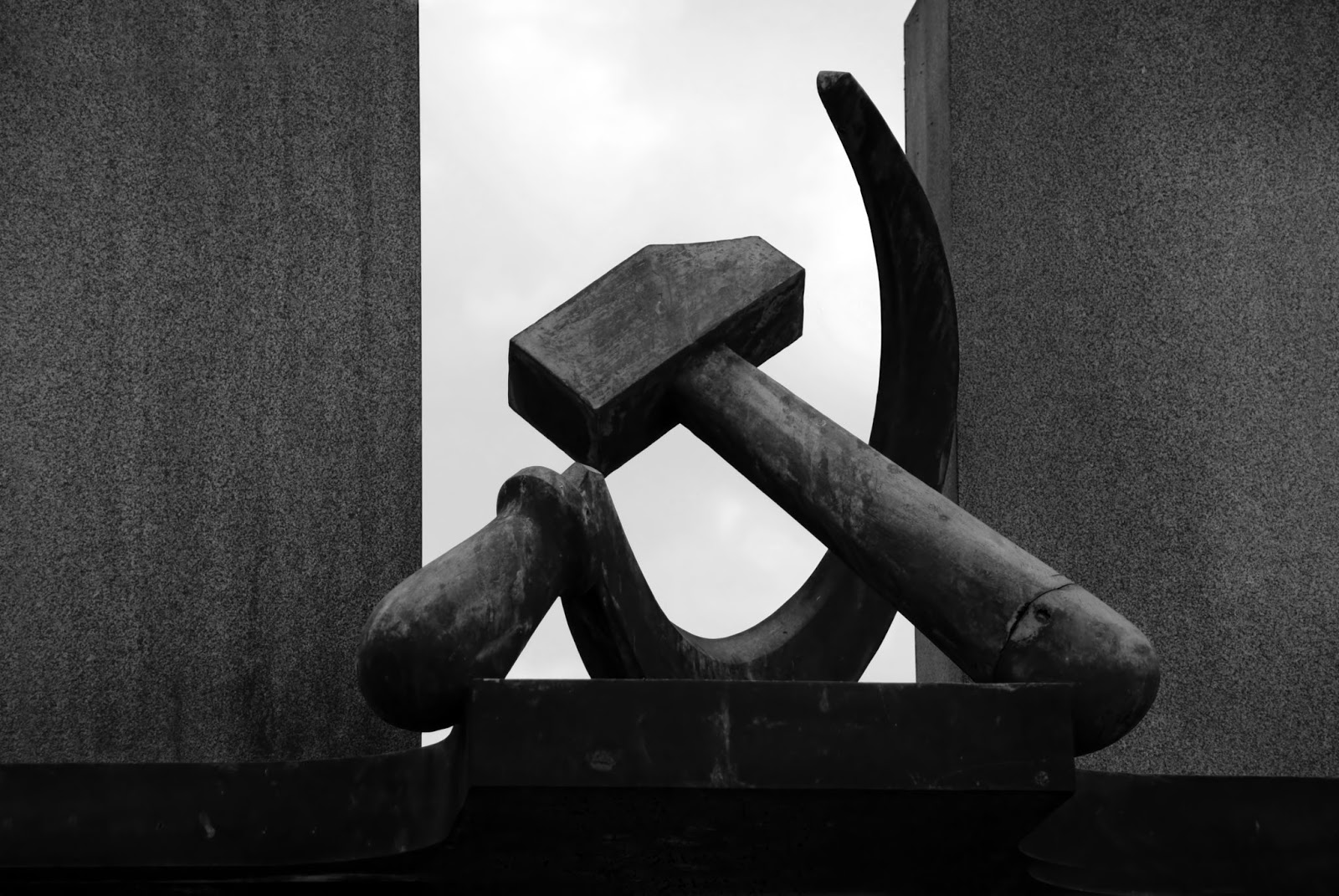
Showing posts with label Cold War. Show all posts

Saturday, 11 July 2026

WORLD CHESS CHAMPIONSHIP 1972, FISCHER VS SPASSKY

The Grandma loves chess. It is one of her great hobbies, and she always enjoys playing to relax and exercise her mind. She always carries her chessboard with her when she travels. She is an older woman, and although modern technology allows for virtual play, she prefers to lay out the board, set up the pieces, find a worthy opponent, and enjoy one of the most fascinating games in existence. With the high temperatures currently hitting Barcelona, ​​going out doesn't seem very appealing; so, The Grandma grabbed her board and headed to Can Deu in Les Corts to spend the day playing until well into the evening.

As it happens, today The Grandma and her playing partner found themselves reminiscing about the great 1972 chess match between the Soviet Boris Spassky and the American Bobby Fischer -a match that changed the world due to the political climate of the time.

Few sporting events have transcended their discipline in the way the 1972 World Chess Championship did. Held in Reykjavík, Iceland, between July 11 and September 1, the match brought together defending world champion Boris Spassky of the Soviet Union and challenger Bobby Fischer of the United States. Although officially a contest for the world's highest chess title, it quickly became a global cultural and political phenomenon, earning the enduring nickname The Match of the Century.

The championship represented much more than a battle between two extraordinary grandmasters. At the height of the Cold War, the encounter symbolized the ideological confrontation between East and West. For over two decades, the Soviet Union had dominated world chess, considering the game an expression of intellectual superiority and national prestige. Fischer, an unconventional American genius, sought not only to claim the title but also to end one of the longest periods of dominance in sporting history.

Since Mikhail Botvinnik became world champion in 1948, every holder of the world title had been Soviet. The USSR invested heavily in chess, establishing schools, training systems, and state-sponsored programs that produced an endless stream of elite players. Chess champions were celebrated as national heroes and symbols of Soviet intellectual achievement.

Boris Spassky became world champion in 1969 after defeating Tigran Petrosian. Unlike some of his predecessors, Spassky was admired for his universal playing style. He could attack brilliantly, defend patiently, and adapt to virtually any position. Calm, elegant, and highly respected, he entered the 1972 match as one of the strongest and most complete players in history.

Across the Atlantic stood Bobby Fischer, whose journey could hardly have been more different. Robert James "Bobby" Fischer had astonished the chess world from an early age. Becoming the youngest grandmaster in history at the time, he developed almost entirely outside the Soviet chess system. Largely self-taught, Fischer possessed an unmatched work ethic, exceptional memory, and an obsessive dedication to improving every aspect of his game.

By the early 1970s he had become the world's highest-rated player and was widely regarded as the strongest competitor outside the Soviet Union. Yet earning the right to challenge Spassky required surviving one of the toughest qualification cycles in chess history. Fischer's performances during the 1971 Candidates Matches remain among the greatest ever recorded.

He defeated Soviet grandmaster Mark Taimanov by an astonishing 6-0 score. Many observers considered such a result impossible between world-class players. Fischer then repeated the feat against Danish grandmaster Bent Larsen, winning another match 6-0. These victories shocked the chess community and demonstrated a level of dominance rarely seen in elite competition.

In the Candidates Final, Fischer faced former world champion Tigran Petrosian. Although Petrosian managed to end Fischer's remarkable twenty-game winning streak by taking one game, Fischer ultimately won the match convincingly and secured the right to challenge Spassky for the world title.

By 1972, anticipation had reached unprecedented levels. Despite enormous public interest, the championship almost never happened. Fischer was famous not only for his genius but also for his difficult personality and uncompromising demands. He repeatedly questioned tournament conditions, prize money, television arrangements, lighting, cameras, and playing facilities.

Negotiations became increasingly complicated. At one stage Fischer refused to travel to Iceland, prompting fears that he would forfeit the championship. The prize fund eventually doubled thanks to British financier James Slater, who dramatically increased the available money in hopes of saving the event. Even then Fischer delayed his arrival.

Only after intense negotiations -and reportedly personal encouragement from influential figures, including U.S. officials- did Fischer finally travel to Reykjavík. His late arrival transformed an already important sporting contest into an international media spectacle. The world watched to see whether the brilliant but unpredictable challenger would actually sit down at the chessboard. The opening game took place on July 11, 1972.

Initially, both players performed cautiously. However, Fischer unexpectedly captured a pawn on the edge of the board with his bishop -a move that many commentators immediately questioned. The decision proved disastrous. Instead of obtaining an advantage, Fischer found himself in an increasingly difficult position. Spassky converted his edge accurately and won the first game. Although losing the opening game was disappointing, what happened next became even more famous.

Before Game Two, Fischer renewed his complaints about television cameras, arguing that their noise distracted him. When organizers refused to remove them entirely, Fischer failed to appear. After waiting the required time, Spassky was awarded victory by forfeit. Suddenly the score stood at 2-0 in favor of the Soviet champion. Many experts believed the match was effectively over. Recovering from such a deficit against an opponent as experienced as Spassky seemed almost impossible. Some even expected Fischer to abandon the championship altogether. Instead, one of the greatest comebacks in sporting history began. To persuade Fischer to continue, organizers agreed to hold the third game in a small backstage room away from spectators and television cameras. Although the unusual arrangement generated controversy, it proved decisive. Playing with the black pieces, Fischer defeated Spassky for the first time ever in a tournament game.

The psychological balance of the match shifted dramatically. From that point onward Fischer displayed extraordinary confidence. His preparation in the openings surprised even Soviet analysts, while his tactical precision and endgame technique repeatedly placed Spassky under enormous pressure. The American gradually reduced the deficit before eventually taking the lead. Several games from the match entered chess history as masterpieces.

Game Six is often regarded as Fischer's finest performance in the entire championship. Playing White in the Queen's Gambit, he produced a positional masterpiece of remarkable elegance. His harmonious piece coordination, deep strategic understanding, and flawless technical execution left spectators and commentators astonished. Perhaps the greatest compliment came from Spassky himself.

After resigning, the Soviet champion joined the audience in applauding Fischer's extraordinary display -a gesture of sportsmanship that has become one of the most memorable moments in world chess. Throughout the remainder of the match Fischer continued to demonstrate remarkable versatility. He successfully employed openings that he had rarely used before, forcing the Soviet preparation to adapt continuously. His willingness to surprise opponents became one of his greatest competitive strengths. Meanwhile Spassky, despite moments of excellent play, increasingly struggled to regain momentum.

The 1972 championship was as much a psychological contest as a chess match. Fischer's unpredictable behavior constantly disrupted routines. His complaints about lighting, cameras, seating arrangements, audience noise, and even chessboard equipment created continual tension for organizers. Some observers believed these actions formed part of a deliberate psychological strategy. Others argued they reflected Fischer's genuine sensitivity to distractions and his perfectionist personality. Whatever the explanation, the controversy surrounding nearly every stage of the event ensured worldwide media attention.

Newspapers that had never previously covered chess devoted front-page articles to the match. Television broadcasts attracted millions of viewers who knew little about the game itself but were fascinated by the personalities involved. For many people, this was their first introduction to competitive chess. The championship cannot be understood without considering the political climate of the early 1970s. The Cold War shaped international relations, and every symbolic victory carried ideological significance.

For decades Soviet dominance in chess had been presented as evidence of the superiority of the Soviet educational and intellectual system. Consequently, Fischer's challenge attracted enormous political attention. Although neither player officially represented government policy, the public frequently viewed them as symbols of their respective nations. Western media portrayed Fischer as the lone individual confronting the vast Soviet chess machine. Soviet commentators emphasized Spassky's professionalism and experience while expressing confidence that the title would remain in Moscow.

The match therefore became far more than a sporting event. It evolved into a cultural confrontation watched by millions around the globe. As the championship progressed, Fischer steadily extended his advantage. Spassky continued fighting courageously, but the momentum had clearly shifted. Several games ended peacefully in draws, yet Fischer maintained firm control of the overall score. The twenty-first game, begun on August 31, proved decisive. Playing the black pieces, Fischer obtained a superior position after forty moves. As was customary under the rules of the time, play was adjourned overnight. Rather than returning the following day, Spassky carefully analyzed the position with his team and concluded that the game could no longer be saved. He resigned without resuming play. The final score stood at 12½–8½.

At twenty-nine years old, Bobby Fischer became the eleventh undisputed World Chess Champion and the first American-born player ever to win the title. His victory also ended twenty-four consecutive years of Soviet control over the World Championship. The impact of Fischer's triumph extended far beyond professional chess. Interest in the game exploded throughout the United States and many other countries. Chess sets sold in unprecedented numbers. Clubs experienced dramatic increases in membership, while newspapers expanded their chess columns. Schools introduced chess programs, and thousands of young players took up the game after following Fischer's achievement.

Publishers released books explaining his games and analyzing his brilliant ideas. For a brief period, chess became part of mainstream popular culture. This phenomenon became known as the Fischer Boom. Although the surge eventually slowed, its long-term influence remained significant, inspiring generations of players across the world. Despite the intense political atmosphere and Fischer's often controversial behavior, the relationship between the two competitors retained moments of genuine mutual respect.

Spassky consistently demonstrated dignity throughout the match, even under extraordinary pressure. His applause following Game Six became one of the defining images of sportsmanship in modern chess history. Years later, the two players would meet again in a rematch held in 1992, long after Fischer had disappeared from competitive chess. Although circumstances had changed dramatically, their rivalry remained one of the most celebrated in sporting history.

The 1972 World Championship has inspired numerous books, documentaries, films, and artistic works. The musical Chess, created by Tim Rice together with Benny Andersson and Björn Ulvaeus, drew inspiration from the dramatic rivalry between an American and a Soviet grandmaster. The documentary Bobby Fischer Against the World revisited the championship using archival footage and interviews. In 2014, the feature film Pawn Sacrifice, starring Tobey Maguire as Fischer and Liev Schreiber as Spassky, dramatized the events leading to the famous match. The championship has also appeared in television programs, historical documentaries, and countless analyses by chess historians. More than fifty years later, its influence continues to shape public perceptions of competitive chess.

The 1972 World Chess Championship remains unique in sporting history because it united exceptional chess with extraordinary historical circumstances

Bobby Fischer's brilliant play challenged an entire chess establishment that had dominated the game for nearly a quarter of a century. Boris Spassky, gracious in both victory and defeat, proved himself a champion whose sportsmanship matched his immense talent. Their encounter demonstrated that chess could capture the imagination of the entire world, transcending language, politics, and culture.

Today, the Reykjavík match is remembered not simply because a world title changed hands, but because it transformed chess from a specialized intellectual pursuit into a truly global spectacle. It remains one of the greatest championships ever played and a timeless reminder that a contest across sixty-four squares can sometimes reflect the tensions, ambitions, and hopes of an entire era.

More information: Sjakknyheter


 The place of chess in the society is closely related 
to the attitude of young people towards our game.

Boris Spassky

Tuesday, 30 June 2026

1990, EAST & WEST GERMANY MERGE THEIR ECONOMIES

Today, The Grandma has been reading about how East and West Germany merged their economies on a day like today in 1990. 

On 3 October 1990, Germany officially became one country again after more than forty years of division

The reunification of East and West Germany was one of the most significant events of the late twentieth century, symbolizing not only the end of Germany's post-war separation but also the collapse of the Cold War order that had shaped Europe since 1945. The story of reunification did not begin in 1990. Instead, it was the result of decades of political tension, ideological conflict, economic differences, and the determination of millions of ordinary people who dreamed of living in a united and democratic country. The fall of the Berlin Wall in November 1989 became the defining image of this transformation, but it was only one chapter in a much larger historical process.

When the Second World War ended in May 1945, Germany lay in ruins. Its cities had been devastated by bombing, millions of people had died, and the country faced political and economic collapse. The victorious Allied powers -the United States, the United Kingdom, France, and the Soviet Union- agreed that Germany should be occupied until its future could be decided.

The country was divided into four occupation zones, each administered by one of the Allied powers. Although Berlin was located deep inside the Soviet occupation zone, the city itself was also divided into four sectors.

At first, the Allies hoped to govern Germany jointly. However, growing disagreements between the Western Allies and the Soviet Union quickly made cooperation impossible. Their conflicting visions for Europe's future gradually transformed former allies into rivals.

By 1949, the political division had become permanent. The western occupation zones united to form the Federal Republic of Germany, commonly known as West Germany. It adopted a democratic political system, a market economy, and close ties with Western Europe and the United States.

A few months later, the Soviet occupation zone became the German Democratic Republic, or East Germany. Although its official name included the word "democratic," it was governed by a communist regime dominated by a single political party. The state controlled the media, education, and much of everyday life, while political opposition was heavily restricted.

From that point onward, Germany became one of the most visible symbols of the Cold War. Berlin represented the confrontation between East and West more clearly than any other city. People could initially move relatively freely between East and West Berlin. However, many East Germans used this opportunity to escape to West Germany, seeking greater political freedom and better economic prospects. By the early 1960s, millions had already left. To stop this mass emigration, East German authorities suddenly closed the border during the night of 12–13 August 1961 and began constructing the Berlin Wall.

The Wall was far more than a concrete barrier. It became a powerful symbol of ideological division. Guard towers, fences, anti-vehicle barriers, and heavily monitored border zones made escape extremely dangerous. Many people risked their lives attempting to cross, and numerous escape attempts ended in tragedy.

Families were separated overnight. Friends lost contact for decades. A city that had once functioned as a single community became physically and emotionally divided. During the following decades, East and West Germany developed in very different ways.

West Germany experienced rapid economic growth during the 1950s and 1960s, often called the economic miracle. Industrial production expanded, living standards improved dramatically, and democratic institutions became firmly established. The country also became one of the founding members of what would later become the European Union.

East Germany also rebuilt successfully in many respects. It developed strong industries, an extensive education system, and comprehensive social services. Compared with many other Eastern Bloc countries, it maintained a relatively high standard of living.

Nevertheless, the East German economy struggled with inefficiency and limited innovation. Consumer goods were often scarce, travel abroad was tightly restricted, and the secret police—the Stasi—maintained one of the world's most extensive surveillance systems. Many citizens lived with the knowledge that conversations, letters, and even friendships could be monitored.

The 1980s brought major changes across the Soviet Union and Eastern Europe. In 1985, Soviet leader Mikhail Gorbachev introduced reforms known as glasnost (openness) and perestroika (restructuring). These policies encouraged greater political transparency and attempted to modernize the Soviet economy. Perhaps even more important, Gorbachev signaled that the Soviet Union would no longer intervene militarily to preserve communist governments across Eastern Europe. This represented a dramatic departure from previous Soviet policy.

Across Eastern Europe, reform movements gained momentum. In Poland, independent trade unions challenged communist rule. Hungary began introducing political reforms and gradually opened its border with Austria.

These developments deeply influenced East Germans, many of whom increasingly questioned why their own government refused to change. Throughout 1989, public dissatisfaction continued to grow. Thousands of East Germans escaped through neighbouring countries, particularly Hungary, whose newly opened border offered an alternative route to the West. At the same time, peaceful demonstrations spread throughout East Germany. The largest became known as the Monday Demonstrations, especially in the city of Leipzig. Protesters demanded free elections, freedom of speech, freedom to travel, and democratic reforms. Remarkably, despite fears of violent repression, these protests remained overwhelmingly peaceful. As participation increased from hundreds to thousands and eventually hundreds of thousands of people, the East German government found it increasingly difficult to maintain control.

On 9 November 1989, events unfolded with astonishing speed. Following confusion over newly announced travel regulations, government spokesman Günter Schabowski mistakenly suggested during a televised press conference that East Germans could cross the border immediately.

Thousands of Berliners gathered at border crossings demanding passage. Border guards, lacking clear instructions and unwilling to use force against the growing crowds, eventually opened the checkpoints. People crossed freely for the first time in nearly three decades. Scenes of celebration spread around the world. Families embraced after years of separation. Strangers climbed onto the Wall, danced together, and began breaking pieces from the concrete with hammers and chisels.

The fall of the Berlin Wall quickly became one of the defining images of the twentieth century and demonstrated that political systems once thought permanent could collapse with remarkable speed.

Although the Wall had fallen, reunification was not automatic. Many difficult questions remained. Would a united Germany remain part of NATO? What would happen to Soviet troops stationed in East Germany? How would Germany's borders be guaranteed? Would neighbouring countries support reunification? The answers required careful diplomacy involving not only East and West Germany but also the four Allied powers that had occupied Germany after the Second World War.

These negotiations became known as the Two Plus Four talks: the two German states plus the United States, the United Kingdom, France, and the Soviet Union. After months of negotiations, agreements were reached concerning Germany's borders, military status, and full sovereignty. These agreements removed the final international obstacles to reunification.

Before political reunification, important economic steps had already been taken. On 1 July 1990, East Germany adopted the West German Deutsche Mark. For many East Germans, this represented immediate access to a stronger currency and greater purchasing power. However, the transition also exposed East German industries to intense competition from Western companies. Many state-owned enterprises proved unable to compete in a market economy. Factories closed, unemployment increased sharply, and entire regions experienced profound economic restructuring. Although living standards gradually improved over time, the transition proved far more difficult than many people had expected.

On 3 October 1990, East Germany officially ceased to exist. Its five federal states joined the Federal Republic of Germany under the existing West German constitution. Berlin once again became the capital of a united Germany. Across the country, celebrations marked what Germans now commemorate annually as the Day of German Unity. For millions, the event represented the realization of hopes that had seemed impossible only a year earlier.

Political reunification did not instantly eliminate decades of separation. East and West Germany had developed under entirely different political, economic, and social systems. Integrating these systems required enormous investment. The German government spent hundreds of billions of euros rebuilding infrastructure, modernizing transportation networks, renovating cities, and improving public services in eastern Germany. While these investments transformed many regions, economic differences persisted. Average incomes, employment opportunities, and business activity often remained lower in the eastern states than in the west. Many East Germans also experienced significant personal challenges. Some lost secure jobs that disappeared during privatization. Others struggled to adapt to a competitive market economy after decades of state planning. At the same time, many younger people moved westward in search of employment, contributing to population decline in some eastern communities.

Beyond economics, reunification involved merging two societies with distinct life experiences. People who had grown up on opposite sides of the Wall often held different memories, expectations, and perspectives. Terms such as Ossis (East Germans) and Wessis (West Germans) reflected stereotypes that sometimes complicated integration. Over time, these differences have gradually diminished, especially among younger generations.

Today, many Germans identify primarily with a united national identity while still recognizing the historical experiences that shaped different regions. German reunification transformed not only Germany but also Europe. The disappearance of the Iron Curtain accelerated European integration. Countries across Central and Eastern Europe gradually embraced democratic reforms and market economies. Many later joined both the European Union and NATO. A larger, democratic Germany became one of Europe's leading political and economic powers. Its commitment to European cooperation reassured neighbouring countries that had once feared German nationalism. Rather than pursuing dominance, reunified Germany generally emphasized partnership, diplomacy, and integration within European institutions.

More than three decades after reunification, Germany continues to reflect on its divided past. The remains of the Berlin Wall have been preserved as historical monuments. Museums, memorials, and educational programs help younger generations understand the realities of dictatorship, division, and peaceful democratic change.

Every year on 3 October, Germany celebrates the Day of German Unity, commemorating both the political achievement of reunification and the peaceful civic movements that made it possible. Historians often describe reunification as one of the greatest diplomatic successes of the late twentieth century. Unlike many major geopolitical transformations, it occurred largely without violence and through negotiation rather than war.

German reunification was far more than the merging of two states. It marked the end of one of history's most enduring political divisions and symbolized the collapse of the Cold War order in Europe.

The process was made possible by changing international politics, courageous political leadership, and, above all, the determination of ordinary citizens who demanded freedom through peaceful protest. Although reunification brought enormous economic, political, and social challenges, it also demonstrated that seemingly permanent divisions can be overcome through dialogue, democratic participation, and international cooperation.

Today, a united Germany stands as a reminder that history is not fixed. The peaceful reunification of a country once separated by walls, ideology, and global rivalry remains one of the defining achievements of modern European history and continues to inspire those who believe that reconciliation is possible even after decades of division.

More information: International Mission Board

I remember when the Berlin Wall fell 
and suddenly intractable problems get solved.

Lucy Walker

Tuesday, 12 April 2022

TOM CLANCY, AMERICAN NOVELS ABOUT THE COLD WAR

Today, The Grandma has been reading The Hunt for Red October, an interesting thriller novel written by Tom Clancy, the American novelist, who was born on a day like today in 1947.

Thomas Leo Clancy Jr. (April 12, 1947-October 1, 2013) was an American novelist. He is best known for his technically detailed espionage and military-science storylines set during and after the Cold War.

Seventeen of his novels have been bestsellers and more than 100 million copies of his books have been sold. His name was also used on movie scripts written by ghostwriters, nonfiction books on military subjects occasionally with co-authors, and video games. He was a part-owner of his hometown Major League Baseball team, the Baltimore Orioles of the American League, and vice-chairman of their community activities and public affairs committees.

Originally an insurance agent, his literary career began in 1984 when he sold his first military thriller novel The Hunt for Red October for $5,000 published by the small academic Naval Institute Press of Annapolis, Maryland.

His works The Hunt for Red October (1984), Patriot Games (1987), Clear and Present Danger (1989), and The Sum of All Fears (1991) have been turned into commercially successful films.

Tom Clancy's works also inspired games such as the Ghost Recon, Rainbow Six, The Division, and Splinter Cell series. Since Clancy's death in 2013, the Jack Ryan series has been continued by his family estate through a series of authors.

More information: Tom Clancy

Clancy was born on April 12, 1947, at Franklin Square Hospital in Baltimore, Maryland, and grew up in the Northwood neighborhood in northeast Baltimore. The family was Irish-American. He was the second of three children to Thomas Clancy, who worked for the United States Postal Service, and Catherine Clancy, who worked in a store's credit department. He was a member of Troop 624 of the Boy Scouts of America.

Clancy's mother worked to send him to the private Catholic secondary school taught by the Jesuit religious order (Society of Jesus), Loyola High School in Towson, Maryland, from which he graduated in 1965. He then attended the associated Loyola College (now Loyola University Maryland) in Baltimore, graduating in 1969 with a bachelor's degree in English literature. While at Loyola College, he was president of the chess club.

He joined the Army Reserve Officers' Training Corps; however, he was ineligible to serve due to his myopia (nearsightedness), which required him to wear thick eyeglasses.

After graduating, Clancy worked for an insurance company in Hartford, Connecticut.

In 1973, Clancy joined the O. F. Bowen Agency, a small insurance agency based in Owings, Maryland, founded by his wife's grandfather.

In 1980, he purchased the insurance agency from his wife's grandmother and wrote novels in his spare time. While working at the insurance agency, he wrote his debut novel, The Hunt for Red October (1984).

Clancy's literary career began in 1982 when he started writing The Hunt for Red October, which in 1984 he sold for publishing to the Naval Institute Press for $5,000.

More information: Publishers Weekly

The publisher was impressed with the work; Deborah Grosvenor, the Naval Institute Press editor who read through the book, said later that she convinced the publisher: I think we have a potential best seller here, and if we don't grab this thing, somebody else would. She believed Clancy had an innate storytelling ability, and his characters had this very witty dialogue.

Clancy, who had hoped to sell 5,000 copies, ended up selling over 45,000. After publication, the book received praise from President Ronald Reagan, who called the work the best yarn, subsequently boosting sales to 300,000 hardcover and 2 million paperback copies of the book, making it a national bestseller.

The book was critically praised for its technical accuracy, which led to Clancy meeting several high-ranking officers in the U.S. military including Steve Pieczenik, and to inspiration for reoccurring characters in his works.

Clancy's novels focus on the hero, most notably Jack Ryan and John Clark, both Irish Catholics like himself. He repeatedly uses the formula whereby the heroes are highly skilled, disciplined, honest, thoroughly professional, and only lose their cool when incompetent politicians or bureaucrats get in their way. Their unambiguous triumphs over evil provide symbolic relief from the legacy of the Vietnam War.

The Cold War epic Red Storm Rising (1986) was co-written, according to Clancy in the book's foreword, with fellow military-oriented author Larry Bond. The book was published by Putnam and sold almost a million copies within its first year.

Clancy became the cornerstone of a publishing list by Putnam which emphasized authors like Clancy who would produce annually. His publisher, Phyllis E. Grann, called these repeaters.

Clancy died on October 1, 2013, at Johns Hopkins Hospital, near his Baltimore home.

The Chicago Tribune quoted Pulitzer Prize-winning film critic and author Stephen Hunter as saying, When he published The Hunt for Red October, he redefined and expanded the genre, and as a consequence of that, many people were able to publish such books who had previously been unable to do so.

More information: The Guardian


The control of information is something the elite always does,
particularly in a despotic form of government.
Information, knowledge, is power.
If you can control information, you can control people.

Tom Clancy

Wednesday, 25 December 2019

M. GORBACHEV RESIGNS AS PRESIDENT OF THE USSR

USSR
Today is Christmas Day. The Grandma and her friends want to congratulate all people who celebrate this feast.

December, 25 is not only Christmas Day but an important day in recent European history. On a day like today in 1991, Mikhail Gorbachev resigned as President of the Soviet Union and the union itself was dissolved the next day. The Grandma wants to talk about this important event that changed the history of the world because of it was the end of the cold war and about Mikhail Gorbachev, an important figure in the USSR and in the European history.

Mikhail Sergeyevich Gorbachev (born 2 March 1931) is a Russian and formerly Soviet politician. The eighth and last leader of the Soviet Union, he was the general secretary of the Communist Party of the Soviet Union from 1985 until 1991.

He was also the country's head of state from 1985 until 1991, serving as Chairman of the Presidium of the Supreme Soviet from 1988 to 1989, Chairman of the Supreme Soviet from 1989 to 1990, and President of the Soviet Union from 1990 to 1991. Ideologically, he initially adhered to Marxism-Leninism although by the early 1990s had moved toward social democracy.

Of mixed Russian and Ukrainian heritage, Gorbachev was born in Privolnoye, Stavropol Krai to a poor peasant family. Growing up under the rule of Joseph Stalin, in his youth he operated combine harvesters on a collective farm before joining the Communist Party, which then governed the Soviet Union as a one-party state according to Marxist-Leninist doctrine. While studying at Moscow State University, he married fellow student Raisa Titarenko in 1953 prior to receiving his law degree in 1955.

Moving to Stavropol, he worked for the Komsomol youth organisation and, after Stalin's death, became a keen proponent of the de-Stalinization reforms of Soviet leader Nikita Khrushchev. He was appointed the First Party Secretary of the Stavropol Regional Committee in 1970, in which position he oversaw construction of the Great Stavropol Canal.

More information: The Cold War Museum

In 1978 he returned to Moscow to become a Secretary of the party's Central Committee and in 1979 joined its governing Politburo. Within three years of the death of Soviet leader Leonid Brezhnev, following the brief regimes of Yuri Andropov and Konstantin Chernenko, the Politburo elected Gorbachev as General Secretary, the de facto head of government, in 1985.

Although committed to preserving the Soviet state and to its socialist ideals, Gorbachev believed significant reform was necessary, particularly after the 1986 Chernobyl disaster. He withdrew from the Soviet-Afghan War and embarked on summits with United States President Ronald Reagan to limit nuclear weapons and end the Cold War.

Domestically, his policy of glasnost, openness allowed for enhanced freedom of speech and press, while his perestroika restructuring sought to decentralise economic decision making to improve efficiency. His democratisation measures and formation of the elected Congress of People's Deputies undermined the one-party state.

Mikhail Sergeyevich Gorbachev
Gorbachev declined to intervene militarily when various Eastern Bloc countries abandoned Marxist-Leninist governance in 1989-90. Internally, growing nationalist sentiment threatened to break up the Soviet Union, leading Marxist-Leninist hardliners to launch the unsuccessful August Coup against Gorbachev in 1991.

In the wake of this, the Soviet Union dissolved against Gorbachev's wishes and he resigned. After leaving office, he launched his Gorbachev Foundation, became a vocal critic of Russian Presidents Boris Yeltsin and Vladimir Putin, and campaigned for Russia's social-democratic movement.

Widely considered one of the most significant figures of the second half of the 20th century, Gorbachev remains the subject of controversy. The recipient of a wide range of awards -including the Nobel Peace Prize-he was widely praised for his pivotal role in ending the Cold War, curtailing human rights abuses in the Soviet Union, and tolerating both the fall of Marxist-Leninist administrations in eastern and central Europe and the reunification of Germany.

Conversely, in Russia he is often derided for not stopping the Soviet collapse, an event which brought a decline in Russia's global influence and precipitated an economic crisis.

Gorbachev's leadership style differed from that of his predecessors. He would stop to talk to civilians on the street, forbade the display of his portrait at the 1985 Red Square holiday celebrations, and encouraged frank and open discussions at Politburo meetings.

More information: The Gorbachev Foundation

To the West, Gorbachev was seen as a more moderate and less threatening Soviet leader; some Western commentators however believed this an act to lull Western governments into a false sense of security. His wife was his closest adviser, and took on the unofficial role of a first lady by appearing with him on foreign trips; her public visibility was a breach of standard practice and generated resentment. His other close aides were Georgy Shakhnazarov and Anatoly Chernyaev.

Gorbachev was aware that the Politburo could remove him from office, and that he could not pursue more radical reform without a majority of supporters in the Politburo. He sought to remove several older members from the Politburo, encouraging Grigory Romanov, Nikolai Tikhonov, and Viktor Grishin into retirement.

He moved Gromyko from his role in foreign policy to that of head of state and replaced Gromyko's former role with his own ally, Eduard Shevardnadze. Other allies whom he saw promoted were Yakovlev, Anatoly Lukyanov, and Vadim Medvedev. Another of those promoted by Gorbachev was Boris Yeltsin, who was made a Secretary of the Central Committee in July 1985.

Five key moments in the fall of the USSR
Most of these appointees were from a new generation of well-educated officials who had been frustrated during the Brezhnev era. In his first year, 14 of the 23 heads of department in the secretariat were replaced. Doing so, Gorbachev secured dominance in the Politburo within a year, faster than either Stalin, Khrushchev, or Brezhnev had achieved. In January 1987, Gorbachev attended a Central Committee plenum where he talked about perestroika and democratisation while criticising widespread corruption. He considered putting a proposal to allow multi-party elections into his speech, but decided against doing so.

After the plenum, he focused his attentions on economic reform, holding discussions with government officials and economists. Many economists proposed reducing ministerial controls on the economy and allowing state-owned enterprises to set their own targets; Ryzhkov and other government figures were sceptical.

In June, Gorbachev finished his report on economic reform. It reflected a compromise: ministers would retain the ability to set output targets but these would not be considered binding. That month, a plenum accepted his recommendations and the Supreme Soviet passed a law on enterprises implementing the changes.

Economic problems remained: by the late 1980s there were still widespread shortages of basic goods, rising inflation, and declining living standards. These stoked a number of miners' strikes in 1989.

By 1987, the ethos of glasnost had spread through Soviet society: journalists were writing increasingly openly, many economic problems were being publicly revealed, and studies appeared that critically reassessed Soviet history. Gorbachev was broadly supportive, describing glasnost as the crucial, irreplaceable weapon of perestroika.

He nevertheless insisted that people should use the newfound freedom responsibly, stating that journalists and writers should avoid sensationalism and be completely objective in their reporting. Nearly two hundred previously restricted Soviet films were publicly released, and a range of Western films were also made available. In 1989, Soviet culpability for the 1940 Katyn massacre was finally revealed. 

More information: Norwich University

In September 1987, the government stopped jamming the signal of the British Broadcasting Corporation and Voice of America.

The reforms also included greater tolerance of religion; an Easter service was broadcast on Soviet television for the first time and the millennium celebrations of the Russian Orthodox Church were given media attention.

Independent organisations appeared, most supportive of Gorbachev, although the largest, Pamyat, was ultra-nationalist and anti-Semitic in nature. Gorbachev also announced that Soviet Jews wishing to migrate to Israel would be allowed to do so, something previously prohibited. 

In February 1990, both liberalisers and Marxist-Leninist hardliners intensified their attacks on Gorbachev. A liberaliser march took part in Moscow criticising Communist Party rule, while at a Central Committee meeting, the hardliner Vladimir Brovikov accused Gorbachev of reducing the country to anarchy and ruin and of pursuing Western approval at the expense of the Soviet Union and the Marxist-Leninist cause.

Gorbachev was aware that the Central Committee could still oust him as General Secretary, and so decided to reformulate the role of head of government to a presidency from which they could not remove him. He decided that the presidential election should be held by the Congress of People's Deputies. He chose this over a public vote because he thought the latter would escalate tensions and feared that he might lose it; a spring 1990 poll nevertheless still showed him as the most popular politician in the country.

The New York Times announced the end of the USSR
At the 28th Communist Party Congress in July, hardliners criticised the reformists but Gorbachev was re-elected party leader with the support of three-quarters of delegates and his choice of Deputy General Secretary, Vladimir Ivashko, was also elected.

Seeking compromise with the liberalisers, Gorbachev assembled a team of both his own and Yeltsin's advisers to come up with an economic reform package: the result was the 500 Days programme. This called for further decentralisation and some privatisation.

Gorbachev described the plan as modern socialism rather than a return to capitalism but had many doubts about it. In September, Yeltsin presented the plan to the Russian Supreme Soviet, which backed it. Many in the Communist Party and state apparatus warned against it, arguing that it would create marketplace chaos, rampant inflation, and unprecedented levels of unemployment.

The 500 Days plan was abandoned. At this, Yeltsin rallied against Gorbachev in an October speech, claiming that Russia would no longer accept a subordinate position to the Soviet government.

By mid-November 1990, much of the press was calling for Gorbachev's resignation and predicting civil war. Hardliners were urging Gorbachev to disband the presidential council and arrest vocal liberals in the media.


In November, he addressed the Supreme Soviet where he announced an eight-point program, which included governmental reforms, among them the abolition of the presidential council. By this point, Gorbachev was isolated from many of his former close allies and aides. Yakovlev had moved out of his inner circle and Shevardnadze had resigned. His support among the intelligentsia was declining, and by the end of 1990 his approval ratings had plummeted.

Amid growing dissent in the Baltics, especially Lithuania, in January 1991 Gorbachev demanded that the Lithuanian Supreme Council rescind its pro-independence reforms. Soviet troops occupied several Vilnius buildings and clashed with protesters, 15 of whom were killed.

Gorbachev was widely blamed by liberalisers, with Yeltsin calling for his resignation. Gorbachev denied sanctioning the military operation, although some in the military claimed that he had; the truth of the matter was never clearly established. Fearing more civil disturbances, that month Gorbachev banned demonstrations and ordered troops to patrol Soviet cities alongside the police. This further alienated the liberalisers but was not enough to win-over hardliners.

Wanting to preserve the Union, in April Gorbachev and the leaders of nine Soviet republics jointly pledged to prepare a treaty that would renew the federation under a new constitution; six of the republics -Estonia, Latvia, Lithuania, Moldova, Georgia, and Armenia- did not endorse this. A referendum on the issue brought 76.4% in favour of continued federation but the six rebellious republics had not taken part. Negotiations as to what form the new constitution would take took place, again bringing together Gorbachev and Yeltsin in discussion; it was planned to be formally signed in August.

The fall of the USSR
On 30 October, Gorbachev attended a conference in Madrid trying to revive the Israeli–Palestinian peace process.

The event was co-sponsored by the U.S. and Soviet Union, one of the first examples of such cooperation between the two countries. There, he again met with Bush. En route home, he travelled to France where he stayed with Mitterrand at the latter's home near Bayonne. After the coup, Gorbachev continued to pursue plans for a new union treaty but found increasing opposition to the idea of a continued federal state as the leaders of various Soviet republics bowed to growing nationalist pressure. Yeltsin stated that he would veto any idea of a unified state, instead favouring a confederation with little central authority. Only the leaders of the Kazakhstan and Kirghizia supported Gorbachev's approach. On 1 December a referendum in Ukraine produced over 90% support for secession from the Union; Gorbachev had expected Ukrainians to reject independence.

Without Gorbachev's knowledge, Yeltsin met with Ukrainian President Leonid Kravchuk and Belarusian President Stanislav Shushkevich in Belovezha Forest, near Brest, Belarus, on 8 December and signed the Belavezha Accords, which declared the Soviet Union had ceased to exist and formed the Commonwealth of Independent States (CIS) as its successor.

Gorbachev only learned of this development when Shushkevich phoned him; Gorbachev was furious. He desperately looked for an opportunity to preserve the Soviet Union, hoping in vain that the media and intelligentsia might rally against the idea of its dissolution.

More information: Business Insider

Ukrainian, Belarussian, and Russian Supreme Soviets then ratified the establishment of the CIS. On 10 December, he issued a statement calling the CIS agreement illegal and dangerous. On 20 December, the leaders of 11 of the 12 remaining republics -all except Georgia– met in Alma-Ata and signed the Alma-Ata Protocol, agreeing to dismantle the Soviet Union and formally establish the CIS. They also provisionally accepted Gorbachev's resignation as president of what remained of the Soviet Union. Gorbachev revealed that he would resign as soon as he saw that the CIS was a reality.

Yeltsin was tasked with overseeing the transfer of power from Gorbachev to its successor states. He and Gorbachev agreed that the latter would formally announce his resignation as Soviet President and Commander-in-Chief on 25 December, before vacating the Kremlin by 29 December.

Yakovlev, Chernyaev, and Shevardnadze joined Gorbachev to help him write a resignation speech. Gorbachev then gave his speech in the Kremlin in front of television cameras, allowing for international broadcast. In it, he announced, I hereby discontinue my activities at the post of President of the Union of Soviet Socialist Republics.

He expressed regret for the breakup of the Soviet Union but cited what he saw as the achievements of his administration: political and religious freedom, the end of totalitarianism, the introduction of democracy and a market economy, and an end to the arms race and Cold War.

Gorbachev was only the second Soviet leader, after Khrushchev, not to die in office.

The Soviet Union officially ceased to exist at midnight on 31 December 1991.

More information: The Guardian


Sometimes it's difficult to accept, to recognise one's own mistakes,
but one must do it. I was guilty of overconfidence and arrogance,
and I was punished for that.

Mikhail Gorbachev

Sunday, 16 June 2019

RUDOLF NUREYEV & THE COLD WAR, DANCE TO FREEDOM

Rudolf Nureyev
Today, The Grandma is still playing with her new Space Invaders machine. She is a little exhausted after playing without stopping during hours and after having realized that the Anti Christ has returned to manage her current city during four more years. She is ready to fight against this cynic egocentric fake figure without surrender.

The Grandma has decided to watch something to relax herself and she has chosen some ballet performances of one of her two favourite dancers, Rudolf Nureyev -the other is Mikhail Baryshnikov.

Nureyev lived the years of the Cold War, the period of geopolitical tension between the Soviet Union with its satellite states (the Eastern Bloc), and the United States with its allies (the Western Bloc) after World War II. He defected from the Soviet Union on a day like today in 1961.

Rudolf Khametovich Nureyev, in Tatar Рудольф Хәмит улы Нуриев (17 March 1938-6 January 1993) was a Soviet ballet and contemporary dancer and choreographer.

Named Lord of the Dance, Nureyev is widely regarded as the greatest male ballet dancer of his generation.

Nureyev was born on a Trans-Siberian train near Irkutsk, Siberia, Soviet Union to a Tatar Muslim family. Nureyev began his early career with the Mariinsky Ballet in St. Petersburg.

He defected from the Soviet Union to the West in 1961, despite KGB efforts to stop him. This was the first defection of a Soviet artist during the Cold War and it created an international sensation.

He went on to dance with The Royal Ballet in London and from 1983 to 1989 served as director of the Paris Opera Ballet. In addition to his technical prowess, Rudolf Nureyev was an accomplished choreographer serving as the chief choreographer of the Paris Opera Ballet. He produced his own interpretations of numerous classical works, including Swan Lake, Giselle, and La Bayadère.


Rudolf Nureyev was born on a Trans-Siberian train near Irkutsk, Siberia, Soviet Union, while his mother, Farida, was travelling to Vladivostok, where his father Khamet, a Red Army political commissar, was stationed. He was raised as the only son with three older sisters in a Tatar Muslim family.

Rudolf Nureyev in 1961
When his mother took Nureyev and his sisters into a performance of the ballet Song of the Cranes, he fell in love with dance. As a child he was encouraged to dance in Bashkir folk performances and his precocity was soon noticed by teachers who encouraged him to train in Saint Petersburg, named as Leningrad 1924–1991.

On a tour stop in Moscow with a local ballet company, Nureyev auditioned for the Bolshoi ballet company and was accepted. However, he felt that the Mariinsky Ballet school was the best, so he left the local touring company and bought a ticket to St. Petersburg.

Owing to the disruption of Soviet cultural life caused by World War II, Nureyev was unable to enroll in a major ballet school until 1955, aged 17, when he was accepted by the Vaganova Academy of Russian Ballet of Saint Petersburg, the associate school of the Mariinsky Ballet. The ballet master Alexander Ivanovich Pushkin took an interest in him professionally and allowed Nureyev to live with him and his wife.

Upon his graduation in 1958, Nureyev joined the Kirov Ballet, now Mariinsky. He moved immediately beyond the corps level, and was given solo roles as a principal dancer from the outset. Rudolf Nureyev regularly partnered Dudinskaya, the company's senior ballerina and the wife of its director, Konstantin Sergeyev. Natalia Dudinskaya, 26 years his senior, chose him as her partner in the ballet Laurencia.

More information: BBC

Before long Rudolf Nureyev became one of the Soviet Union's best-known dancers. From 1958 to 1961, in his three years with the Mariinsky, he danced 15 roles, usually opposite his partner, Ninel Kurgapkina, with whom he was very well paired, although she was almost a decade older than he was.

Nureyev and Kurgapkina were invited to dance at a gathering at Khrushchev's dacha, and in 1959 they were allowed to travel outside the Soviet Union, dancing in Vienna at the International Youth Festival. Not long after, he was told by the Ministry of Culture that he would not be allowed to go abroad again. In one memorable incident, Nureyev interrupted a performance of Don Quixote for 40 minutes, insisting on dancing in tights and not in the customary trousers. He relented in the end, but his preferred dress code was adopted in later performances.

Rudolf Nureyev & Zizi Jeanmarie, 1966
By the late 1950s, Rudolf Nureyev had become a sensation in the Soviet Union.

Yet, as the Mariinsky Ballet was preparing to go on a tour to Paris and London, Nureyev's rebellious character and a non-conformist attitude made him an unlikely candidate for a trip to the West, which was to be of crucial importance to the Soviet government's ambitions to portray what they felt was their cultural supremacy. Furthermore, tensions between Rudolf Nureyev and the Mariinsky's artistic director Konstantin Sergeyev, husband and former dance partner of Natalia Dudinskaya, were growing. After a representative of the French tour organizers saw Nureyev dance in Leningrad in 1960, the French organizers urged Soviet authorities to let him dance in Paris, and he was allowed to go.

Nureyev was seen to have broken the rules about mingling with foreigners and allegedly frequented gay bars in Paris, which alarmed the Mariinsky's management and the KGB agents observing him. The KGB wanted to send him back to the Soviet Union.

More information: The Guardian

On 16 June 1961, the Mariinsky group had gathered at Le Bourget Airport in Paris to fly to London. Sergeyev then took Nureyev aside and told him that he would have to return to Moscow, for a special performance in the Kremlin. Nureyev became suspicious and refused. Next he was told that his mother had fallen severely ill and he needed to come home immediately to see her. Nureyev refused again, believing that on return to the USSR he was likely to be imprisoned. With the help of French police and a Parisian socialite friend -Clara Saint, who had been engaged to the son of the French Minister of Culture Andre Malraux- Nureyev got away from his KGB minders and asked for asylum. Sergeyev and the KGB tried to discuss it with him but he chose to stay in Paris.

Within a week, he was signed up by the Grand Ballet du Marquis de Cuevas and was performing The Sleeping Beauty with Nina Vyroubova. On a tour of Denmark he met Erik Bruhn, soloist at the Royal Danish Ballet who became his lover, his closest friend and his protector until Bruhn's death in 1986.


Soviet authorities made Nureyev's father, mother and dance teacher Pushkin write letters to him, urging him to return, without effect. Although he petitioned the Soviet government for many years to be allowed to visit his mother, he was not allowed to do so until 1987, when his mother was dying and Mikhail Gorbachev consented to the visit.

Rudolf Nureyev
In 1989, he was invited to dance the role of James in La Sylphide with the Mariinsky Ballet at the Mariinsky Theatre in St. Petersburg. The visit gave him the opportunity to see many of the teachers and colleagues he had not seen since his defection.

In 1982, Nureyev became a naturalized citizen of Austria. In 1983, he was appointed director of the Paris Opera Ballet, where, as well as directing, he continued to dance and to promote younger dancers. He remained there as a dancer and chief choreographer until 1989. His artistic directorship of the Paris Opera Ballet was a great success, lifting the company out of a dark period.

When AIDS appeared in France's news around 1982, Nureyev took little notice. The dancer tested positive for HIV in 1984, but for several years he simply denied that anything was wrong with his health. However, by the late 1980s his diminished capabilities disappointed his admirers who had fond memories of his outstanding prowess and skill. Nureyev began a marked decline only in the summer of 1991 and entered the final phase of the disease in the spring of 1992.

In March 1992, living with advanced AIDS, he visited Kazan and appeared as a conductor in front of the audience at Musa Cälil Tatar Academic Opera and Ballet Theater, which now presents the Rudolf Nureyev Festival in Tatarstan.


More information: The Irish Times

Returning to Paris, with a high fever, he was admitted to the hospital Notre Dame du Perpétuel Secours in Levallois-Perret, a suburb northwest of Paris, and was operated on for pericarditis, an inflammation of the membranous sac around the heart.

At that time, what inspired him to fight his illness was the hope that he could fulfill an invitation to conduct Prokofiev's Romeo and Juliet at an American Ballet Theatre benefit on 6 May 1992 at the Metropolitan Opera House in New York. He did so and was elated at the reception.

Rudolf Nureyev
In July 1992, Nureyev showed renewed signs of pericarditis but determined to forswear further treatment. His last public appearance was on 8 October 1992, at the premiere at Palais Garnier of a new production of La Bayadère that he choreographed after Marius Petipa for the Paris Opera Ballet.

Nureyev had managed to obtain a photocopy of the original score by Minkus when in Russia in 1989. The ballet was a personal triumph although the gravity of his condition was evident. The French Culture Minister, Jack Lang, presented him that evening on stage with France's highest cultural award, the Commandeur de l'Ordre des Arts et des Lettres.

Nureyev re-entered the hospital Notre Dame du Perpétuel Secours in Levallois-Perret on 20 November 1992 and remained there until his death from AIDS complications at age 54 on 6 January 1993.

His funeral was held in the marble foyer of the Paris Garnier Opera House. Many paid tributes to his brilliance as a dancer. One such tribute came from Oleg Vinogradov of the Mariinsky Ballet in Saint Petersburg, Russia, stating: What Nureyev did in the west, he could never have done here.

More information: Stars & Stripes

Nureyev's grave, at a Russian cemetery in Sainte-Geneviève-des-Bois near Paris, features a tomb draped in a mosaic of an oriental carpet. Nureyev was an avid collector of beautiful carpets and antique textiles. As his coffin was lowered into the ground, music from the last act of Giselle was played and his ballet shoes were cast into the grave along with white lilies.

After so many years of having been denied a place in the Mariinsky Ballet history, Nureyev's reputation was restored. His name was reentered in the history of the Mariinsky and some of his personal effects were placed on display at the theatre museum in St. Petersburg.

At the famed Vaganova Academy a rehearsal room was named in his honour. As of October 2013, the Centre National du Costume de Scene has a permanent collection of Nureyev's costumes that offers visitors a sense of his exuberant, vagabond personality and passion for all that was rare and beautiful. In 2015, he was inducted into the Legacy Walk.

At the Paris Opera there is a tradition to organize a dance night as homage to Rudolf Nureyev every ten years after he died in 1993. The homage to Nureyev was scheduled on 20 March 2003 and on 6 March 2013 respectively because he was born in March.

More information: English Heritage


For me, purity of movement wasn't enough.
I needed expression, more intensity, more mind.

Rudolf Nureyev