Friday, 14 October 2022

ANTHONY R. MCMILLAN, GOODBYE TO RUBEUS HAGRID

Today, The Grandma has received more sad news. Robbie Coltrane, the Scottish actor who played Rubeus Hagrid in Harry Potter saga has passed away.
 
The Grandma wants to talk about Coltrane, his career, and his unforgettable roles.

Anthony Robert McMillan (30 March 1950-14 October 2022), known professionally as Robbie Coltrane, was a Scottish actor and comedian. He gained worldwide recognition as Rubeus Hagrid in the Harry Potter film series (2001-2011), and as Valentin Dmitrovich Zukovsky in the James Bond films GoldenEye (1995) and The World Is Not Enough (1999).

He was appointed an OBE in the 2006 New Year Honours by Queen Elizabeth II for his services to drama.

In 1990, Coltrane received the Evening Standard British Film Award -Peter Sellers Award for Comedy.

In 2011, he was honoured for his outstanding contribution to film at the British Academy Scotland Awards.

Coltrane started his career appearing alongside Hugh Laurie, Stephen Fry, and Emma Thompson in the sketch series Alfresco (1983-1984).

In 1987, he starred in the BBC miniseries Tutti Frutti alongside Thompson, for which he received his first British Academy Television Award for Best Actor nomination. Coltrane then gained national prominence starring as criminal psychologist Dr. Eddie "Fitz" Fitzgerald in the ITV television series Cracker (1993-2006), a role which saw him receive the British Academy Television Award for Best Actor in three consecutive years (1994 to 1996).

In 2006, Coltrane came eleventh in ITV's poll of TV's 50 Greatest Stars, voted by the public.

In 2016 he starred in the four-part Channel 4 series National Treasure alongside Julie Walters, a role for which he received a British Academy Television Award nomination.

Coltrane appeared in two films for George Harrison's Handmade Films: the Neil Jordan neo-noir Mona Lisa (1986) with Bob Hoskins, and Nuns on the Run with Eric Idle. He also appeared in Kenneth Branagh's Shakespeare adaptation Henry V (1989), the comedy Let It Ride (1989), Roald Dahl's Danny, the Champion of the World (1989), Steven Soderbergh's crime-comedy thriller Ocean's Twelve (2004), Rian Johnson's caper film The Brothers Bloom (2008), Mike Newell's Dickens film adaptation Great Expectations (2012), and Emma Thompson's biographical film Effie Gray (2014). He was also known for his voice performances in the animated films The Tale of Despereaux (2008), and Pixar's Brave (2012).

More information: The Guardian

Coltrane was born Anthony Robert McMillan on 30 March 1950 in Rutherglen, Scotland, the son of Jean Ross Howie, a teacher and pianist, and Ian Baxter McMillan, a GP who also served as a forensic police surgeon. He had an older sister, Annie, and a younger sister, Jane.

Coltrane was the great-grandson of Scottish businessman Thomas W. Howie and the nephew of businessman Forbes Howie.

He started his education at Belmont House School in Newton Mearns before moving to Glenalmond College, an independent school in Perthshire. Though he later described his experiences there as deeply unhappy, he played for the rugby First XV, was head of the school's debating society, and won prizes for his art. He studied painting at the Glasgow School of Art.

Coltrane moved into acting in his early twenties, taking the stage name Coltrane and working in theatre and comedy. He appeared in the first theatre production of John Byrne's The Slab Boys, at the Traverse Theatre in Edinburgh (1978). His comic skills brought him roles in The Comic Strip Presents (1982-2012) serie and the comedy sketch show Alfresco (1983-1984).

In 1984, he appeared in A Kick Up the Eighties (Series 2) and Laugh??? I Nearly Paid My Licence Fee, and is credited as a writer for both.

Coltrane moved into roles in films such as Flash Gordon (1980), Death Watch (1980), Balham, Gateway to the South (1981), Scrubbers (1983), Krull (1983), The Supergrass (1985), Defence of the Realm (1985), Absolute Beginners (1986), Mona Lisa (1986), and appeared as "Annabelle" in The Fruit Machine (1988).

On television, he appeared in The Young Ones, Tutti Frutti (1987), as Samuel Johnson in Blackadder the Third (1987), LWT's The Robbie Coltrane Special (1989) (which he also co-wrote), and in other stand-up and sketch comedy shows. He played the part of Falstaff in Kenneth Branagh's Henry V (1989). He co-starred with Eric Idle in Nuns on the Run (1990) and played the Pope in The Pope Must Die (1991). He also played a would-be private detective obsessed with Humphrey Bogart in the TV film The Bogie Man (1992).
His roles continued in the 1990s with the TV series Cracker (1993-1996, returning in 2006 for a one-off special), in which he starred as forensic psychologist Dr. Edward "Fitz" Fitzgerald. The role won him three BAFTA awards.

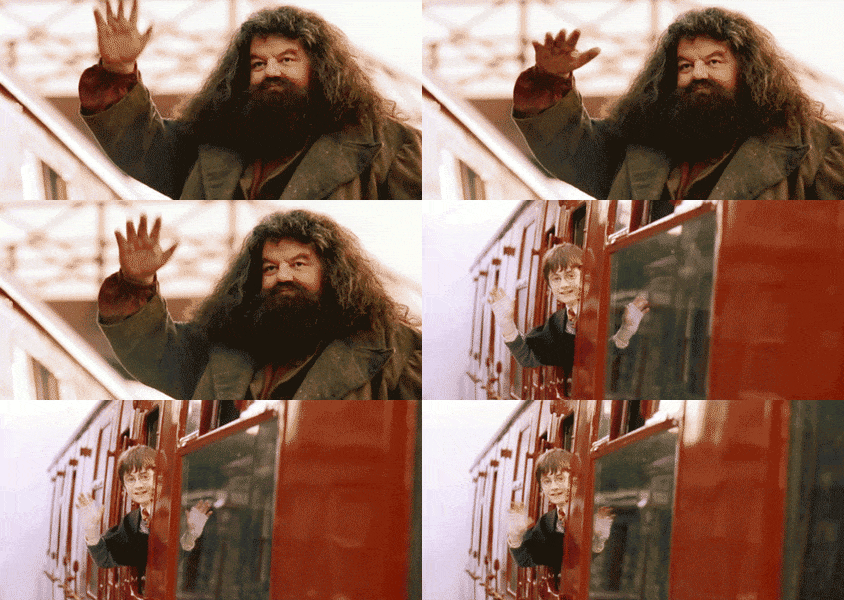
Roles in bigger films followed: the James Bond films GoldenEye (1995) and The World Is Not Enough (1999), a supporting role in From Hell (2001), as well as half-giant Rubeus Hagrid in the Harry Potter films (2001-2011). J. K. Rowling, author of the Harry Potter books, had Coltrane at the top of her list to play Hagrid and, when asked whom she would like to see in the role, responded Robbie Coltrane for Hagrid in one quick breath.

Coltrane also presented a number of documentary programmes for the British ITV network based around his twin passions for travel and transportation. 

Coltrane in a Cadillac (1993) saw him cross North America from Los Angeles to New York City behind the wheel of a 1951 Cadillac Series 62 coupe convertible, a journey of 6,059 km, which he completed in 32 days.

In 1997, Coltrane appeared in a series of six programmes under the title Coltrane's Planes and Automobiles, in which he extolled the virtues of the steam engine, the diesel engine, the supercharger, the V8 engine, the two-stroke engine, and the jet engine. In these programmes he dismantled and rebuilt several engines. He also single-handedly removed the engine from a Trabant car in 23 minutes.

More information: The Guardian

In September 2006, Coltrane was voted No. 11 in ITV's TV's 50 Greatest Stars and sixth in a poll of 2000 adults across the UK to find the most famous Scot, behind the Loch Ness Monster, Robert Burns, Sean Connery, Robert the Bruce, and William Wallace.

In August 2007, Coltrane presented a series for ITV called B-Road Britain, in which he travelled from London to Glasgow, stopping in towns and villages along the way.

Coltrane voiced characters in several animated films, including The Tale of Despereaux (2008) Pixar's Brave (2012), as well as the title roles of Gooby and The Gruffalo (both 2009).

In 2016, Coltrane starred in National Treasure, a four-part drama in which he played a former comedian accused of historic sexual offences. He was nominated for Best Actor at the 2017 British Academy Television Awards, and won in the category at the Royal Television Society Programme Awards.

Maureen Ryan of Variety wrote that Coltrane does a masterful job of depicting every nuance of the character, whose wicked sense of humor masks a startling, and possibly intentional, lack of self-awareness.

Coltrane suffered from osteoarthritis in later life. He said he was in constant pain all day in 2016, and from 2019 on he employed a wheelchair.

On 14 October 2022, Coltrane died at Forth Valley Royal Hospital in Larbert, Scotland at the age of 72.

More information: Rubeus Hagrid, Strong Honesty and Loyalty


What you do is get the right director
and the right screenwriter and the right cast.
It's a fantastic job.
 
Robbie Coltrane

Thursday, 13 October 2022

THE FIRST ELECTRON MICROGRAPH OF AN EBOLA VIRUS

Today, The Grandma has been reading about Ebola virus, the virus whose first electron micrograph was taken on a day like today in 1976.
 
Zaire ebolavirus, more commonly known as Ebola virus (EBOV), is one of six known species within the genus Ebolavirus.

Four of the six known ebolaviruses, including EBOV, cause a severe and often fatal hemorrhagic fever in humans and other mammals, known as Ebola virus disease (EVD).

Ebola virus has caused the majority of human deaths from EVD, and was the cause of the 2013-2016 epidemic in western Africa, which resulted in at least 28,646 suspected cases and 11,323 confirmed deaths.

Ebola virus and its genus were both originally named for Zaire (now the Democratic Republic of the Congo), the country where it was first described, and was at first suspected to be a new strain of the closely related Marburg virus.

The virus was renamed Ebola virus in 2010 to avoid confusion. Ebola virus is the single member of the species Zaire ebolavirus, which is assigned to the genus Ebolavirus, family Filoviridae, order Mononegavirales. The members of the species are called Zaire ebolaviruses.

The natural reservoir of Ebola virus is believed to be bats, particularly fruit bats, and it is primarily transmitted between humans and from animals to humans through body fluids.

The EBOV genome is a single-stranded RNA, approximately 19,000 nucleotides long. It encodes seven structural proteins: nucleoprotein (NP), polymerase cofactor (VP35), (VP40), GP, transcription activator (VP30), VP24, and RNA-dependent RNA polymerase (L).

Because of its high fatality rate (up to 83 to 90 percent), EBOV is also listed as a select agent, World Health Organization Risk Group 4 Pathogen (requiring Biosafety Level 4-equivalent containment), a US National Institutes of Health/National Institute of Allergy and Infectious Diseases Category A Priority Pathogen, US CDC Centers for Disease Control and Prevention Category A Bioterrorism Agent, and a Biological Agent for Export Control by the Australia Group.

More information: CDC

EBOV carries a negative-sense RNA genome in virions that are cylindrical/tubular, and contain viral envelope, matrix, and nucleocapsid components.

Each virion contains one molecule of linear, single-stranded, negative-sense RNA, 18,959 to 18,961 nucleotides in length. The 3′ terminus is not polyadenylated and the 5′ end is not capped. This viral genome codes for seven structural proteins and one non-structural protein. The gene order is 3′–leader–NP–VP35–VP40–GP/sGP–VP30–VP24–L–trailer–5′; with the leader and trailer being non-transcribed regions, which carry important signals to control transcription, replication, and packaging of the viral genomes into new virions. Sections of the NP, VP35 and the L genes from filoviruses have been identified as endogenous in the genomes of several groups of small mammals.

Ebola virus is a zoonotic pathogen. Intermediary hosts have been reported to be various species of fruit bats... throughout central and sub-Saharan Africa. Evidence of infection in bats has been detected through molecular and serologic means. However, ebolaviruses have not been isolated in bats.

End hosts are humans and great apes, infected through bat contact or through other end hosts. Pigs in the Philippines have been reported to be infected with Reston virus, so other interim or amplifying hosts may exist.

Ebola virus outbreaks tend to occur when temperatures are lower and humidity is higher than usual for Africa. Even after a person recovers from the acute phase of the disease, Ebola virus survives for months in certain organs such as the eyes and testes.

Zaire ebolavirus is one of the four ebolaviruses known to cause disease in humans. It has the highest case-fatality rate of these ebolaviruses, averaging 83 percent since the first outbreaks in 1976, although a fatality rate of up to 90 percent was recorded in one outbreak in the Republic of the Congo between December 2002 and April 2003. There have also been more outbreaks of Zaire ebolavirus than of any other ebolavirus.

More information: WHO


Think of the earth as a living organism
that is being attacked by billions of bacteria
whose numbers double every forty years.
Either the host dies, or the virus dies, or both die.

Gore Vidal

Wednesday, 12 October 2022

TYPHOON TIP, THE MOST INTENSE TROPICAL CYCLONE

Today, The Grandma has been reading about Typhoon Tip, that became the largest and most intense tropical cyclone ever recorded on a day like today in 1979.
 
Typhoon Tip, known in the Philippines as Typhoon Warling, was the largest and most intense tropical cyclone ever recorded.

The forty-third tropical depression, nineteenth tropical storm, twelfth typhoon, and third super typhoon of the 1979 Pacific typhoon season, Tip developed out of a disturbance within the monsoon trough on October 4 near Pohnpei in Micronesia. Initially, Tropical Storm Roger to the northwest hindered the development and motion of Tip, though after the storm tracked farther north, Tip was able to intensify. After passing Guam, Tip rapidly intensified and reached peak sustained winds of 305 km/h and a worldwide record-low sea-level pressure of 870 hPa on October 12.

At its peak intensity, Tip was the largest tropical cyclone on record, with a wind diameter of 2,220 km. Tip slowly weakened as it continued west-northwestward and later turned to the northeast, in response to an approaching trough. The typhoon made landfall in southern Japan on October 19, and became an extratropical cyclone shortly thereafter.

Tip's extratropical remnants continued moving east-northeastward, until they dissipated near the Aleutian Islands on October 24.

U.S. Air Force aircraft flew 60 weather reconnaissance missions into the typhoon, making Tip one of the most closely observed tropical cyclones. Rainfall from Tip indirectly led to a fire that killed 15 Marines and injured 68 at Combined Arms Training Center, Camp Fuji in the Shizuoka Prefecture of Japan. Elsewhere in the country, the typhoon caused widespread flooding and 42 deaths; offshore shipwrecks left 44 people killed or missing.

At the end of September 1979, three circulations developed within the monsoon trough that extended from the Philippines to the Marshall Islands.

More information: Hurricanes Science

Owing to very favorable conditions for development, Typhoon Tip rapidly intensified over the open waters of the western Pacific Ocean. Late on October 10, Tip attained wind speeds equal to Category 4 strength on the Saffir-Simpson Hurricane Scale (SSHS), and it became a super typhoon on the next day.

The central pressure dropped by 92 hPa from October 9 to 11, during which the circulation pattern of Typhoon Tip expanded to a record diameter of 2,220 km. Tip continued to intensify further, becoming a Category 5-equivalent super typhoon, and early on October 12, reconnaissance aircraft recorded a worldwide record-low pressure of 870 with 1-minute sustained winds of 305 km/h, when Tip was located about 840 km west-northwest of Guam.

In its best track, the Japan Meteorological Agency listed Tip as peaking with 10-minute sustained winds of 260 km/h. At the time of its peak strength, its eye was 15 km wide.

Tip crossed the 135th meridian east on the afternoon of October 13, prompting the PAGASA to issue warnings on Typhoon Tip, assigning it the local name Warling.

After peaking in intensity, Tip weakened to 230 km/h and remained at that intensity for several days, as it continued west-northwestward. For five days after its peak strength, the average radius of winds stronger than 55 km/h extended over 1,100 km.

On October 17, Tip began to weaken steadily and decrease in size, recurving northeastward under the influence of a mid-level trough the next day. After passing about 65 km east of Okinawa, the typhoon accelerated to 75 km/h.

Tip made landfall on the Japanese island of Honshū with winds of about 130 km/h on October 19. It continued rapidly northeastward through the country and became an extratropical cyclone over northern Honshū a few hours after moving ashore. The extratropical remnant of Tip proceeded east-northeastward and gradually weakened, crossing the International Date Line on October 22. The storm was last observed near the Aleutian Islands of Alaska on October 24.

Typhoon Tip was the largest tropical cyclone on record, with a diameter of 2,220 km -almost double the previous record of 1,130 km set by Typhoon Marge in August 1951. At its largest, Tip was nearly half the size of the contiguous United States. The temperature inside the eye of Typhoon Tip at peak intensity was 30 °C  and described as exceptionally high. With 10-minute sustained winds of 260 km/h, Typhoon Tip is the strongest cyclone in the complete tropical cyclone listing by the Japan Meteorological Agency.

More information: Scientific American


Typhoons are a sort of violent whirlwinds.
Before these whirlwinds come on...
there appears a heavy cloud to the northeast
which is very black near the horizon,
but toward the upper part is a dull reddish color.
The tempest came with great violence,
but after a while,
the winds ceased all at once and a calm succeeded.
This lasted... an hour, more or less,
then the gales were turned around,
blowing with great fury from the southwest.

William Dampier

Tuesday, 11 October 2022

MURDER, SHE WROTE. GOODBYE TO JESSICA FLETCHER

Today, The Grandma has received some sad news. Angela Lansbury, the English actress who played the role of Jessica Fletcher in Murder, She Wrote, has passed away.
 
The Grandma wants to remember Angela Lansbury and her role in this unforgettable work.
 
Murder, She Wrote is an American crime drama television series, created by Peter S. Fischer, Richard Levinson and William Link, starring Angela Lansbury, and produced and distributed by Universal Television for the CBS network.

The series focuses on the life of Jessica Fletcher, a mystery writer and amateur detective, who finds herself becoming involved in solving a series of murders that take place in the fictional town of Cabot Cove, Maine, as well as across the United States and abroad.

The program ran for 12 seasons from September 30, 1984 to May 19, 1996, for a total of 264 episodes, and included amongst its recurring cast Tom Bosley, William Windom and Ron Masak, as well as a vast array of guest cast members including Michael Horton, Keith Michell and Julie Adams.

The series proved a ratings hit during its broadcast, becoming a staple of CBS Sunday night TV schedule for around a decade, while achieving distinction as one of the most successful and longest-running television shows in history, averaging 25 million viewers per week in its prime.

In syndication, the series is still highly successful and popular throughout the world. For her role on the program, Lansbury was nominated for ten Golden Globes, winning four, along with nominations for 12 Emmy Awards, earning her the record for the most Golden Globe nominations and wins for Best Actress in a television drama series and the most Emmy nominations for Outstanding Lead Actress in a Drama Series. The series itself also received three Emmy nominations for Outstanding Drama Series, as well as six Golden Globe nominations in the same category, with two major wins.

More information: The Guardian

After the series finished in 1996, four television films were released between 1997 and 2003, with two point-and-click video games released for PC: one in 2009, and a sequel in 2012. A spin-off book series continues publication at present.

Series producers Peter S. Fischer, Richard Levinson and William Link developed the lead role for actress Jean Stapleton, who was initially somewhat interested but eventually turned it down, threatening the project.

Scrambling to find another major star, the producers thought Angela Lansbury would be perfect for the part of Jessica Fletcher but did not think that she would be interested in a television series. 

Earlier, she had acted in two film adaptations of Agatha Christie's mystery novels: as Salome Otterbourne in Death on the Nile (1978) and as Miss Marple in The Mirror Crack'd (1980). When the latter film did poorly -despite an all-star cast including Rock Hudson, Elizabeth Taylor, Kim Novak, and Tony Curtis- the offer for Lansbury to reprise Miss Marple in three more films never materialized.

When she made it known she would be available if the right project came along, the three creators sent her the script and almost immediately, Lansbury felt she could do something with the role of Jessica Fletcher. With Murder, She Wrote debuting on Sunday, September 30, 1984, the producers were able to parlay their mystery writer/amateur detective premise into a 12-year hit for CBS. It also made Lansbury, known previously for her motion picture and Broadway stage work, a household name for millions of television viewers. The title comes from Murder, She Said, which was the title of a 1961 film adaptation of Agatha Christie's Miss Marple novel 4:50 from Paddington.

The show revolves around the day-to-day life of Jessica Fletcher (née MacGill), a widowed and retired English teacher, who becomes a successful mystery writer. Despite fame and fortune, Jessica remains a resident of Cabot Cove, a small coastal community in Maine, and maintains her links with all of her old friends, never letting her success go to her head.

Murder, She Wrote was mostly filmed on sound stages at Universal Studios in Universal City, California (near Los Angeles). The series also filmed exterior shots and some episodes on location in the Northern California town of Mendocino, which stood in for the fictional Maine town of Cabot Cove.

More information: Angela Lansbury, Murder She Wrote in Honolulu


Mystery is something that appeals to most everybody.

Angela Lansbury

Monday, 10 October 2022

HENRY CAVENDISH & THE DISCOVERING OF HYDROGEN

Today, The Grandma has been reading about Henry Cavendish, the English natural philosopher and scientist, who was born on a day like today in 1731.  
 
Henry Cavendish (10 October 1731-24 February 1810) was an English natural philosopher and scientist who was an important experimental and theoretical chemist and physicist.

He is noted for his discovery of hydrogen, which he termed inflammable air. He described the density of inflammable air, which formed water on combustion, in a 1766 paper, On Factitious Airs. Antoine Lavoisier later reproduced Cavendish's experiment and gave the element its name.

A shy man, Cavendish was distinguished for great accuracy and precision in his researches into the composition of atmospheric air, the properties of different gases, the synthesis of water, the law governing electrical attraction and repulsion, a mechanical theory of heat, and calculations of the density (and hence the mass) of the Earth. 

His experiment to measure the density of the Earth (which, in turn, allows the gravitational constant to be calculated) has come to be known as the Cavendish experiment.

More information: Famous Scientists

Henry Cavendish was born on 10 October 1731 in Nice, where his family was living at the time. His mother was Lady Anne de Grey, fourth daughter of Henry Grey, 1st Duke of Kent, and his father was Lord Charles Cavendish, the third son of William Cavendish, 2nd Duke of Devonshire.

At the age of 18 (on 24 November 1748) he entered the University of Cambridge in St Peter's College, now known as Peterhouse, but left three years later on 23 February 1751 without taking a degree (at the time, a common practice). He then lived with his father in London, where he soon had his own laboratory.

Lord Charles Cavendish spent his life firstly in politics and then increasingly in science, especially in the Royal Society of London.

In 1758, he took Henry to meetings of the Royal Society and also to dinners of the Royal Society Club.

In 1760, Henry Cavendish was elected to both these groups, and he was assiduous in his attendance after that. He took virtually no part in politics, but followed his father into science, through his researches and his participation in scientific organisations. He was active in the Council of the Royal Society of London to which he was elected in 1765.

His interest and expertise in the use of scientific instruments led him to head a committee to review the Royal Society's meteorological instruments and to help assess the instruments of the Royal Greenwich Observatory. His first paper, Factitious Airs, appeared in 1766. Other committees on which he served included the committee of papers, which chose the papers for publication in the Philosophical Transactions of the Royal Society, and the committees for the transit of Venus (1769), for the gravitational attraction of mountains (1774), and for the scientific instructions for Constantine Phipps's expedition (1773) in search of the North Pole and the Northwest Passage.

More information: India Today

In 1773, Henry joined his father as an elected trustee of the British Museum, to which he devoted a good deal of time and effort. Soon after the Royal Institution of Great Britain was established, Cavendish became a manager (1800) and took an active interest, especially in the laboratory, where he observed and helped in Humphry Davy's chemical experiments.

Although others, such as Robert Boyle, had prepared hydrogen gas earlier, Cavendish is usually given the credit for recognising its elemental nature.

In 1777, Cavendish discovered that air exhaled by mammals is converted to fixed air (carbon dioxide), not phlogisticated air as predicted by Joseph Priestley. Also, by dissolving alkalis in acids, Cavendish produced carbon dioxide, which he collected, along with other gases, in bottles inverted over water or mercury. He then measured their solubility in water and their specific gravity, and noted their combustibility. He concluded in his 1778 paper General Considerations on Acids that respirable air constitutes acidity.

Cavendish was awarded the Royal Society's Copley Medal for this paper. Gas chemistry was of increasing importance in the latter half of the 18th century, and became crucial for Frenchman Antoine-Laurent Lavoisier's reform of chemistry, generally known as the chemical revolution.

Cavendish's electrical and chemical experiments, like those on heat, had begun while he lived with his father in a laboratory in their London house. Lord Charles Cavendish died in 1783, leaving almost all of his very substantial estate to Henry. Like his theory of heat, Cavendish's comprehensive theory of electricity was mathematical in form and was based on precise quantitative experiments.

Cavendish died at Clapham on 24 February 1810 (as one of the wealthiest men in Britain) and was buried, along with many of his ancestors, in the church that is now Derby Cathedral. The road he used to live on in Derby has been named after him. 

The University of Cambridge's Cavendish Laboratory was endowed by one of Cavendish's later relatives, William Cavendish, 7th Duke of Devonshire (Chancellor of the University from 1861 to 1891).

More information: MPRL Series


Henry Cavendish fixed the weight of the earth;
he established the proportions of the constituents of the air;
he occupied himself with the quantitative study of the laws of heat;
and lastly, he demonstrated the nature of water
and determined its volumetric composition.
Earth, air, fire, and water
-each and all came within the range of his observations.
 
Sir Thomas Edward Thorpe

Sunday, 9 October 2022

THE NASA'S LUNAR PRECURSOR ROBOTIC PROGRAM

Today, The Grandma has received the wonderful visit of one of her best friends, Joseph de Ca'th Lon. 

Joseph loves Astronomy and they have been talking about the Lunar Precursor Robotic Program, the NASA program that uses robotic spacecraft to prepare for future manned missions to the Moon, whose first lunar impact occurred on a day like today in 2009.

The Lunar Precursor Robotic Program (LPRP) is a NASA program that uses robotic spacecraft to prepare for future manned missions to the Moon. The program gathers data such as lunar radiation, surface imaging, areas of scientific interest, temperature and lighting conditions, and potential resource identification.

Two LPRP missions, the Lunar Reconnaissance Orbiter (LRO) and the Lunar Crater Observation and Sensing Satellite (LCROSS), were launched in June 2009. The lift-off above Cape Canaveral Air Force Station in Florida on June 18, 2009, was successful.

The uncrewed Atlas V rocket launched the two space probes towards the Moon, where they will provide a 3D map and search for water in conjunction with the Hubble Space Telescope.

The launch date, originally planned for October 2008, was moved to June 17, 2009, due to a postponement of the June 13, 2009 launch of the Space Shuttle Endeavour because a hydrogen fuel leak. This lunar program marked the first United States mission to the Moon in over ten years.

Neil Armstrong's first step on the Moon occurred on July 20, 1969, and this launch was 32 days before its 40th anniversary. The actual journey to the Moon took about four days. The LRO entered a low orbit around the Moon, while the LCROSS mission performed a swing-by and entered a different orbit to set up a collision with the Moon's surface several months later.

More information: NASA

The projected lunar impact of the Centaur and LCROSS spacecraft was on October 9, 2009, at 11:30 UT (7:30 a.m. EDT, 4:30 a.m. PDT), ± 30 minutes. The plume from the Centaur impact was predicted by NASA to be visible through telescopes with apertures as small as 300 mm.

Initially, the LPRP program was a part of the Science Mission Directorate of NASA (SMD) and was called the Robotic Lunar Exploration Program (RLEP). Management of the RLEP program was assigned to Goddard Space Flight Center (GSFC) in February, 2004. At that time, the Program's goal was to ...initiate a series of robotic missions to the Moon to prepare for and support future human exploration activities.

In 2005, responsibility for RLEP was moved to NASA's Exploration Systems Mission Directorate (ESMD) and management was assigned to the Ames Research Center (ARC). 

In 2006, the program was renamed the Lunar Precursor Robotic Program and management responsibility was reassigned to the Marshall Space Flight Center (MSFC). The US$583 million space mission comes equipped with a $504 million 1,900 kg LRO space probe and a $79 million LCROSS satellite.

The Lunar Reconnaissance Orbiter (LRO) is the first mission of the LPRP program. Management of the LRO was assigned to Goddard Space Flight Center (GSFC) in 2004. The LRO launched on an Atlas V 401 rocket from Cape Canaveral Air Force Station[11] on June 18, 2009, at 5:32 p.m. EDT (2132 GMT). The planned liftoff at 5:12 p.m. EDT (2112 GMT) was delayed by 20 minutes due to thunderstorms.

The LRO was scheduled to orbit the moon for one year, gathering high-resolution images of the lunar surface that would allow the creation of detailed maps. The LRO's goals included finding safe landing sites for human visits to the Moon, identifying lunar resources, studying the lunar radiation environment, and providing a 3D map of the Moon's surface to allow astronauts to return to the moon by 2020.

More information: NASA

The LRO carried seven main instruments, including the Cosmic Ray Telescope for the Effects of Radiation (CRaTER), the Diviner Lunar Radiometer Experiment (DLRE), the Lyman-Alpha Mapping Project (LAMP), the Lunar Exploration Neutron Detector (LEND), the Lunar Orbiter Laser Altimeter (LOLA), the Lunar Reconnaissance Orbiter Camera (LROC), and the Miniature Radio Frequency radar (Mini-RF).

The Lunar Crater Observation and Sensing Satellite (LCROSS) mission is to be launched with the LRO. It was selected as a secondary payload in 2006, and management of the program was assigned to Ames Research Center (ARC). The mission will explore a permanently shadowed region of a lunar pole by crashing the 1,000 kg spent Centaur rocket upper stage of the Atlas V launch vehicle into a dark crater. The composition of the ejecta plume will be observed by a shepherding spacecraft, which will itself crash-land 4 minutes later, creating a second plume. NASA expects the impact velocity will be over 9,000 km/h. The ejecta plume will weigh in the order of 350 tons and rise 9.7 km from the surface.

The Lunar Atmosphere and Dust Environment Explorer (LADEE) launched on September 7, 2013. LADEE studied the lunar exosphere and dust in the Moon's vicinity.

For a hypothetical International Lunar Network, NASA and international partners planned to land two stations on the lunar surface. Their objective was to establish a robotic set of geophysical monitoring stations on the surface and, eventually, in lunar orbit as well.

The Lunar Mapping and Modeling project is using the obtained data to develop detailed topographic maps of the lunar surface that support lunar science, exploration, commercial, educational, and public outreach activities. In addition, solar radiation levels will be mapped and modelled. These integrated data will be used by NASA to make decisions about, for example, lunar outpost designs.

More information: W3WE


Modern science says: 'The sun is the past,
the earth is the present, the moon is the future.'
From an incandescent mass we have originated,
and into a frozen mass we shall turn.
Merciless is the law of nature,
and rapidly and irresistibly we are drawn to our doom.

Nikola Tesla

Saturday, 8 October 2022

MATT PAIGE DAMON, ONE OF THE MOST BANKABLE STARS

Today, The Grandma has been watching some movies. She has chosen Matt Damon's ones, the American actor, film producer, and screenwriter, who was born on a day like today in 1970.

Matthew Paige Damon (born October 8, 1970) is an American actor, film producer, and screenwriter.

Ranked among Forbes' most bankable stars, the films in which he has appeared have collectively earned over $3.88 billion at the North American box office, making him one of the highest-grossing actors of all time.

He has received various awards and nominations, including an Academy Award and two Golden Globe Awards, in addition to nominations for three British Academy Film Awards, six Screen Actors Guild Awards, and seven Primetime Emmy Awards.

Damon began his acting career by appearing in high school theater productions. He made his professional acting debut in the film Mystic Pizza (1988). He continued acting in Courage Under Fire (1996) and The Rainmaker. He soon gained prominence in 1997 when he and Ben Affleck wrote and starred in Good Will Hunting, which won them the Academy and Golden Globe awards for Best Screenplay.

He attracted further praise from critics for his performances in Saving Private Ryan (1998), The Talented Mr. Ripley (1999), Syriana (2005), The Departed (2006), The Informant!, Invictus (both 2009), True Grit (2010), Contagion (2011), Downsizing (2017), Ford v Ferrari (2019), Stillwater, and The Last Duel (both 2021). He received the Golden Globe Award for Best Actor for his leading role as Mark Watney, an astronaut stranded on Mars, in The Martian (2015).

Damon is also known for his starring roles as Jason Bourne in the Bourne franchise (2002–2007; 2016), and as con man Linus Caldwell in the Ocean's trilogy (2001–2007; 2018). He also portrayed the fallen angel Loki in the View Askewniverse films Dogma (1999) and Jay and Silent Bob Reboot (2019), and Loki actor in the Marvel Cinematic Universe (MCU) films Thor: Ragnarok (2017) and Thor: Love and Thunder (2022).

More information: Kaufmann

He is also known for his performances in television, including his portrayal as Scott Thorson in the HBO biopic Behind the Candelabra (2013) for which he was nominated for the Primetime Emmy Award for Outstanding Lead Actor in a Limited Series or Movie.

He received Primetime Emmy Award for Outstanding Guest Actor in a Comedy Series nominations for his performances on 30 Rock in 2011 and Saturday Night Live in 2019. He also produced the reality series Project Greenlight (2001-2015) as well as the film Manchester by the Sea (2016).

Damon has performed voice-over work in both animated and documentary films, and has established two production companies with Affleck. He has been involved in charitable work with organizations including the ONE Campaign, H2O Africa Foundation, Feeding America, and Water.org.

Damon was born in Cambridge, Massachusetts on October 8, 1970, the second son of Kent Telfer Damon (1942-2017), a stockbroker, and Nancy Carlsson-Paige (b. 1946), an early childhood education professor at Lesley University.

His father had English and Scottish ancestry, while his mother is of Finnish and Swedish descent; her family surname had been changed from Pajari to Paige. Damon and his family moved to Newton for two years. His parents divorced when he was two years old, and he and his brother returned with their mother to Cambridge, where they lived in a six-family communal house. His brother, Kyle, is a sculptor and artist. As a lonely teenager, he has said that he felt he did not belong Due to his mother's by the book approach to child-rearing, he had a hard time defining his own identity.

Damon attended Cambridge Alternative School and Cambridge Rindge and Latin School, where he was a good student. He performed as an actor in several high school theater productions.

More information: GQ

Damon, alongside George Clooney, Brad Pitt, Don Cheadle, David Pressman, and Jerry Weintraub, is one of the founders of Not On Our Watch Project, an organization that focuses global attention and resources to stop and prevent mass atrocities such as in Darfur.

Damon supports One Campaign, which is aimed at fighting AIDS and poverty in Third World countries. He has appeared in their print and television advertising. He is an ambassador for ONEXONE, a nonprofit foundation committed to supporting, preserving, and improving the lives of children at home in Canada, the United States, and around the world.

Damon is a spokesperson for Feeding America, a hunger-relief organization, and a member of their Entertainment Council, participating in their Ad Council public service announcements. He is a board member of Tonic Mailstopper, a company that attempts to halt junk mail delivered to American homes each day.

Damon was the founder of the H2O Africa Foundation, the charitable arm of the Running the Sahara expedition, which merged with WaterPartners to create Water.org in July 2009.

Water.org has partnered with corporate sponsors to promote awareness and raise funds to support its mission of bringing safe, clean, cost-effective drinking water and sanitation to developing countries.

In this context, Damon has been the face of advertising campaigns to promote Water.org in conjunction with products from major sponsors.

More information: Look to the Stars


My mother is a professor of early childhood education.
When I was two she would say 
she knew I was going to be an actor.

Matt Damon