Showing posts with label Second Conditional. Show all posts

Thursday, 7 July 2022

'WELCOME TO NEW YORK' BY TAYLOR ALISON SWIFT

Today, The Grandma has been listening to some songs written by Taylor Swift, and she has enjoyed one of them, especially, "Welcome to New York".

Meanwhile, The Newtons have continued preparing their Cambridge Exam. They have studied the Second Conditional.

Taylor Alison Swift (born December 13, 1989) is an American singer-songwriter

Her discography spans multiple genres, and her narrative songwriting -often inspired by her personal life- has received critical praise and widespread media coverage. 

Born in West Reading, Pennsylvania, Swift moved to Nashville, Tennessee, at the age of 14 to pursue a career in country music. She signed a songwriting contract with Sony/ATV Music Publishing in 2004 and a recording deal with Big Machine Records in 2005, and released her eponymous debut studio album in 2006. 

"Welcome to New York" is a song by American singer-songwriter Taylor Swift, taken from her fifth studio album, 1989 (2014). 

The song was written and produced by both Swift and Ryan Tedder, with additional production from Noel Zancanella. It was released on October 20, 2014 as a promotional single for the album, through Big Machine Records. A synth-pop, disco, and electropop song equipped with pulsating synthesizers, it explores Swift's newfound freedom, inspired by her relocation to New York City in March 2014.

Contemporary music critics criticized the lyrics, arguing that the song lacks substance compared to popular New York tribute songs. A number of others defended the song, noting its mention of LGBT equality, and praised the production. 

The song reached the top 10 in New Zealand, and entered the top 20 of the charts in Canada, Hungary, and Scotland. In the United States, "Welcome to New York" reached number 48 on the Billboard Hot 100 and was certified platinum by the Recording Industry Association of America (RIAA).

More information: Taylor Swift

Swift donated all proceeds from the sales to the New York City Department of Education.

Walkin' through a crowd, the village is aglow
Kaleidoscope of loud heartbeats under coats
Everybody here wanted somethin' more
Searchin' for a sound we hadn't heard before
And it said

Welcome to New York, it's been waitin' for you
Welcome to New York, welcome to New York
Welcome to New York, it's been waitin' for you
Welcome to New York, welcome to New York

It's a new soundtrack, I could dance to this beat, beat forevermore
The lights are so bright, but they never blind me, me

Welcome to New York, it's been waitin' for you
Welcome to New York, welcome to New York

When we first dropped our bags on apartment floors
Took our broken hearts, put them in a drawer
Everybody here was someone else before
And you can want who you want
Boys and boys and girls and girls

Welcome to New York, it's been waitin' for you
Welcome to New York, welcome to New York
Welcome to New York, it's been waitin' for you
Welcome to New York, welcome to New York

It's a new soundtrack, I could dance to this beat, beat forevermore
The lights are so bright, but they never blind me, me

Welcome to New York (New York), it's been waitin' for you
Welcome to New York, welcome to New York

Like any great love, it keeps you guessing
Like any real love, it's ever-changing
Like any true love, it drives you crazy
But you know you wouldn't change anything, anything, anything

Welcome to New York, it's been waitin' for you
Welcome to New York, welcome to New York
Welcome to New York, it's been waitin' for you
Welcome to New York, welcome to New York

It's a new soundtrack, I could dance to this beat
The lights are so bright, but they never blind me

Welcome to New York (new soundtrack), it's been waitin' for you
Welcome to New York (the lights are so bright but they never blind me)
Welcome to New York (so bright, they never blind me)

Welcome to New York
Welcome to New York

More information: Song Facts

People haven't always been there for me,
but music always has.

Taylor Swift

Tuesday, 3 November 2020

BEYOND THE SEA AND NEVER AGAIN I WILL GO SAILING...

Today, The Stones have said goodbye to Hawaiian Islands and they have started a new trip destination Tierra del Fuego.
 
It has been a pleasure and a great experience visiting the Hawaiian Islands and they are sure they will return very soon because they are owners of a little part of them.

In that moment, the family is flying somewhere over the Ocean. Some of them are studying Second Conditional, other are watching Star Wars films or listening to music.

The Grandma is listening to Beyond the Sea, one of her favourite songs, one that talks about the sea and about travels without return.

Beyond the Sea is a 1945 contemporary pop romantic love song by Jack Lawrence, with music taken from the song La Mer by Charles Trenet.

Trenet had composed La Mer, which means the Sea, with French lyrics. It had some differences to the English-language version that Lawrence later wrote. Trenet's French version was a homage and ode to the changing moods of the sea, while Lawrence, by just adding one word Beyond to the title, gave him the start whereby he made the song into a love song.

More information: Second Conditional

Beyond the Sea has been recorded by many artists, but Bobby Darin's version released in late 1959 is the best known by many, reaching No. 6 on the Billboard Hot 100, No. 15 on the US R&B Chart, and No. 8 in the UK Singles Chart in early 1960.

Before Bobby Darin's, two recordings reached the Top 40 of the Billboard Hot 100. Benny Goodman's version charted in 1948, and was featured in the Cary Grant/Betsy Drake romantic comedy Every Girl Should Be Married. Roger Williams' recording reached No. 37 in 1955.

Deana Martin recorded Beyond the Sea in 2013. The song was released on her album, Destination Moon, in 2013 by Big Fish Records.

American R&B singer George Benson recorded an R&B version of the song under the title Beyond The Sea (La Mer). It was released on Warner Bros. This version entered the UK Singles Chart on 20 April 1985. It reached a peak position of no. 60 and remained on the chart for three weeks.

The first recording of Beyond the Sea was by Harry James and His Orchestra on December 22, 1947 and the first recording of La Mer was by French jazz musician Roland Gerbeau in December 1945.

More information: Bobby Darin


 It isn't true that you live only once. You only die once.
You live lots of times, if you know how.

Bobby Darin

Friday, 18 May 2018

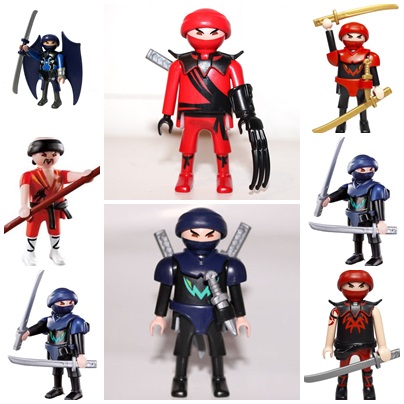
GEISHAS, NINJAS, HAIKUS AND ORIGAMIS IN MYORYUJI

Kanazawa District: samuaris, ninjas and geishas
Today, The Jones have visited Myōryū-ji in Kanazawa. They wanted to discover the world of ninjas and geishas, two of the most famous icons in the Japanese culture.

The family has visited this wonderful temple and have had enough time to revised the Second Conditional and talk about very interesting themes that affects the whole planet. Joaquín Jones have been talking about the smart green cities in Sweden and how this country is working in a sustainable model betting on renewable green energies. Marta Jones have explained the Spanish fraud with the renewable energies and how it has ruined hundreds of little investors and has affected the global public debt of this country.


 More information: Second Conditional

Finally, the family has read another chapter of Oscar Wilde's The Picture of Dorian Gray and they received the visit of some Japanese friends and altogether, they have written some haikus and have made some origamis before talking about an interesting theme: dinosaurs and its difficult names.


Some Jones at Myōryū-ji
Myōryū-ji, commonly known as Ninja-dera or Ninja Temple, is a Buddhist temple belonging to Nichiren sect located in the city of Kanazawa, Ishikawa. While not actually associated with ninjas, the temple earned its nickname because of its many deceptive defences.

Myoryuji is located in the Teramachi District in the south of the city. Populated by numerous temples, this area was originally located outside of the city limits as were the entertainment districts.

In 1585 Maeda Toshiie, the founding daimyō of Kaga Domain, built a chapel within Kanazawa Castle as a prayer place of Kaga Domain. In 1643, Maeda Toshitsune, the third daimyō of Kaga Domain, relocated the chapel to a new site in the Tera-machi district to the south of the castle, and ordered the construction of a full temple. The temple layout and location were part of the domain's defensive plans against a possible attack by the central government, Tokugawa shogunate.


More information: Myoryuji Temple

Since the Edo period Tokugawa shogunate imposed strict building restrictions as one way of weakening his regional lords, Myōryū-ji was designed to circumvent the restrictions and serve as a disguised military outpost. It was supplemented with considerable defensive features and escape routes, so that its defenders could alert the castle in the event of an attack. These iincluded hidden tunnels, secret rooms, traps, and a labyrinth of corridors and staircases.


Some Jones at Myōryū-ji
The Tokugawa shogunate prohibited construction of buildings higher than three stories. Viewed from the outside, the temple appears to be a two-story building, but actually it is a four-story building with seven-layer internal structure.

The temple is built around a central water well which is approximately 25 m deep; the bottom of the well is said to connect to a tunnel to Kanazawa Castle. The main building has a complicated layout which includes a middle floor and middle-middle floor, and contains 23 rooms and 29 staircases. There are different contrivances to fool the enemy such as hidden chambers and stairs, completely unexpected and reversible trap-like doors and floors, secret tunnels, escape pits. The lookout on the top affords a view of the surrounding area. In addition, the temple walls and roof are very strong and durable enough to withstand typhoons and heavy snow.


More information: Taiken

Since the shogun imposed strict building restrictions as one way of weakening his regional lords, Myoryuji was designed to circumvent the restrictions and serve as a disguised military outpost. It was built with considerable defences and escape routes, so that its defenders could alert the castle in the event of an attack.

The temple's defences aimed to guard against intruders or attack, and include hidden tunnels, secret rooms, traps, and a labyrinth of corridors and staircases.


More information: Hub Japan


 Fall down seven times, stand up eight.

Japanese Proverb


A ninja or shinobi was a covert agent or mercenary in feudal Japan. The functions of the ninja included espionage, sabotage, infiltration, assassination and guerrilla warfare. 

Their covert methods of waging irregular warfare were deemed dishonorable and beneath the samurai, who observed strict rules about honor and combat. The shinobi proper, a specially trained group of spies and mercenaries, appeared in the 15th century during the Sengoku period, but antecedents may have existed as early as the 12th century.

Ninja warriors
In the unrest of the Sengoku period (15th–17th centuries), mercenaries and spies for hire became active in the Iga Province and the adjacent area around the village of Kōga, and it is from the area's clans that much of our knowledge of the ninja is drawn. 

Following the unification of Japan under the Tokugawa shogunate (17th century), the ninja faded into obscurity. A number of shinobi manuals, often based on Chinese military philosophy, were written in the 17th and 18th centuries, most notably the Bansenshukai (1676).

By the time of the Meiji Restoration (1868), the tradition of the shinobi had become a topic of popular imagination and mystery in Japan. Ninja figured prominently in legend and folklore, where they were associated with legendary abilities such as invisibility, walking on water and control over the natural elements. As a consequence, their perception in popular culture is often based more on such legend and folklore than on the historically accurate spies of the Sengoku period.


More information: Thoughco


After the rain, earth hardens.

Ninja Proverb


Geisha are traditional Japanese female entertainers who act as hostesses. Their wide skills include performing various arts such as Japanese classical music and traditional dance, witty games and conversation, traditionally to entertain male customers, but also female customers today.

Some geishas
In the early stages of Japanese history, there were female entertainers: Saburuko, serving girls, were mostly wandering girls whose families were displaced from struggles in the late 600s. 

Some of these saburuko girls sold sexual services, while others with a better education made a living by entertaining at high-class social gatherings. 

After the imperial court moved the capital to Heian-kyō, Kyoto, in 794 the conditions that would form geisha culture began to emerge, as it became the home of a beauty-obsessed elite. Skilled female performers, such as Shirabyōshi dancers, thrived.

Traditional Japan embraced sexual delights, it is not a Shinto taboo, and men were not constrained to be faithful to their wives. The ideal wife was a modest mother and manager of the home; by Confucian custom love had secondary importance. 


More information: Toki Tojyo

For sexual enjoyment and romantic attachment, men did not go to their wives, but to courtesans. Walled-in pleasure quarters known as yūkaku  were built in the 16th century, and in 1617 the shogunate designated pleasure quarters, outside of which prostitution would be illegal, and within which yūjo, play women, would be classified and licensed. 

The highest yūjo class was the geisha's predecessor, called tayuu, a combination of actress and prostitute, originally playing on stages set in the dry Kamo riverbed in Kyoto. They performed erotic dances and skits, and this new art was dubbed kabuku, meaning to be wild and outrageous. The dances were called kabuki, and this was the beginning of kabuki theater.

More information: Historical Honey


Martial arts is just practice. Being a geisha requires complete control. 

Michelle Yeoh


Origami, from ori meaning folding, and kami meaning paper is the art of paper folding, which is often associated with Japanese culture. In modern usage, the word origami is used as an inclusive term for all folding practices, regardless of their culture of origin. 

The Jones & Kokeshis ready to make origamis
The goal is to transform a flat square sheet of paper into a finished sculpture through folding and sculpting techniques. Modern origami practitioners generally discourage the use of cuts, glue, or markings on the paper.  

Origami folders often use the Japanese word kirigami to refer to designs which use cuts, although cutting is more characteristic of Chinese papercrafts.

The small number of basic origami folds can be combined in a variety of ways to make intricate designs. The best-known origami model is the Japanese paper crane. In general, these designs begin with a square sheet of paper whose sides may be of different colors, prints, or patterns.


Traditional Japanese origami, which has been practiced since the Edo period (1603–1867), has often been less strict about these conventions, sometimes cutting the paper or using nonsquare shapes to start with. The principles of origami are also used in stents, packaging and other engineering applications.

More information: My Modern MET

Distinct paperfolding traditions arose in Europe, China, and Japan which have been well-documented by historians. These seem to have been mostly separate traditions, until the 20th century.

In Japan, the earliest unambiguous reference to a paper model is in a short poem by Ihara Saikaku in 1680 which mentions a traditional butterfly design used during Shinto weddings. Folding filled some ceremonial functions in Edo period Japanese culture; noshi were attached to gifts, much like greeting cards are used today. This developed into a form of entertainment; the first two instructional books published in Japan are clearly recreational.


More information: Smithsonian


My origami creations, in accordance with the laws of nature, require the use of geometry, science, and physics. They also encompass religion, philosophy, and biochemistry. Overall, I want you to discover 
the joy of creation by your own handthe possibility of creation 
from paper is infinite.
 
Akira Yoshizawa


The Jones have written some haikus dedicated to some members of the family for Ana Bean-Jones to wish a soon recovering; Silvia Jones to wish a great success in her exams; and Félix Jones and Rubén Jones to congratulate them for their successes in athletics and gymnastics.

To Ana Bean Jones:

Ana's very strong
She overcomes all bad things
She is our winner 

Haiku is a very short form of Japanese poetry.In Japanese haiku a kireji, or cutting word, typically appears at the end of one of the verse's three phrases. A kireji fills a role somewhat analogous to a caesura in classical western poetry or to a volta in sonnets. 

The Jones have written some dedicated haikus
Depending on which cutting word is chosen, and its position within the verse, it may briefly cut the stream of thought, suggesting a parallel between the preceding and following phrases, or it may provide a dignified ending, concluding the verse with a heightened sense of closure.

To Silvia Jones:

Silvia works hard
Tomorrow a great proof has
Good luck she will have

The fundamental aesthetic quality of both hokku and haiku is that it is internally sufficient, independent of context, and will bear consideration as a complete work. The kireji lends the verse structural support, allowing it to stand as an independent poem. 

The use of kireji distinguishes haiku and hokku from second and subsequent verses of renku; which may employ semantic and syntactic disjuncture, even to the point of occasionally end-stopping a phrase with a sentence-ending particle. However, renku typically employ kireji.

To Félix Jones:

He is the winner
Félix the happy boy is
The best runner is

In English, since kireji have no direct equivalent, poets sometimes use punctuation such as a dash or ellipsis, or an implied break to create a juxtaposition intended to prompt the reader to reflect on the relationship between the two parts.


To Rubén Jones:
 Rubén was training
to be a great champion
Now he is the best

The first haiku written in English was by Ezra Pound, In a Station of the Metro, published in 1913. Since then, the haiku has become a fairly popular form among English-speaking poets. English haiku can follow the traditional Japanese rules, but are frequently less strict, particularly concerning the number of syllables and subject matter.

More information: Web Exhibits


In eternity
We live. Come from.
Life is one Series of footprints.
 
Shashi

Friday, 16 February 2018

THE BEANS THINK IN UNCERTAIN THINGS: IF I WERE...

The Grandma drinking Tamarindo
After some hours resting and taking enough force to continue with their travel, this morning, The Beans have reviewed some English with Conditional and Second Conditional and have finished another chapter of Charles Dickens's Christmas Carol.

More information: Conditional

It has been another special day. Nereyda Bean has invited all the family to taste a delicious Dominican breakfast and the family has been talking about popular culture, lullabies, songs and the figure of the hobo in the American society and history.

The Grandma has talked about the importance of lyrics in the songs and how some songs have been able to pass the censorship and become in universal hymns of freedom and social rights. 

More information: Second Conditional

Finally, The Beans have been playing with one of the most incredible genius of the architecture, Antoni Gaudí, a referent, a symbol and a must.

This afternoon, the family has visited Fisherman's Wharf and Pier 39. Fisherman's Wharf is a neighborhood and popular tourist attraction in San Francisco. It roughly encompasses the northern waterfront area of San Francisco from Ghirardelli Square or Van Ness Avenue east to Pier 35 or Kearny Street. The F Market streetcar runs through the area, the Powell-Hyde cable car lines runs to Aquatic Park, at the edge of Fisherman's Wharf, and the Powell-Mason cable car line runs a few blocks away.

The Beans arriving to Fisherman's Wharf
Fisherman's Wharf gets its name and neighborhood characteristics from the city's early days of the mid to later 1800s when Italian immigrant fishermen came to the city by the bay to take advantage of the influx of population due to the gold rush. One, Achille Paladini, found success wholesaling local fish as owner of the Paladini Fish Company, and came to be known as the Fish King. Most of the Italian immigrant fishermen settled in the North Beach area close to the wharf and fished for the local delicacies and the now famed Dungeness crab. 

From then until the present day it remained the home base of San Francisco's fishing fleet. Despite its redevelopment into a tourist attraction during the 1970s and 1980s, the area is still home to many active fishermen and their fleets.

More information: Fisherman's Wharf

Pier 39 is a shopping center and popular tourist attraction built on a pier in San Francisco. At Pier 39, there are shops, restaurants, a video arcade, street performances, the Aquarium of the Bay, virtual 3D rides, and views of California sea lions hauled out on docks on Pier 39's marina. A two-story carousel is one of the pier's more dominant features, although it is not directly visible from the street and sits towards the end of the pier. The family-oriented entertainment and presence of marine mammals make this a popular tourist location for families with kids.

Tania Bean enjoying the sea lions at Pier 39
The pier is located at the edge of the Fisherman's Wharf district and is close to North Beach, Chinatown, and the Embarcadero. The area is easily accessible with the historic F Market streetcars.

From the pier one can see Angel Island, Alcatraz Island, the Golden Gate Bridge, and the Bay Bridge. Blue & Gold Fleet's bay cruises leave from Pier 39.

California sea lions have always been present in San Francisco Bay. They started to haul out on docks of Pier 39 in September 1989. Before that they mostly used Seal Rock for that purpose. Ever since September 1989 the number of sea lions on Seal Rock has been steadily decreasing, while their number on Pier 39 has generally increased. Some people speculate that sea lions moved to docks because of the 1989 Loma Prieta earthquake, but the earthquake occurred months after the first sea lions had arrived at Pier 39. It is likely that the sea lions feel safer inside the Bay.

More information: Pier 39


I didn't really start writing music or lyrics or turning them 
into songs until I went to San Francisco. 

Jello Biafra

Thursday, 16 February 2017

CHANSON FRANÇAISE: HYMN TO RESISTANCE SINCE 1945

The Bonds in the Arc de Triomphe de l'Étoile
Today, The Bonds have visited the Arc de Triomphe de l'Étoile, Champs Elysées and Jardin du Luxembourg to homage Mariona Bond.

They have continued practising Telephoning English, although today The Grandma was a little crossed with comas and she wasn't very fortunate with it. Later, they have revised Present Perfect with Since and For and they have created some sentences about Second Conditional.

More information: Present Perfect Simple

The family has done another exam. They have been talking about songs and their meanings, but, as we know, songs are poetry and poetry has a free interpretation. 


More information: Since / For

The Grandma has remembered some old friends who sing in French like Charles Aznavour, Édith Piaf, Charles Trenet, Jacques Brel and Céline Dion. They have also read Mary Shelley's Frankenstein.

Finally, the family has played with the works of a genius, Antoni Gaudí, who created an incredible architecture which can be understood from different points of view and this diversity of opinions and points of view makes us stronger and better.


Singing is a way of escaping. It's another world. 
I'm no longer on earth. 
Édith Piaf

Tuesday, 14 February 2017

CATHEDRALS, RESILIENCE AND RESISTANCE TO SHINE

Antoni Gaudí and the Sagrada Família
Today, The Bonds have visited some places in Paris like Notre-Dame and the Eiffel Tower. They have taken lots of photos and they have had enough time to practise some Telephoning English and Second Conditional

The family is working a lot and they need some time to rest and sum up all the information that they are receiving. They have written a little post about Columbus and have listened the interesting presentation of Mariona Bond who has talked about her new future project.  

After all, The Grandma has explained the importance of being the owner of your land during the Middle Age and its influence in our history from then to nowadays in the industrial evolution, and the importance of keeping strong in front of the worst moments to be ready to start a new hope when the moment arrives. 

More information: Second Conditional

Eusebi Güell in Park Güell
All generations have lived hard moments and have passed them resisting and creating the most incredible art, like old cathedrals, from Notre-Dame to the Sagrada Família, like masterpieces from Victor Hugo's Les Misérables to Salvador Espriu's Inici de Càntic en el Temple and being strong and perseverant from The Uffizis to The Medicis; from The Güells to The Bonds.

Tomorrow, The Grandma is going to take a free day to try to resolve some personal business meanwhile the family is continuing visiting the city of love and light which creates a magic triangle with Venice and Barcelona.

Life is not pink but The Bonds are going to offer their colour tone in the city of art and vanguards. We're ready to enjoy the city!


Who knows where the world may turn us, only a fool would say.
Who knows what the fates may have in store.
Follow the light of truth as far as our eyes can see.
How should we know where that may be? How should we know?

Then the angry skies, the battle cries, the sounds of glory,
and for all those years our eyes and ears were filled with tears.

La Sagrada Família the war is won the battle's over.
La Sagrada Família for the lion and the lamb.
La Sagrada Família we thank the lord the danger's over.
La Sagrada Família behold the mighty hand.
La Sagrada Família the night is gone the waiting's over.
La Sagrada Família there's peace throughout the land.

La Sagrada Família, Alan Parson Project 

Wednesday, 1 June 2016

BE SURE TO WEAR SOME FLOWERS IN YOUR HAIR

Yesterday, The Poppins continued with their English classes. They reviewed Countable & Uncountable nouns, something a little difficult to learn and understand. They also did some exercises about vocabulary and Second Conditional.


The day was like a normal one but The Grandma received some news from Barcelona. Something had happened with her business and she must pay attention to them. After talking with the family and explaining her situation, she listened to every member who wanted to reply her and she took as advice as she could. When you have a problem, the best solution is to share it with the rest of the family because they can be your best counsellors.

Finally, The Grandma decided to talk about public and private educational system with its pros and cons.

More information: PET Listening

Today, the family is continuing in San Francisco. They want to visit Chinatown, the bay with the Golden Gate Bridge and Alcatraz prison, which is now an important museum. 


One today is worth two tomorrows.

Benjamin Franklin

Tuesday, 31 May 2016

IF...? PREJUDICES? NO, THANKS. REAL INFORMATION.

Yesterday, The Poppins said goodbye to Australia. It has been a wonderful experience with lots of emotions and new partners. They’ve visited all the country and enjoyed new and old cultures.

Today, The Poppins have just arrived to San Francisco in California where they have a new mission. Before this, they’ve reviewed Second Conditional and some new exercises about plurals and countable and uncountable nouns. 

More information: Second Conditional

Moreover, The Grandma explained some controversial stories where prejudices were present and they weren’t good. It’s difficult to have an opinion about a story paying only attention to the official channel. There is sometimes another explanation which you can obtain off the record seeing and analysing these little details that we don’t see in the first moment.

The Grandma is very excited to be in San Francisco again and she wants to visit some old friends from Berkeley University and think about her old hippie friends who wanted to change the world and created one of the best folk music generations.


The media's the most powerful entity on earth. 
They have the power to make the innocent guilty 
and to make the guilty innocent, and that's power. 
Because they control the minds of the masses.
Malcolm X

Saturday, 20 February 2016

THE TUBE: HISTORICAL SUBWAY

The Holmes in Tower Bridge, London
Yesterday, The Holmes reviewed Second Conditional, Past Simple, Past Continuous, Adverbs of Manner and Prepositions. They took The Tube and travelled round London visiting the most important places. They also read a little more about Charles DickensA Christmas Carol.

Moreover, they received new manuals to work PET Exam and practise Phrasal Verbs.

On Thursday, they had visited London Eye where they took lots of photos and they continued practising Social English and Present Perfect Continuous.

More information: Urban Dictionary

Today, they’ve visited Tower Bridge and British Museum where they’ve enjoyed Art and History.


Monday, 15 February 2016

HOLMES... WE ARE THE DREAM!

Good Luck, Holmes!
Last Saturday, The Holmes stayed in Belgium. They participated in the Eurovision Song Contest where they won the first prize with the song “Idiot” played by Geni & Núria Holmes.

Before this, on Friday, they had visited Lîdje and Brugge in the Flemish Belgium where they had been reviewing English, in that case, Second Conditional, Past Simple and Prepositions of Time. Moreover, all the family decided to play Bingo and Poker and talked about ancient languages.


On Sunday, The Grandma had an introspective day and decided to do nothing except thinking and thinking while the rest of the family was visiting museums and important buildings. Manoli Holmes saw how her dream became real visiting Hercule, the famous detective, while Rosa Holmes was having tea with Audrey, an actress who she admires a lot. The rest of the family were visiting some cafés and eating chocolate without stopping, while Carmen and Asun Holmes were remembering old times in the High School with an incredible teacher: Maria Mercè.

More information: Second Conditional Exercises

Today, The Holmes have continued their English classes reviewing Second Conditional, Modal Verbs, Present Simple and Relative Pronouns (Whose). It has been a hard day for the most part of the members of this wonderful family but they’ve done a great work, like always.

More information: Prepositions of Time Exercises 

Tomorrow, they’re going to study Perfect Tenses and they are going to walk around London to discover this fantastic city hometown of Peter Pan, Mary Poppins and Harry Potter.


We are the dream.

 Muriel Casals i Couturier

Sunday, 17 May 2015

GOODBYE EDINBURGH, WELCOME LONDON!

The Holmes visit Edinburg, Scotland
After visiting some incredible places in Edinburgh, the Scottish capital, like Arthur’s Seat, Royal Mile, Princess Street, Calton Hill or the Castle, and some other Scottish places, where The Addams Family has enjoyed its wonderful people, like Connor MacLeod; they went to Inverness to meet Nessie in Loch Ness. It wasn’t possible and then, they flew to London, the English capital, where they’ve spent some days.

They’ve visited emblematic places like Piccadilly Circus, Trafalgar Square, Westminster Abbey, The Houses of the Parliament, the London Eye, Saint Paul’s Cathedral, Tower Bridge and the Tower of London and they went to meet the Queen, a Grandma’s friend, who had invited all the family to take some tea in Buckingham Palace.

It has been an interesting trip to improve their English and join to The Collins who received them in their majestic mansion, Downton Abbey. They have talked about environment and gender equality and they've done their first KET exams, too. It has been an intense week.

More information: First & Second Conditional

In a few days, the family is going to travel to Venice and Rome where they will continue its adventures and stories.


When you hear someone from the very north of Scotland speaking,
I think it's nice, very musical and harmonious.

Sean Connery