Showing posts with label Humphrey Bogart. Show all posts

Wednesday, 3 May 2023

LAUREN BACALL, DISTINCTIVE VOICE AND SULTRY LOOKS

Today, The Grandma has been watching some classic films. She has enjoyed a lot especially with Murder on the Orient Express, the film based on the book of Agatha Christie that includes incredible performances in its 1974 version. One of the actresses of this masterpiece is Lauren Bacall.
 
The Grandma loves her films and she has wanted to watch some of them to homage this wonderful actress who was born in The Bronx, New York City. Lauren Bacall is a legend of arts and cinema, a great actress with an interesting career and amazing live. 
 
Lauren Bacall (born Betty Joan Perske; September 16, 1924-August 12, 2014) was an American actress known for her distinctive voice and sultry looks. She was named the 20th-greatest female star of classic Hollywood cinema by the American Film Institute and received an Academy Honorary Award from the Academy of Motion Picture Arts and Sciences in 2009 in recognition of her central place in the Golden Age of motion pictures.

Bacall began her career as a model before making her film debut as a leading lady in To Have and Have Not (1944). She continued in the film noir genre with appearances with Humphrey Bogart in The Big Sleep (1946), Dark Passage (1947), and Key Largo (1948), and she starred in the romantic comedies How to Marry a Millionaire (1953) with Marilyn Monroe and Betty Grable, and Designing Woman (1957) with Gregory Peck. She co-starred with John Wayne in his final film The Shootist (1976) by Wayne's personal request. She also worked on Broadway in musicals, earning Tony Awards for Applause (1970) and Woman of the Year (1981). She won a Golden Globe Award and was nominated for an Academy Award for her performance in The Mirror Has Two Faces (1996).
 
More information: Biography

Lauren Bacall was born Betty Joan Perske on September 16, 1924, in The Bronx, New York City, the only child of Natalie (née Weinstein; 1901–1977), a secretary who later legally changed her surname to Bacal, and William Perske (1889–1982), who worked in sales. Both her parents were Jewish. According to Bacall, her mother emigrated from Iași, the Kingdom of Romania, through Ellis Island, and her father was born in New Jersey to parents who were born in Valozhyn, a significant center of Jewish life, in present-day Belarus, then in the Russian Empire.

In 1941, Bacall took lessons at the American Academy of Dramatic Arts in New York, where she was classmates with Kirk Douglas, while working as a theatre usher at the St. James Theatre and fashion model.

She made her acting debut on Broadway in 1942, at age 17, as a walk-on in Johnny 2 X 4. By then, she lived with her mother at 75 Bank Street, and in 1942, she was crowned Miss Greenwich Village.

As a teenage fashion model, she appeared on the cover of Harper's Bazaar, as well as in magazines such as Vogue. She was noted for her cat-like grace, tawny blonde hair, and blue-green eyes.

The Harper's Bazaar cover caught the attention of Hollywood producer and director Howard Hawks' wife Slim, who urged Hawks to have Bacall take a screen test for To Have and Have Not.

After meeting Bacall in Hollywood, Hawks immediately signed her to a seven-year contract, with a weekly salary of $100, and personally began to manage her career. He changed her first name to Lauren, and she chose Bacall (a variant of her mother's maiden name) as her screen surname.

After To Have and Have Not, Bacall was seen opposite Charles Boyer in Confidential Agent (1945), which was poorly received by critics. By her own estimation, it could have caused considerable damage to her career, but her next performance as the mysterious, acid-tongued Vivian Rutledge in Hawks's film noir The Big Sleep (1946), co-starring Bogart, provided a quick career resurgence.

Bacall was cast with Bogart in two more films. In Dark Passage (1947), another film noir, she played an enigmatic San Francisco artist.  And, in 1948, she was in John Huston's melodramatic suspense film Key Largo with Bogart, Edward G. Robinson and Lionel Barrymore.

Bacall turned down scripts she did not find interesting, and thereby earned a reputation for being difficult. Despite this, she further solidified her star status in the 1950s by appearing as the leading lady in a string of films that won favorable reviews.

Bacall was cast opposite Gary Cooper in Bright Leaf (1950). In the same year, she played a two-faced femme fatale in Young Man with a Horn (1950), a jazz musical co-starring Kirk Douglas, Doris Day, and Hoagy Carmichael.

From 1951 to 1952, Bacall co-starred with Bogart in the syndicated action-adventure radio series Bold Venture.

In 1953, she starred in the CinemaScope comedy How to Marry a Millionaire, a runaway hit among critics and at the box office. Directed by Jean Negulesco and co-starring Marilyn Monroe and Betty Grable, Bacall got positive notices for her turn as the witty gold-digger, Schatze Page.

In 1955, a television version of Bogart's breakthrough film, The Petrified Forest, was performed as a live installment of Producers' Showcase, a weekly dramatic anthology, featuring Bogart as Duke Mantee, Henry Fonda as Alan, and Bacall as Gabrielle, the part originally played in the 1936 movie by Bette Davis. Bacall starred in two feature films, The Cobweb and Blood Alley.

More information: ET Online

Many film scholars consider Written on the Wind, directed by Douglas Sirk in 1956, to be a landmark work in the melodrama genre. Appearing with Rock Hudson, Dorothy Malone and Robert Stack, Bacall played a career woman whose life is unexpectedly turned around by a family of oil magnates. Bacall wrote in her autobiography that she did not think much of the role, but reviews were favorable.

While struggling at home with Bogart's battle with esophageal cancer, Bacall starred with Gregory Peck in Designing Woman to solid reviews.

Bacall was seen in only a handful of films in the 1960s. She starred on Broadway in Goodbye, Charlie in 1959, and went on to have a successful on-stage career in Cactus Flower (1965), Applause (1970), and Woman of the Year (1981). The few films Bacall made during this period were all-star vehicles such as Sex and the Single Girl (1964) with Henry Fonda, Tony Curtis, and Natalie Wood; Harper (1966) with Paul Newman, Shelley Winters, Julie Harris, Robert Wagner, and Janet Leigh; and Murder on the Orient Express (1974), with Ingrid Bergman, Albert Finney, Vanessa Redgrave, Martin Balsam, and Sean Connery.

In 1981, Bacall appeared in star vehicle The Fan. The film received mixed reviews, but her performance got a favorable reception.

Bacall was featured in Robert Altman's Health (1980) and Michael Winner's Appointment with Death (1988). In 1990, she had a small role in Misery which starred Kathy Bates and James Caan.

In 1997, she was nominated for a Best Supporting Actress Academy Award for her role in The Mirror Has Two Faces (1996), her first nomination after a career span of more than 50 years. She had already won a Golden Globe and was widely expected to win the Oscar, but she lost to Juliette Binoche for The English Patient.

Bacall received the Kennedy Center Honors in 1997, and she was voted one of the 25 most significant female movie stars in history in 1999 by the American Film Institute.

More information: Independent

In July 2013, Bacall expressed interest in the film Trouble Is My Business. In November, she joined the English dub voice cast for StudioCanal's animated film Ernest & Celestine. Her final role was in 2014, a guest vocal appearance in the Family Guy episode Mom's the Word.

On May 21, 1945, Bacall married Humphrey Bogart. Their wedding and honeymoon took place at Malabar Farm, Lucas, Ohio, the country home of Pulitzer Prize-winning author Louis Bromfield, a close friend of Bogart. Their marriage ended with Bogart's death in 1957.

During the filming of The African Queen (1951), Bacall and Bogart became friends with Katharine Hepburn and Spencer Tracy. She began to mix in non-acting circles, becoming friends with the historian Arthur Schlesinger Jr. and the journalist Alistair Cooke.

In 1952, she gave campaign speeches for Democratic presidential contender Adlai Stevenson. Along with other Hollywood figures, Bacall was a staunch opponent of McCarthyism.

Bacall then met and began a relationship with Jason Robards. Their marriage was originally scheduled to take place in Vienna, Austria, on June 16, 1961; however, the plans were shelved after Austrian authorities refused to grant the pair a marriage license. They were refused a marriage also in Las Vegas, Nevada. On July 4, 1961, the couple drove to Ensenada, Mexico, where they wed. The couple divorced in 1969. According to Bacall's autobiography, she divorced Robards mainly because of his alcoholism.

Bacall was a staunch liberal Democrat, and proclaimed her political views on numerous occasions. Bacall and Bogart were among about 80 Hollywood personalities to send a telegram protesting the House Un-American Activities Committee's investigations of Americans suspected of Communism. The telegram said that investigating individuals' political beliefs violated the basic principles of American democracy.

In October 1947, Bacall and Bogart traveled to Washington, D.C., along with a number of other Hollywood stars in a group that called itself the Committee for the First Amendment (CFA), which also included Danny Kaye, John Garfield, Gene Kelly, John Huston, Ira Gershwin and Jane Wyatt.

Bacall died on August 12, 2014, one month before her 90th birthday, at her longtime apartment in The Dakota, the Upper West Side building near Central Park in Manhattan.

More information: The Guardian I, II & III


That was my original dream, anyway, to be on stage.
I think the stage is an actor's place because actors,
it belongs to you.

Lauren Bacall

Saturday, 25 December 2021

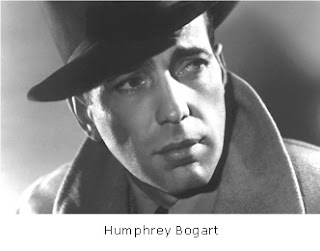
HUMPHREY D. BOGART, AN AMERICAN CULTURAL ICON

Today, The Grandma have been watching classical films. She has chosen some interpreted by Humphrey Bogart, the American actor and cultural icon, who was born on a day like today in 1899.

Humphrey DeForest Bogart (December 25, 1899-January 14, 1957), nicknamed Bogie, was an American film and stage actor.

His performances in Classical Hollywood cinema films made him an American cultural icon.

In 1999, the American Film Institute selected Bogart as the greatest male star of classic American cinema.

Bogart began acting in Broadway shows, beginning his career in motion pictures with Up the River (1930) for Fox and appeared in supporting roles for the next decade, sometimes portraying gangsters. He was praised for his work as Duke Mantee in The Petrified Forest (1936) but remained secondary to other actors Warner Bros. cast in lead roles.

His breakthrough from supporting roles to stardom came with High Sierra (1941) and The Maltese Falcon (1941), considered one of the first great noir films.

Bogart's private detectives, Sam Spade (in The Maltese Falcon) and Phillip Marlowe (in 1946's The Big Sleep), became the models for detectives in other noir films. His most significant romantic lead role was with Ingrid Bergman in Casablanca (1942), which earned him his first nomination for the Academy Award for Best Actor.

Forty-four-year-old Bogart and 19-year-old Lauren Bacall fell in love when they filmed To Have and Have Not (1944).

In 1945, a few months after principal photography for The Big Sleep, their second film together, he divorced his third wife and married Bacall. After their marriage, they played each other's love interest in the mystery thrillers Dark Passage (1947) and Key Largo (1948).

Bogart's performances in The Treasure of the Sierra Madre (1948) and In a Lonely Place (1950) are now considered among his best, although they were not recognized as such when the films were released.

He reprised those unsettled, unstable characters as a World War II naval-vessel commander in The Caine Mutiny (1954), which was a critical and commercial hit and earned him another Best Actor nomination. He won the Academy Award for Best Actor for his portrayal of a cantankerous river steam launch skipper opposite Katharine Hepburn's missionary in the World War I African adventure The African Queen (1951).

Other significant roles in his later years included The Barefoot Contessa (1954) with Ava Gardner and his on-screen competition with William Holden for Audrey Hepburn in Sabrina (1954). A heavy smoker and drinker, Bogart died from esophageal cancer in January 1957.

More information: Hometowns to Hollywood

Humphrey DeForest Bogart was born on Christmas Day 1899 in New York City, the eldest child of Belmont DeForest Bogart (1867–1934) and Maud Humphrey (1868–1940). Belmont was the only child of the unhappy marriage of Adam Welty Bogart (a Canandaigua, New York, innkeeper) and Julia Augusta Stiles, a wealthy heiress.

The name Bogart derives from the Dutch surname, Bogaert. Belmont and Maud married in June 1898. He was a Presbyterian, of English and Dutch descent, and a descendant of Sarah Rapelje, the first European child born in New Netherland. Maud was an Episcopalian of English heritage, and a descendant of Mayflower passenger John Howland. Humphrey was raised Episcopalian, but was non-practicing for most of his adult life.

With no viable career options, Bogart enlisted in the United States Navy in the spring of 1918, during World War I, and served as a coxswain. He recalled later, At eighteen, war was great stuff. Paris! Sexy French girls! Hot damn!

Bogart was recorded as a model sailor, who spent most of his sea time after the armistice ferrying troops back from Europe.

Bogart left the service on June 18, 1919 at the rank of Boatswain's Mate Third Class. During the Second World War, Bogart attempted to reenlist in the Navy but was rejected due to his age. He then volunteered for the Coast Guard Temporary Reserve in 1944, patrolling the California coastline in his yacht, the Santana.

Bogart resumed his friendship with Bill Brady Jr. (whose father had show-business connections), and obtained an office job with William A. Brady's new World Films company.

Although he wanted to try his hand at screenwriting, directing, and production, he excelled at none. Bogart was stage manager for Brady's daughter Alice's play A Ruined Lady. He made his stage debut a few months later as a Japanese butler in Alice's 1921 play Drifting (nervously delivering one line of dialogue), and appeared in several of her subsequent plays.

Bogart signed a contract with the Fox Film Corporation for $750 a week. There he met Spencer Tracy, a Broadway actor whom Bogart liked and admired, and they became close friends and drinking companions.

In 1930, Tracy first called him Bogie. Tracy made his feature film debut in his only movie with Bogart, John Ford's early sound film Up the River (1930), in which they had the two leading roles as inmates. Tracy received top billing, but Bogart's picture appeared on the film's posters. He was billed fourth behind Tracy, Claire Luce and Warren Hymer but his role was almost as large as Tracy's and much larger than Luce's or Hymer's. Despite being close friends, Tracy and Bogart made only one movie together, Up the River. A quarter of a century later, the two men planned to make The Desperate Hours together. Both insisted upon top billing, however; Tracy dropped out, and was replaced by Fredric March.

Bogart then had a supporting role in Bad Sister (1931) with Bette Davis.

Bogart shuttled back and forth between Hollywood and the New York stage from 1930 to 1935, out of work for long periods. His parents had separated; his father died in 1934 in debt, which Bogart eventually paid off. He inherited his father's gold ring, which he wore in many of his films. At his father's deathbed, Bogart finally told him how much he loved him.

Bogart's second marriage was rocky; dissatisfied with his acting career, depressed and irritable, he drank heavily.

On August 21, 1938, Bogart entered a turbulent third marriage to actress Mayo Methot, a lively, friendly woman when sober but paranoid and aggressive when drunk. She became convinced that Bogart was unfaithful to her (which he eventually was, with Lauren Bacall, while filming To Have and Have Not in 1944).

High Sierra (1941, directed by Raoul Walsh) featured a screenplay written by John Huston, Bogart's friend and drinking partner, albeit adapted from a novel by W. R. Burnett, author of the novel on which Little Caesar was based.

Now regarded as a classic film noir, The Maltese Falcon (1941) was John Huston's directorial debut. Based on the Dashiell Hammett novel, it was first serialized in the pulp magazine Black Mask in 1929 and was the basis of two earlier film versions; the second was Satan Met a Lady (1936), starring Bette Davis.

Producer Hal B. Wallis initially offered to cast George Raft as the leading man, but Raft, far more established than Bogart, had a contract stipulating he was not required to appear in remakes. Fearing that it would be nothing more than a sanitized version of the pre-Production Code The Maltese Falcon (1931), Raft turned down the role to make Manpower with director Raoul Walsh, with whom he had worked on The Bowery in 1933. Huston then eagerly accepted Bogart as his Sam Spade.

Bogart played his first romantic lead in Casablanca (1942): Rick Blaine, an expatriate nightclub owner hiding from a suspicious past and negotiating a fine line among Nazis, the French underground, the Vichy prefect and unresolved feelings for his ex-girlfriend. Bosley Crowther wrote in his November 1942 New York Times review that Bogart's character was used to inject a cold point of tough resistance to evil forces afoot in Europe today. The film, directed by Michael Curtiz and produced by Hal Wallis, featured Ingrid Bergman, Claude Rains, Sydney Greenstreet, Paul Henreid, Conrad Veidt, Peter Lorre and Dooley Wilson.

Howard Hawks introduced Bogart and Lauren Bacall (1924-2014) while Bogart was filming Passage to Marseille (1944). The three subsequently collaborated on To Have and Have Not (1944), a loose adaptation of the Ernest Hemingway novel, and Bacall's film debut. 

Months after wrapping To Have and Have Not, Bogart and Bacall were reunited for an encore: the film noir The Big Sleep (1946), based on the novel by Raymond Chandler with script help from William Faulkner.

The suspenseful Dark Passage (1947) was Bogart and Bacall's next collaboration.

Riding high in 1947 with a new contract which provided limited script refusal and the right to form his production company, Bogart rejoined with John Huston for The Treasure of the Sierra Madre: a stark tale of greed among three gold prospectors in Mexico.

More information: Click Americana

Bogart, a liberal Democrat, organized the Committee for the First Amendment (a delegation to Washington, D.C.) opposing what he saw as the House Un-American Activities Committee's harassment of Hollywood screenwriters and actors. He later wrote an article, I'm No Communist, for the March 1948 issue of Photoplay magazine distancing himself from the Hollywood Ten to counter negative publicity resulting from his appearance and save his career. Bogart wrote, The ten men cited for contempt by the House Un-American Activities Committee were not defended by us.

Bogart created his film company, Santana Productions (named after his yacht and the cabin cruiser in Key Largo), in 1948.

Outside Santana Productions, Bogart starred with Katharine Hepburn in the John Huston-directed The African Queen in 1951.

Bogart dropped his asking price to obtain the role of Captain Queeg in Edward Dmytryk's drama, The Caine Mutiny (1954).

For Sabrina (1954), Billy Wilder wanted Cary Grant for the older male lead and chose Bogart to play the conservative brother who competes with his younger, playboy sibling (William Holden) for the affection of the Cinderella-like Sabrina (Audrey Hepburn).

Bogart was a founding member and the original leader of the Hollywood Rat Pack. In the spring of 1955, after a long party in Las Vegas attended by Frank Sinatra, Judy Garland, her husband Sidney Luft, Michael Romanoff and his wife Gloria, David Niven, Angie Dickinson and others, Bacall surveyed the wreckage and said: You look like a goddamn rat pack.

Bogart had already been diagnosed with terminal cancer when shooting The Harder They Fall, a boxing drama with Rod Steiger in a supporting role. Steiger later mentioned Bogart's courage and geniality during his final performance.

Bogart died in January 1957.

More information: Toronto Public Library


You're not a star until they can spell your name in Karachi.

Humphrey Bogart

Monday, 16 September 2019

LAUREN BACALL, DISTINCTIVE VOICE AND SULTRY LOOKS

Lauren Bacall
Today, The Grandma has stayed at home watching some classic films. She has enjoyed a lot especially with Murder on the Orient Express, the film based on the book of Agatha Christie that includes incredible performances in its 1974 version.

One of the actresses of this masterpiece is Lauren Bacall. The Grandma loves her films and she has wanted to watch some of them to homage this wonderful actress who was born on a day like today in 1924.

Lauren Bacall is a legend of arts and cinema, a great actress with an interesting career and amazing live.

Before watching Lauren Bacall's films, The Grandma has studied a new lesson of her Ms. Excel course.

19. Sharing Documents (IV) (Spanish Version)

Lauren Bacall (born Betty Joan Perske; September 16, 1924-August 12, 2014) was an American actress known for her distinctive voice and sultry looks. She was named the 20th-greatest female star of classic Hollywood cinema by the American Film Institute and received an Academy Honorary Award from the Academy of Motion Picture Arts and Sciences in 2009 in recognition of her central place in the Golden Age of motion pictures.

Bacall began her career as a model before making her film debut as a leading lady in To Have and Have Not (1944). She continued in the film noir genre with appearances with Humphrey Bogart in The Big Sleep (1946), Dark Passage (1947), and Key Largo (1948), and she starred in the romantic comedies How to Marry a Millionaire (1953) with Marilyn Monroe and Betty Grable, and Designing Woman (1957) with Gregory Peck. She co-starred with John Wayne in his final film The Shootist (1976) by Wayne's personal request. She also worked on Broadway in musicals, earning Tony Awards for Applause (1970) and Woman of the Year (1981). She won a Golden Globe Award and was nominated for an Academy Award for her performance in The Mirror Has Two Faces (1996).

Lauren Bacall
Lauren Bacall was born Betty Joan Perske on September 16, 1924, in The Bronx, New York City, the only child of Natalie (née Weinstein; 1901–1977), a secretary who later legally changed her surname to Bacal, and William Perske (1889–1982), who worked in sales. Both her parents were Jewish. According to Bacall, her mother emigrated from Iași, the Kingdom of Romania, through Ellis Island, and her father was born in New Jersey to parents who were born in Valozhyn, a significant center of Jewish life, in present-day Belarus, then in the Russian Empire.

In 1941, Bacall took lessons at the American Academy of Dramatic Arts in New York, where she was classmates with Kirk Douglas, while working as a theatre usher at the St. James Theatre and fashion model.

She made her acting debut on Broadway in 1942, at age 17, as a walk-on in Johnny 2 X 4. By then, she lived with her mother at 75 Bank Street, and in 1942, she was crowned Miss Greenwich Village.

As a teenage fashion model, she appeared on the cover of Harper's Bazaar, as well as in magazines such as Vogue. She was noted for her cat-like grace, tawny blonde hair, and blue-green eyes.

The Harper's Bazaar cover caught the attention of Hollywood producer and director Howard Hawks' wife Slim, who urged Hawks to have Bacall take a screen test for To Have and Have Not.

After meeting Bacall in Hollywood, Hawks immediately signed her to a seven-year contract, with a weekly salary of $100, and personally began to manage her career. He changed her first name to Lauren, and she chose Bacall (a variant of her mother's maiden name) as her screen surname.

More information: Biography

After To Have and Have Not, Bacall was seen opposite Charles Boyer in Confidential Agent (1945), which was poorly received by critics. By her own estimation, it could have caused considerable damage to her career, but her next performance as the mysterious, acid-tongued Vivian Rutledge in Hawks's film noir The Big Sleep (1946), co-starring Bogart, provided a quick career resurgence.

Bacall was cast with Bogart in two more films. In Dark Passage (1947), another film noir, she played an enigmatic San Francisco artist.  And, in 1948, she was in John Huston's melodramatic suspense film Key Largo with Bogart, Edward G. Robinson and Lionel Barrymore.

Lauren Bacall
Bacall turned down scripts she did not find interesting, and thereby earned a reputation for being difficult. Despite this, she further solidified her star status in the 1950s by appearing as the leading lady in a string of films that won favorable reviews.

Bacall was cast opposite Gary Cooper in Bright Leaf (1950). In the same year, she played a two-faced femme fatale in Young Man with a Horn (1950), a jazz musical co-starring Kirk Douglas, Doris Day, and Hoagy Carmichael.

From 1951 to 1952, Bacall co-starred with Bogart in the syndicated action-adventure radio series Bold Venture.

In 1953, she starred in the CinemaScope comedy How to Marry a Millionaire, a runaway hit among critics and at the box office. Directed by Jean Negulesco and co-starring Marilyn Monroe and Betty Grable, Bacall got positive notices for her turn as the witty gold-digger, Schatze Page.

In 1955, a television version of Bogart's breakthrough film, The Petrified Forest, was performed as a live installment of Producers' Showcase, a weekly dramatic anthology, featuring Bogart as Duke Mantee, Henry Fonda as Alan, and Bacall as Gabrielle, the part originally played in the 1936 movie by Bette Davis. Bacall starred in two feature films, The Cobweb and Blood Alley.

More information: ET Online

Many film scholars consider Written on the Wind, directed by Douglas Sirk in 1956, to be a landmark work in the melodrama genre. Appearing with Rock Hudson, Dorothy Malone and Robert Stack, Bacall played a career woman whose life is unexpectedly turned around by a family of oil magnates. Bacall wrote in her autobiography that she did not think much of the role, but reviews were favorable.

While struggling at home with Bogart's battle with esophageal cancer, Bacall starred with Gregory Peck in Designing Woman to solid reviews.

Bacall was seen in only a handful of films in the 1960s. She starred on Broadway in Goodbye, Charlie in 1959, and went on to have a successful on-stage career in Cactus Flower (1965), Applause (1970), and Woman of the Year (1981). The few films Bacall made during this period were all-star vehicles such as Sex and the Single Girl (1964) with Henry Fonda, Tony Curtis, and Natalie Wood; Harper (1966) with Paul Newman, Shelley Winters, Julie Harris, Robert Wagner, and Janet Leigh; and Murder on the Orient Express (1974), with Ingrid Bergman, Albert Finney, Vanessa Redgrave, Martin Balsam, and Sean Connery.

Lauren Bacall in Murder on the Orient Express
In 1981, Bacall appeared in star vehicle The Fan. The film received mixed reviews, but her performance got a favorable reception.

Bacall was featured in Robert Altman's Health (1980) and Michael Winner's Appointment with Death (1988). In 1990, she had a small role in Misery which starred Kathy Bates and James Caan.

In 1997, she was nominated for a Best Supporting Actress Academy Award for her role in The Mirror Has Two Faces (1996), her first nomination after a career span of more than 50 years. She had already won a Golden Globe and was widely expected to win the Oscar, but she lost to Juliette Binoche for The English Patient.

Bacall received the Kennedy Center Honors in 1997, and she was voted one of the 25 most significant female movie stars in history in 1999 by the American Film Institute.

More information: Independent

In July 2013, Bacall expressed interest in the film Trouble Is My Business. In November, she joined the English dub voice cast for StudioCanal's animated film Ernest & Celestine. Her final role was in 2014, a guest vocal appearance in the Family Guy episode Mom's the Word.

On May 21, 1945, Bacall married Humphrey Bogart. Their wedding and honeymoon took place at Malabar Farm, Lucas, Ohio, the country home of Pulitzer Prize-winning author Louis Bromfield, a close friend of Bogart. Their marriage ended with Bogart's death in 1957.

Humphrey Bogart & Lauren Bacall
During the filming of The African Queen (1951), Bacall and Bogart became friends with Katharine Hepburn and Spencer Tracy. She began to mix in non-acting circles, becoming friends with the historian Arthur Schlesinger Jr. and the journalist Alistair Cooke.

In 1952, she gave campaign speeches for Democratic presidential contender Adlai Stevenson. Along with other Hollywood figures, Bacall was a staunch opponent of McCarthyism.

Bacall then met and began a relationship with Jason Robards. Their marriage was originally scheduled to take place in Vienna, Austria, on June 16, 1961; however, the plans were shelved after Austrian authorities refused to grant the pair a marriage license. They were refused a marriage also in Las Vegas, Nevada. On July 4, 1961, the couple drove to Ensenada, Mexico, where they wed. The couple divorced in 1969. According to Bacall's autobiography, she divorced Robards mainly because of his alcoholism.

Bacall was a staunch liberal Democrat, and proclaimed her political views on numerous occasions. Bacall and Bogart were among about 80 Hollywood personalities to send a telegram protesting the House Un-American Activities Committee's investigations of Americans suspected of Communism. The telegram said that investigating individuals' political beliefs violated the basic principles of American democracy.

In October 1947, Bacall and Bogart traveled to Washington, D.C., along with a number of other Hollywood stars in a group that called itself the Committee for the First Amendment (CFA), which also included Danny Kaye, John Garfield, Gene Kelly, John Huston, Ira Gershwin and Jane Wyatt.

Bacall died on August 12, 2014, one month before her 90th birthday, at her longtime apartment in The Dakota, the Upper West Side building near Central Park in Manhattan.

More information: The Guardian I, II & III


That was my original dream, anyway, to be on stage.
I think the stage is an actor's place because actors,
it belongs to you.

Lauren Bacall
Tuesday, 27 November 2018

CASABLANCA PREMIERES IN NYC: 'AS TIME GOES BY'

Casablanca
Yesterday, The Grandma was still suffering the flu. She continued resting at home and doing nothing except reading, checking the social networks and watching TV.

She has been following with a lot of attention the situation in France with the Gilets Jaunes a popular movement that has her admiration.

Thinking about France and in its recent history, The Grandma remembered how on a day like today in 1942, a magnificent film was premiered at the Hollywood Theater in New York City. It was Casablanca.

The Grandma was watching this film and enjoying again with the great performances of Humprey Bogart and Ingrid Bergman two excellent actors who are part of the most amazing age of the cinema.

After watching Casablanca, The Grandma studied a new lesson of her
Elementary Language Practice manual (Grammar 24).

 More information: Future Time Words


Allons enfants de la patrie,
Le jour de gloire est arrivé!
Contre nous de la tyrannie
L'etendard sanglant est levé!

La Marseillaise


Casablanca is a 1942 American romantic drama film directed by Michael Curtiz based on Murray Burnett and Joan Alison's unproduced stage play Everybody Comes to Rick's. The film stars Humphrey Bogart, Ingrid Bergman, and Paul Henreid; it also features Claude Rains, Conrad Veidt, Sydney Greenstreet, Peter Lorre, and Dooley Wilson.

Set during contemporary World War II, it focuses on an American expatriate who must choose between his love for a woman and helping her and her husband, a Czech Resistance leader, escape from the Vichy-controlled city of Casablanca to continue his fight against the Nazis.

Principal photography began on May 25, 1942, ending on August 3; the film was shot entirely at Warner Bros. Studios in Burbank, California with the exception of one sequence at Van Nuys Airport in Van Nuys, Los Angeles.

Although Casablanca was an A-list film with established stars and first-rate writers, no one involved with its production expected it to be anything other than one of the hundreds of ordinary pictures produced by Hollywood that year.

  
Casablanca
Casablanca was rushed into release to take advantage of the publicity from the Allied invasion of North Africa a few weeks earlier. It had its world premiere on November 26, 1942, in New York City and was released nationally in the United States on January 23, 1943. The film was a solid if unspectacular success in its initial run.

Exceeding expectations, Casablanca went on to win the Academy Award for Best Picture, while Curtiz was selected as Best Director and the Epsteins and Koch were honored for writing the Best Adapted Screenplay, and gradually its reputation grew. Its lead characters, memorable lines, and pervasive theme song have all become iconic, and the film consistently ranks near the top of lists of the greatest films in history.

In December 1941, American expatriate Rick Blaine owns an upscale nightclub and gambling den in Casablanca. Rick's Café Américain attracts a varied clientele, including Vichy French and German officials, refugees desperate to reach the still-neutral United States, and those who prey on them. Although Rick professes to be neutral in all matters, he ran guns to Ethiopia during its war with Italy and fought on the Loyalist side in the Spanish Civil War.

More information: Britannica

Petty crook Ugarte boasts to Rick of letters of transit obtained by murdering two German couriers. The papers allow the bearers to travel freely around German-occupied Europe and to neutral Portugal, and are priceless to the refugees stranded in Casablanca. Ugarte plans to sell them at the club, and asks Rick to hold them. Before he can meet his contact, Ugarte is arrested by the local police under the command of Captain Louis Renault, the unabashedly corrupt Vichy prefect of police. Ugarte dies in custody without revealing that he entrusted the letters to Rick.

Then the reason for Rick's bitterness, former lover Ilsa Lund, enters his establishment. Spotting Rick's friend and house pianist, Sam, Ilsa asks him to play As Time Goes By. Rick storms over, furious that Sam disobeyed his order never to perform that song, and is stunned to see Ilsa. She is accompanied by her husband, Victor Laszlo, a renowned fugitive Czech Resistance leader. They need the letters to escape to America to continue his work. German Major Strasser has come to Casablanca to see that Laszlo fails.

Casablanca
When Laszlo makes inquiries, Ferrari, a major underworld figure and Rick's friendly business rival, divulges his suspicion that Rick has the letters. Privately, Rick refuses to sell at any price, telling Laszlo to ask his wife the reason.

They are interrupted when Strasser leads a group of officers in singing Die Wacht am Rhein, The Watch on the Rhine. Laszlo orders the house band to play La Marseillaise. When the band looks to Rick, he nods his head. Laszlo starts singing, alone at first, then patriotic fervor grips the crowd and everyone joins in, drowning out the Germans. Strasser demands Renault close the club, which he does on the pretext of suddenly discovering there is gambling on the premises.

More information: Film Forever

Ilsa confronts Rick in the deserted café. When he refuses to give her the letters, she threatens him with a gun, but then confesses that she still loves him. She explains that when they met and fell in love in Paris in 1940, she believed her husband had been killed attempting to escape from a concentration camp. 

While preparing to flee with Rick from the imminent fall of the city to the German army, she learned Laszlo was alive and in hiding. She left Rick without explanation to nurse her sick husband. Rick's bitterness dissolves. He agrees to help, letting her believe she will stay with him when Laszlo leaves.

When Laszlo unexpectedly shows up, having narrowly escaped a police raid on a Resistance meeting, Rick has waiter Carl spirit Ilsa away. Laszlo, aware of Rick's love for Ilsa, tries to persuade him to use the letters to take her to safety.

When the police arrest Laszlo on a minor, trumped-up charge, Rick persuades Renault to release him by promising to set him up for a much more serious crime: possession of the letters. To allay Renault's suspicions, Rick explains that he and Ilsa will be leaving for America.

Casablanca
When Renault tries to arrest Laszlo as arranged, Rick forces him at gunpoint to assist in their escape. At the last moment, Rick makes Ilsa board the plane to Lisbon with Laszlo, telling her that she would regret it if she stayed, Maybe not today, maybe not tomorrow, but soon and for the rest of your life.

Strasser, tipped off by Renault, drives up alone. Rick shoots him when he tries to intervene. When policemen arrive, Renault pauses, then orders them to round up the usual suspects. He suggests to Rick that they join the Free French in Brazzaville. As they walk away into the fog, Rick says, Louis, I think this is the beginning of a beautiful friendship.

The entire picture was shot in the studio, except for the sequence showing Major Strasser's arrival, which was filmed at Van Nuys Airport, and a few short clips of stock footage views of Paris. The street used for the exterior shots had recently been built for another film, The Desert Song, and redressed for the Paris flashbacks.

More information: The Guardian

The background of the final scene, which shows a Lockheed Model 12 Electra Junior airplane with personnel walking around it, was staged using little person extras and a proportionate cardboard plane. Fog was used to mask the model's unconvincing appearance. Nevertheless, the Disney's Hollywood Studios theme park in Orlando, Florida purchased a Lockheed 12A for its Great Movie Ride attraction, and initially claimed that it was the actual plane used in the film.

Although an initial release date was anticipated for early 1943, the film premiered at the Hollywood Theater in New York City on November 26, 1942, to coincide with the Allied invasion of North Africa and the capture of Casablanca

It went into general release on January 23, 1943, to take advantage of the Casablanca Conference, a high-level meeting in the city between British Prime Minister Winston Churchill and American President Franklin D. Roosevelt. The Office of War Information prevented screening of the film to troops in North Africa, believing it would cause resentment among Vichy supporters in the region.

More information: CBC


It's still the same old story. A fight for love and glory.
A case of do or die. The world will always welcome lovers.
As time goes by.

Dooley Wilson

Sunday, 10 June 2018

THE MALTESE FALCON: A CLASSIC BASED ON REAL FACTS

The Maltese Falcon
The Grand Master of the Order of St John of Jerusalem had to pay an annual tribute to the Emperor Charles V and his mother Queen Joanna of Castile as monarchs of Sicily, for the granting of Tripoli, Malta and Gozo. There were also other conditions. 

The annual tribute payable on All Saints day, 1 November, was one falcon. The grant was made at Castel Franco and is dated the 23rd day of the month of March, Third Indiction, in the Year of Our Lord 1530; in the 10th year of our reign as Emperor, the 27th as King of Castile, Granada, the 16th of Navarre, the 15th of Aragon, the Two Sicilies, Jerusalem and all our other realms.

More information: How to Malta

We grant, and of our liberality we bountifully bestow upon the aforesaid Very Reverend Grand Master of the Religion and Order of Saint John of Jerusalem, in feudal perpetuity, noble, free and unencumbered, our cities, castles, places and islands of Tripoli, Malta and Gozo, with all their cities, castles, places and island territories; with pure and mixed jurisdiction, right, and property of useful government; with power of life and death over males and females residing within their limits, and with the laws, constitutions, and rights now existing amongst the inhabitants; together with all other laws and rights, exemptions, privileges, revenues and other immunities whatsoever; so that they may hereafter hold them in feudal tenure from us, as Kings of both Sicilies, and from our successors in the same kingdom, reigning at the time, under the sole payment of a falcon; which every year, on the Feast of All Saints, shall be presented by the person or persons duly authorised for that purpose, into the hands of the Viceroy or President, who may at that time be administering the government, in sign and recognition of feudal tenure; and having made that payment, they shall remain exempt and free from all other service claimable by law, and by custom performed by feudal vassals.

More information: Atlantis On Line

Dashiell Hammett's The Maltese Falcon
The investiture had to be renewed in every case of a new succession, and completed according to the dispositions of common law. Other conditions included:

-Non-aggression against Sicily.
-No immunity to fugitives of justice.
-Nomination of bishop of Malta.
-Appointment of bishop as Grand Cross and membership of the Order's Council.
-Preference to appoint an Italian as Admiral of the Order.
-Prohibition of transferability of the fief.
-Arbitration in case of dispute.

Under whatsoever laws or conditions they may have in favour of the people already residing there.

The order and grand master paid the annual falcon until 1798 when the Order was expelled from the Maltese islands by the French Directory.


The Maltese Falcon is a 1941 film noir written and directed by John Huston in his directorial debut, and based on Dashiell Hammett's 1930 novel of the same name. The film stars Humphrey Bogart as private investigator Sam Spade and Mary Astor as his femme fatale client. Gladys George, Peter Lorre, and Sydney Greenstreet co-star, with Greenstreet appearing in his film debut. 

The Maltese Falcon Film Poster
The story follows a San Francisco private detective and his dealings with three adventurers, all of whom are competing to obtain a jewel-encrusted falcon statuette. The film premiered on October 3, 1941, in New York City, and was nominated for three Academy Awards. The Maltese Falcon was selected for inclusion in the Library of Congress' National Film Registry in 1989. The Maltese Falcon is a part of Roger Ebert's Great Movies series and was cited by Panorama du Film Noir Américain as the first major film noir.

In 1539 the Knight Templars of Malta, paid tribute to Charles V, by sending him a Golden Falcon encrusted from beak to claw with rarest jewels, but pirates seized the galley carrying this priceless token and the fate of the Maltese Falcon remains a mystery to this day


In San Francisco in 1941, private investigators Sam Spade and Miles Archermeet prospective client Ruth Wonderly. She claims to be looking for her missing sister, who is involved with a man named Floyd Thursby. Archer agrees to follow her that night and help get her sister back.

Sam Spade, Ruth Wonderly and Miles Archermeet
Spade is awakened by a phone call early in the morning and the police inform him that Archer has been killed. He meets his friend, Police Detective Tom Polhaus at the murder scene and then tries calling his client at her hotel, but she has checked out. Back at his apartment, he is grilled by Polhaus and Lieutenant Dundy, who tell him that Thursby was also murdered the same evening. Dundy suggests that Spade had the opportunity and motive to kill Thursby, who likely killed Archer. Archer's widow Iva later visits him in his office, believing that Spade shot his partner so he could have her.

Later that morning, Spade meets his client, now calling herself Brigid O'Shaughnessy. She explains that Thursby was her partner and probably killed Archer, but claims to have no idea who killed Thursby. Spade distrusts her, but agrees to investigate the murders.


At his office, Spade meets Joel Cairo, who first offers him $5,000 to find a black figure of a bird, then pulls a gun on him in order to search the room for it. Spade knocks Cairo out and goes through his belongings. When Cairo comes round, he hires Spade. Later that evening, Spade tells O'Shaughnessy about Cairo. When Cairo shows up, it becomes clear that Spade's acquaintances know each other. Cairo becomes agitated when O'Shaughnessy reveals that the Fat Man is in San Francisco.

Sam Spade with the Maltese Falcon
In the morning, Spade goes to Cairo's hotel, where he spots Wilmer, a young man who had been following him earlier, and gives Wilmer a message for his boss, Kasper Gutman. 

When Spade goes to meet Gutman, alias the Fat Man, in his hotel suite, Gutman will only talk about the Black Falcon evasively, so Spade pretends to throw a temper tantrum and storms out. 

Later, Wilmer takes Spade at gunpoint to see Gutman. Spade overpowers him, but meets Gutman anyway. Gutman relates the history of the Maltese Falcon, then offers Spade $25,000 for the bird and a quarter of the proceeds from its sale. 

After Spade passes out because his drink had been spiked, Wilmer and Cairo come in from another room and leave with Gutman.

More information: Mental Floss

On coming round, Spade searches the suite and finds a newspaper with the arrival time of the freighter La Paloma circled. He goes to the dock, only to find the ship on fire. Later, the ship's captain, Jacobi, shot several times, staggers into Spade's office before dying. The bundle he was clutching contains the Maltese Falcon.

The Maltese Falcon
O'Shaughnessy calls the office, gives an address, then screams before the line goes dead. Spade stashes the package at the bus terminal, then goes to the address, which turns out to be an empty lot. Spade returns home and finds O'Shaughnessy hiding in a doorway. 

He takes her inside and finds Gutman, Cairo, and Wilmer waiting for him, guns drawn. Gutman gives Spade $10,000 for the Falcon, but Spade tells them that part of his price is someone he can turn over to the police for the murders of Thursby and Captain Jacobi, suggesting Wilmer. After some intense negotiation, Gutman and Cairo agree and Wilmer is knocked out and disarmed.

More information: TV Tropes

Just after dawn, Spade calls his secretary, Effie Perin, to bring him the bundle. However, when Gutman inspects the statuette, he finds it is a fake and Wilmer escapes during the tumult. Recovering his composure, Gutman invites Cairo to return with him to Istanbul to continue their quest. After they leave, Spade calls the police and tells them where to pick up the pair. Spade then angrily confronts O'Shaughnessy, telling her he knows she killed Archer to implicate Thursby, her unwanted accomplice. She confesses, but begs Spade to not turn her over to the police. Despite his feelings for her, Spade gives O'Shaughnessy up.


  I don't care what your secrets are. 
But I can't go ahead without more confidence in you than I've got now. 
You've got to convince me that you know what this is all about, 
hat you aren't just fiddling around, hoping that it will all 
come out right in the end.

Sam Spade