Showing posts with label Christopher Plummer. Show all posts

Friday, 5 February 2021

CHRISTOPHER PLUMMER, THE BEST CANADIAN ELEGANCE

Today, The Grandma has received sad news. Christopher Plummer, one of her favourite actors has died. She wants to remember him talking about his career and his life.
 
Arthur Christopher Orme Plummer (December 13, 1929-February 5, 2021) was a Canadian actor whose career spanned seven decades.

He gained recognition for his performances in film, television, and theatre. Plummer made his Broadway debut in 1954, and continued to act in leading roles on stage playing Cyrano de Bergerac in Cyrano (1974), Iago in Othello, as well as playing the titular roles in Macbeth, King Lear, and Barrymore. Plummer also performed in stage productions J.B., No Man's Land, and Inherit the Wind.

Plummer was born in Toronto and grew up in Senneville, Quebec. He made his film debut in Sidney Lumet's Stage Struck (1958), and won great acclaim with audiences for his performance as Captain Georg von Trapp in the musical film The Sound of Music (1965) alongside Julie Andrews.

Plummer portrayed numerous major historical figures, including Roman emperor Commodus in The Fall of the Roman Empire (1964), Arthur Wellesley, 1st Duke of Wellington in Waterloo (1970), Rudyard Kipling in The Man Who Would Be King (1975), Mike Wallace in The Insider (1999), Leo Tolstoy in The Last Station (2009), Kaiser Wilhelm II in The Exception (2016), and J. Paul Getty in All the Money in the World (2017).

Plummer also appeared in such films as Spike Lee's Malcolm X (1992), Ron Howard's A Beautiful Mind (2001), Terrence Malick's The New World (2005), David Fincher's The Girl with the Dragon Tattoo (2011), Mike Mills' Beginners (2011), and Rian Johnson's Knives Out (2019).

Plummer received various accolades for his work, including an Academy Award, two Primetime Emmy Awards, two Tony Awards, a Golden Globe Award, a Screen Actors Guild Award, and a British Academy Film Award; he is one of the few performers to receive the Triple Crown of Acting, and the only Canadian.

More information: BBC America

He won the Academy Award for Best Supporting Actor at the age of 82 for Beginners (2010), becoming the oldest person to win an acting award, and he received a nomination at the age of 88 for All the Money in the World, making him the oldest person to be nominated in an acting category.

Plummer was born on December 13, 1929, in Toronto, Ontario. He spoke both English and French fluently. As a schoolboy, he began studying to be a concert pianist, but developed a love for theatre at an early age, and began acting while he was attending the High School of Montreal. He took up acting after watching Laurence Olivier's film Henry V (1944). He learned the basics of acting as an apprentice with the Montréal Repertory Theatre, where fellow Montrealer William Shatner also played.

Plummer never attended college, something he regretted all his life. Although his mother and his father's family had ties with McGill University, he was never a McGill student.

In 1946, he caught the attention of Montreal Gazette's theatre critic Herbert Whittaker with his performance as Mr Darcy in the Montreal High School production of Pride and Prejudice. Whittaker was also amateur stage director of the Montreal Repertory theatre, and he cast Plummer at age 18 as Oedipus in Jean Cocteau's La Machine infernale.

Plummer made his debut at the Stratford Shakespeare Festival in 1956, playing the title role in Henry V, which subsequently was performed that year at the Edinburgh Festival. He played the title role in Hamlet and Sir Andrew Aguecheek in Twelfth Night at Stratford in 1957.
 
The following year, he played Leontes in The Winter's Tale, Bardolph in Henry IV, Part 1, and Benedick in Much Ado About Nothing.

Plummer's film career began in 1958 when Sidney Lumet cast him as a young writer in Stage Struck. That same year, Plummer played the lead in Nicholas Ray's film Wind Across the Everglades (1958). That same year, he appeared in the live television drama Little Moon of Alban with Julie Harris, for which he received his first Emmy Award nomination. He also appeared with Harris in the 1958 television adaptation of Johnny Belinda and played Torvald Helmer to Harris' Nora in a 1959 television version of Henrik Ibsen's A Doll's House.

In 1960, he played Philip the Bastard in King John and Mercutio in Romeo and Juliet.

In 1962, he played the title roles in both Cyrano de Bergerac and Macbeth, returning in 1967 to play Mark Antony in Antony and Cleopatra.

In April 1961, he appeared as Benedick in Much Ado About Nothing with the Royal Shakespeare Company at the Shakespeare Memorial Theatre in Stratford-upon-Avon, England. He also appeared with the RSC in May 1961 in the lead role of Richard III.

He made his London debut on June 11, 1961, playing King Henry II in Jean Anouilh's Becket with the RSC at the Aldwych Theatre, directed by Peter Hall. The production later transferred to the Globe for a December 1961 to April 1962 run. For his performance, Plummer won the Evening Standard Award for Best Actor.

More information: Vanity Fair

His next film, the Oscar-winning The Sound of Music, made cinematic history, becoming the all-time top-grossing film, eclipsing Gone with the Wind. Plummer remains widely known for his portrayal of Captain Von Trapp due to the box office success and continued popularity of The Sound of Music (1965), a role which he once described as so awful and sentimental and gooey. He found all aspects of making the film unpleasant, except working with Andrews, and he avoided using its name, instead calling it that movie, S&M, or The Sound of Mucus.

On screen, Plummer portrayed the Duke of Wellington in Waterloo (1970). The Pyx (1973) was his first Canadian film. He also appeared in The Man Who Would Be King (1975) playing Rudyard Kipling alongside Michael Caine and Sean Connery. He also appeared in the comedy The Return of the Pink Panther (1975), alongside Peter Sellers and The Silent Partner (1978) opposite Elliott Gould. He appeared in Aces High (1976), International Velvet (1978), and Murder by Decree (1979), playing Sherlock Holmes.

In 2000, Plummer starred as Sir David Maxwell Fyfe in the Primetime Emmy Award-winning Nuremberg (2000) starring Alec Baldwin, Brian Cox and Max Von Sydow. 

Plummer received an Academy Award for Best Supporting Actor for his performance in Mike Mills' independent comedy drama film Beginners (2011) starring Ewan McGregor, and Mélanie Laurent.

Plummer was announced as the winner at the 84th Academy Awards. Plummer's win made him, at age 82, the oldest actor to win an Academy Award. When he accepted the award, he quipped You're only two years older than me, darling. Where have you been all my life?.

More information: The Guardian

Most actors come from the streets,
and their rise to fame is guided by a natural anger.
It was harder to find that rage coming from a gentle background.

Christopher Plummer

Wednesday, 9 January 2019

MARIA AUGUSTA VON TRAPP & 'THE SOUND OF MUSIC'

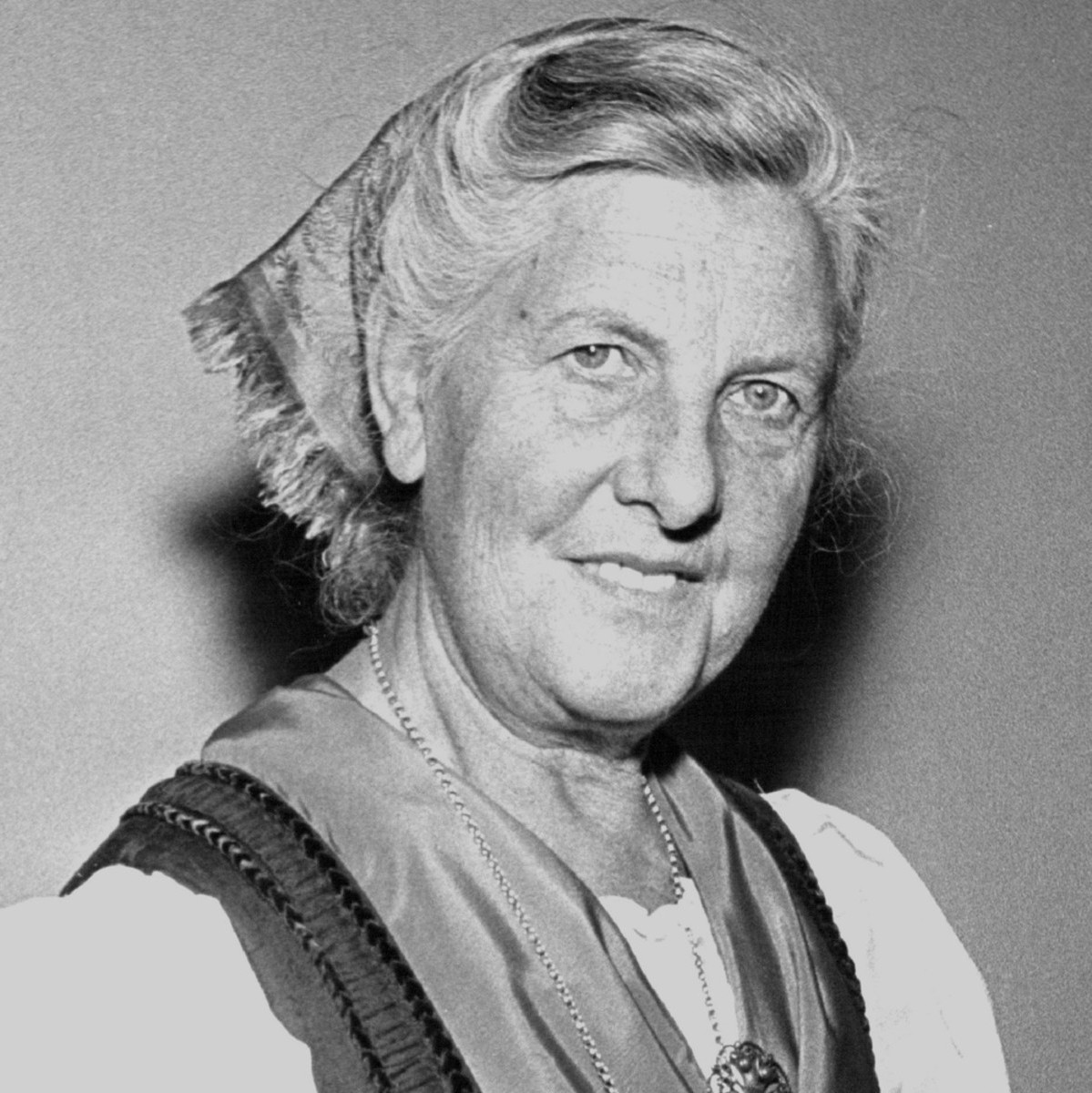
Maria Von Trapp
Today, Tonyi Tamaki and her friends have continued their visit to Salzburg discovering the fascinating life of Maria Von Trapp the stepmother and matriarch of the Trapp Family Singers who inspired the famous film The Sound of Music performanced by Julie Andrews and Christopher Plummer.

Before arriving to the public local library where they have been documenting about Baroness von Trapp, The Grandma has studied a new lesson of her
Elementary Language Practice manual (Grammar 68).


Maria Augusta von Trapp DHS, née Kutschera, 26 January 1905–28 March 1987, also known as Baroness von Trapp, was the stepmother and matriarch of the Trapp Family Singers. She wrote The Story of the Trapp Family Singers which was published in 1949 and was the inspiration for the 1956 West German film The Trapp Family, which in turn inspired the Broadway musical The Sound of Music (1959) and its 1965 film version.

More information: Salzburg Panorama Tours

Maria was born on 26 January 1905 to Augusta (Rainer) and Karl Kutschera. She was delivered on a train heading from her parents' village in Tyrol to a hospital in Vienna, Austria. She was an orphan by her tenth birthday. She graduated from the State Teachers College for Progressive Education in Vienna at age 18 in 1923. In 1924, she entered Nonnberg Abbey, a Benedictine monastery in Salzburg, as a postulant intending to become a nun.

Maria Von Trapp
Maria was asked to teach one of the seven children of widowed naval commander Georg von Trapp in 1926, while she was still a schoolteacher at the abbey. His wife Agatha had died in 1922 from scarlet fever. Eventually, Maria began to look after the other children, as well.

Captain Trapp saw how much she cared about his children and asked her to marry him, although he was 25 years her senior. She was frightened and fled back to Nonnberg Abbey to seek guidance from the mother abbess, who advised her that it was God's will that she should marry him.

She then returned to the family and accepted the proposal. She wrote in her autobiography that she was very angry on her wedding day, both at God and at her husband, because what she really wanted was to be a nun. I really and truly was not in love. I liked him but didn't love him. However, I loved the children, so in a way I really married the children. I learned to love him more than I have ever loved before or after. They were married on 26 November 1927 and had three children together: Rosmarie, Eleonore, and Johannes.

The Trapps faced financial ruin in 1935. He had transferred his savings from a bank in London to an Austrian bank run by a friend named Frau Lammer. Austria was experiencing economic difficulties during a worldwide depression because of the Crash of 1929, and Lammer's bank failed. To survive, the Trapps discharged most of their servants, moved into the top floor of their home, and rented out the other rooms. The archbishop sent Father Franz Wasner to stay with them as their chaplain, and this began their singing career.

More information: History

Soprano Lotte Lehmann heard the family sing, and she suggested they perform at concerts. When the Austrian Chancellor Kurt Schuschnigg heard them on radio, he invited them to perform in Vienna.

After performing at a festival in 1935, they became a popular touring act. They experienced life under the Nazis after the annexation of Austria by Germany in March 1938. Life became increasingly difficult as they witnessed hostility towards Jewish children by their classmates, the use of children against their parents, the advocacy of abortion both by Maria's doctor and by her son's school, and finally by the induction of Georg into the German Navy.

They visited Munich in the summer of 1938 and encountered Hitler at a restaurant. In September, the family left Austria and traveled to Italy, then to England and finally the United States. The Nazis made use of their abandoned home as Heinrich Himmler's headquarters.

Maria Von Trapp
Initially calling themselves the Trapp Family Choir, the von Trapps began to perform in the United States and Canada. Charles Wagner was their first booking agent, then they signed on with Frederick Christian Schang.

Thinking the name Trapp Family Choir too churchy, Schang Americanized their repertoire and, following his suggestion, the group changed its name to the Trapp Family Singers. The family, which by then included ten children, was soon touring the world giving concert performances. Alix Williamson served as the group's publicist for over two decades. After the war, they founded the Trapp Family Austrian Relief fund, which sent food and clothing to people impoverished in Austria.

In the 1940s, the family moved to Stowe, Vermont where they ran a music camp when they were not touring. In 1944, Maria, Johanna, Martina, Maria, Hedwig, and Agathe applied for U.S. citizenship, whereas Georg never applied to become a citizen. Rupert and Werner became citizens by serving during World War II, while Rosmarie and Eleonore became citizens by virtue of their mother's citizenship. Johannes was born in the United States in Philadelphia in September 1939 during a concert tour. Georg von Trapp died in 1947 in Vermont after suffering lung cancer.

More information: BBC

The family made a series of 78-rpm records for RCA Victor in the 1950s, some of which were later issued on RCA Camden LPs. There were also a few later recordings released on LPs, including some stereo sessions. In 1957, the Trapp Family Singers disbanded and went their separate ways. Maria and three of her children became missionaries in Papua New Guinea. In 1965, Maria moved back to Vermont to manage the Trapp Family Lodge, which had been named Cor Unum. She began turning over management of the lodge to her son Johannes, although she was initially reluctant to do so. Hedwig returned to Austria and worked as a teacher in Umhausen.

Maria von Trapp died of heart failure on 28 March 1987 at 82 in Morrisville, Vermont, three days following surgery. She is interred in the family cemetery at the lodge, along with her husband and five of her step-children.

More information: Parade

The Sound of Music is a musical with music by Richard Rodgers, lyrics by Oscar Hammerstein II and a book by Howard Lindsay and Russel Crouse. It is based on the memoir of Maria von Trapp, The Story of the Trapp Family Singers.

The Sound of Music, 1965
Set in Austria on the eve of the Anschluss in 1938, the musical tells the story of Maria, who takes a job as governess to a large family while she decides whether to become a nun. She falls in love with the children, and eventually their widowed father, Captain von Trapp.

He is ordered to accept a commission in the German navy, but he opposes the Nazis. He and Maria decide on a plan to flee Austria with the children. Many songs from the musical have become standards, such as Edelweiss, My Favorite Things, Climb Ev'ry Mountain, Do-Re-Mi, and the title song The Sound of Music.

The original Broadway production, starring Mary Martin and Theodore Bikel, opened in 1959 and won five Tony Awards, including Best Musical, out of nine nominations. The first London production opened at the Palace Theatre in 1961. The show has enjoyed numerous productions and revivals since then.

It was adapted as a 1965 film musical starring Julie Andrews and Christopher Plummer, which won five Academy Awards. The Sound of Music was the last musical written by Rodgers and Hammerstein; Oscar Hammerstein died of stomach cancer nine months after the Broadway premiere.

More information: Sound of Music


Music acts like a magic key,
to which the most tightly closed heart opens.

Maria Von Trapp