 |
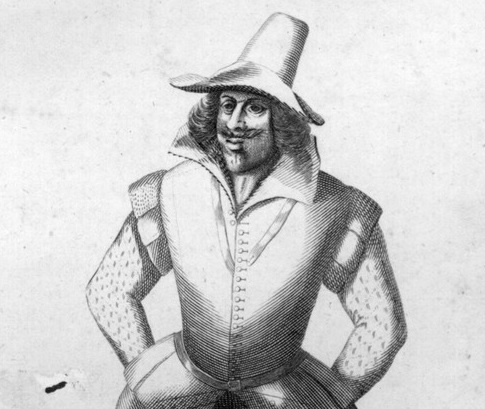
| The Gun-Powder Plot, 1606 |
Today, The Grandma has been watching on TV the latest news about Brexit. British people have decided their future in a referendum and The Grandma does not believe a better way to do something as important as this.
British history is full of referents for the rest of European cultures and this goodbye is only a political decision, something that does not affect to the thousands and thousand of ties that we have with this great Kingdom and its nations. Some of them like Scotland and North Ireland are going to decide their future in a closer time and in Wales the local feeling is strong enough to wait new changes very soon.
Europe is changing and the European Union must pay attention to its citizens, their feelings and aspirations if the Union wants to be a reality and not only a plan written in a paper. The Europe of the Nations is the future and, curiously, Brexit could be the first step to achieve this ancient objective.
The Grandma wants to talk about an important event in the English history, the Gunpowder Plot and its influence in popular culture, a failed assassination attempt against King James VI of Scotland and I of England by a group of provincial English Catholics led by Robert Catesby and Guy Fawkes. They were prisioned, sentenced to death and executed on a day like today in 1606.
Europe is changing and the European Union must pay attention to its citizens, their feelings and aspirations if the Union wants to be a reality and not only a plan written in a paper. The Europe of the Nations is the future and, curiously, Brexit could be the first step to achieve this ancient objective.
The Grandma wants to talk about an important event in the English history, the Gunpowder Plot and its influence in popular culture, a failed assassination attempt against King James VI of Scotland and I of England by a group of provincial English Catholics led by Robert Catesby and Guy Fawkes. They were prisioned, sentenced to death and executed on a day like today in 1606.
More information: BBC
Guy
Fawkes was a member of a group of provincial English Catholics who
planned the failed Gunpowder Plot of 1605. He was born and educated in
York.
Fawkes converted to Catholicism and left for mainland Europe, where he fought for Catholic Spain in the Eighty Years' War against Protestant Dutch reformers in the Low Countries. He travelled to Spain to seek support for a Catholic rebellion in England without success. He later met Thomas Wintour, with whom he returned to England. Wintour introduced him to Robert Catesby, who planned to assassinate King James I and restore a Catholic monarch to the throne.
The plotters leased an undercroft beneath the House of Lords; Fawkes was placed in charge of the gunpowder which they stockpiled there. The authorities were prompted by an anonymous letter to search Westminster Palace during the early hours of 5 November, and they found Fawkes guarding the explosives. He was questioned and tortured over the next few days and confessed to wanting to blow up the House of Lords.
Fawkes converted to Catholicism and left for mainland Europe, where he fought for Catholic Spain in the Eighty Years' War against Protestant Dutch reformers in the Low Countries. He travelled to Spain to seek support for a Catholic rebellion in England without success. He later met Thomas Wintour, with whom he returned to England. Wintour introduced him to Robert Catesby, who planned to assassinate King James I and restore a Catholic monarch to the throne.
The plotters leased an undercroft beneath the House of Lords; Fawkes was placed in charge of the gunpowder which they stockpiled there. The authorities were prompted by an anonymous letter to search Westminster Palace during the early hours of 5 November, and they found Fawkes guarding the explosives. He was questioned and tortured over the next few days and confessed to wanting to blow up the House of Lords.
 |
| Guy Fawkes |
Since the release of the 2006 film V for Vendetta, set in a dystopian United Kingdom, the use of the Guy Fawkes mask that appears in the film has become widespread internationally among anti-establishment protest groups, a kind of groups that fight for a better world where the 1% has not got more than the 99%.
The Gunpowder Plot was a failed assassination attempt against King James VI of Scotland and I of England by a group of provincial English Catholics led by Robert Catesby.
The conspirators' aim was to blow up the House of Lords at the State Opening of Parliament on 5 November 1605, while the king and many other important members of the aristocracy and nobility were inside. The conspirator who became most closely associated with the plot in the popular imagination was Guy Fawkes, who had been assigned the task of lighting the fuse to the explosives.
More information: History
The
young John Milton, in 1626 at the age of 17, wrote what one commentator
has called a critically vexing poem, In Quintum Novembris. The work
reflects partisan public sentiment on an English-Protestant national
holiday, 5 November. In the published editions of 1645 and 1673, the
poem is preceded by five epigrams on the subject of the Gunpowder Plot,
apparently written by Milton in preparation for the larger work.
Milton's imagination continued to be haunted by the Gunpowder Plot
throughout his life, and critics have argued that it strongly influenced
his later and more well-known poem, Paradise Lost.
William Harrison Ainsworth's 1841 historical romance Guy Fawkes; or, The Gunpowder Treason, portrays Fawkes in a generally sympathetic light, although it also embellishes the known facts for dramatic effect. Ainsworth's novel transformed Fawkes into an acceptable fictional character, and Fawkes subsequently appeared in children's books and penny dreadfuls. One example of the latter is The Boyhood Days of Guy Fawkes, published in about 1905, which portrayed Fawkes as essentially an action hero.
William Harrison Ainsworth's 1841 historical romance Guy Fawkes; or, The Gunpowder Treason, portrays Fawkes in a generally sympathetic light, although it also embellishes the known facts for dramatic effect. Ainsworth's novel transformed Fawkes into an acceptable fictional character, and Fawkes subsequently appeared in children's books and penny dreadfuls. One example of the latter is The Boyhood Days of Guy Fawkes, published in about 1905, which portrayed Fawkes as essentially an action hero.
With
the phrase A penny for the Old Guy, Anglo-American poet T. S. Eliot
acknowledges Fawkes and the straw-man effigy burned every year on 5
November in an epigraph to his 1925 poem The Hollow Men.
 |
| The Gun-Powder Plot, 1606 |
Its film adaptation opening shows a dramatised depiction of Fawkes's arrest and execution, with Evey narrating the first lines of the poem of Guy Fawkes Night.
In the Doctor Who Virgin Missing Adventures novel The Plotters, the First Doctor and his companions Ian Chesterton, Barbara Wright and Vicki become involved with the Gunpowder Plot when the Doctor visits to investigate, learning that the plot was aided by a member of the king's court -who intended to expose the plot and thus impose more stringent anti-Catholic measures- and a brotherhood of self-styled warlocks who hoped that they would gain power in the ensuing chaos if the plot succeeded.
In the Harry Potter series, Dumbledore, the school's headmaster, has a phoenix called Fawkes, named after Guy Fawkes. According to tradition, a phoenix burns when it reaches the end of its life.
In the novel Martin Chuzzlewit it is said that a member of the Chuzzlewit family was unquestionably involved in the Gunpowder Plot, and that Fawkes himself may indeed have been a scion of the family's remarkable stock.
More information: Historic UK
By the 19th century, Fawkes and the Gunpowder Plot had begun to be used as the basis for pantomimes. One early example is Harlequin and Guy Fawkes: or, the 5th of November, which was performed at the Theatre Royal, Covent Garden, on 16 November 1835. After the Plot is discovered, Fawkes changes into Harlequin and Robert Catesby, the leader of the Plot, into Pantaloon, following which pure pantomime begins.
Fawkes also features in the pantomime Guy Fawkes, or a Match for a King, written by Albert Smith and William Hale and first performed in 1855. The opening scene shows an argument between Catesby and Fawkes over the fate of Lord Monteagle, the man who raised the alarm after receiving an anonymous letter warning him not to attend Parliament on 5 November 1605.
More information: History Extra
Catesby wants to save his friend Monteagle, but Fawkes, who regards him as an enemy, wants him blown up with the rest of the aristocracy. The two fight, at first with doubtful swords and then with bladders, before Fawkes is done. The remainder of the pantomime consists of clowns acting out various comic scenes unrelated to the Gunpowder Plot.
 |
| Guy Fawkes |
Performed at the Queen's Theatre, Manchester, in June 1840, it portrayed Fawkes as a politically motivated sympathiser with the common people's cause.
Ainsworth's novel was translated to film in the 1923 production of Guy Fawkes, directed by Maurice Elvey and starring Matheson Lang as Fawkes.
Several traditional rhymes have accompanied the Guy Fawkes Night festivities. God Save the King can be replaced by God save the Queen depending on who is on the throne.
Remember, remember the Fifth of November,
The Gunpowder Treason and Plot,
I know of no reason
Why the Gunpowder Treason
Should ever be forgot.
Guy Fawkes, Guy Fawkes, t'was his intent
To blow up the King and Parli'ment.
Three-score barrels of powder below,
Poor old England to overthrow;
By God's providence he was catch'd (or by God's mercy*)
With a dark lantern and burning match.
Holla boys, Holla boys, let the bells ring.
Holloa boys, holloa boys, God save the King!
And what should we do with him? Burn him!
More information: National Geographic
The Gunpowder Treason and Plot,
I know of no reason
Why the Gunpowder Treason
Should ever be forgot.
Guy Fawkes, Guy Fawkes, t'was his intent
To blow up the King and Parli'ment.
Three-score barrels of powder below,
Poor old England to overthrow;
By God's providence he was catch'd (or by God's mercy*)
With a dark lantern and burning match.
Holla boys, Holla boys, let the bells ring.
Holloa boys, holloa boys, God save the King!
And what should we do with him? Burn him!
More information: National Geographic
In more common use the bonfire cry is occasionally altered with the last three lines (after burning match) supplanted by the following;
A traitor to the Crown by his action,
No Parli'ment mercy from any faction,
His just end should'st be grim,
What should we do? Burn him!
Holler boys, holler boys, let the bells ring,
Holler boys, holler boys, God save the King!
No Parli'ment mercy from any faction,
His just end should'st be grim,
What should we do? Burn him!
Holler boys, holler boys, let the bells ring,
Holler boys, holler boys, God save the King!
Some of the Bonfire Societies in the town of Lewes use a second verse reflecting the struggle between Protestants and Roman Catholics. This was widely used, but due to its anti-Roman Catholic tone has fallen out of favour.
A penny loaf to feed the Pope
A farthing o' cheese to choke him.
A pint of beer to rinse it down.
A fagot of sticks to burn him.
Burn him in a tub of tar.
Burn him like a blazing star.
Burn his body from his head.
Then we'll say ol' Pope is dead.
Hip hip hoorah!
Hip hip hoorah hoorah!
More information: History of York
A farthing o' cheese to choke him.
A pint of beer to rinse it down.
A fagot of sticks to burn him.
Burn him in a tub of tar.
Burn him like a blazing star.
Burn his body from his head.
Then we'll say ol' Pope is dead.
Hip hip hoorah!
Hip hip hoorah hoorah!
More information: History of York
A variant on the foregoing:
Remember, remember the fifth of November
Gunpowder, treason and plot.
I see no reason, why gunpowder treason
Should ever be forgot.
Remember, remember, the fifth of November,
Gunpowder, treason and plot!
A stick or a stake for King James' sake
Will you please to give us a fagot
If you can't give us one, we'll take two;
The better for us and the worse for you!
Gunpowder, treason and plot.
I see no reason, why gunpowder treason
Should ever be forgot.
Remember, remember, the fifth of November,
Gunpowder, treason and plot!
A stick or a stake for King James' sake
Will you please to give us a fagot
If you can't give us one, we'll take two;
The better for us and the worse for you!
 |
| Guy Fawkes's mask, symbol of Anonymous movement |
Guy, guy, guy
Poke him in the eye,
Put him on the bonfire,
And there let him die
Poke him in the eye,
Put him on the bonfire,
And there let him die
Or, today used frequently, instead of Put him on the bonfire, Hang him on a lamppost. Another variant, sung by children in Lancashire whilst begging A Penny For The Guy:
Remember, remember the fifth of November
It's Gunpowder Plot, we never forgot
Put your hand in your pocket and pull out your purse
A ha'penny or a penny will do you no harm
Who's that knocking at the window?
Who's that knocking at the door?
It's little Mary Ann with a candle in her hand
And she's going down the cellar for some coal
More information: The Telegraph
It's Gunpowder Plot, we never forgot
Put your hand in your pocket and pull out your purse
A ha'penny or a penny will do you no harm
Who's that knocking at the window?
Who's that knocking at the door?
It's little Mary Ann with a candle in her hand
And she's going down the cellar for some coal
More information: The Telegraph
The following is a South Lancashire song sung when knocking on doors asking for money to buy fireworks, or combustibles for a bonfire, known as Cob-coaling. There are many variations, this is a shorter one:
We come a Cob-coaling for Bonfire time,
Your coal and your money we hope to enjoy.
Fal-a-dee, fal-a-die, fal-a-diddly-i-do-day.
For down in yon' cellar there's an owd umberella
And up on yon' cornish there's an owd pepperpot.
Pepperpot! Pepperpot! Morning 'till night.
If you give us nowt, we'll steal nowt and bid you good night.
Up a ladder, down a wall, a cob o'coal would save us all.
If you don't have a penny a ha'penny will do.
If you don't have a ha'penny, then God bless you.
We knock at your knocker and ring at your bell
To see what you'll give us for singing so well.
More information: Mental Floss
Your coal and your money we hope to enjoy.
Fal-a-dee, fal-a-die, fal-a-diddly-i-do-day.
For down in yon' cellar there's an owd umberella
And up on yon' cornish there's an owd pepperpot.
Pepperpot! Pepperpot! Morning 'till night.
If you give us nowt, we'll steal nowt and bid you good night.
Up a ladder, down a wall, a cob o'coal would save us all.
If you don't have a penny a ha'penny will do.
If you don't have a ha'penny, then God bless you.
We knock at your knocker and ring at your bell
To see what you'll give us for singing so well.
More information: Mental Floss
From Calderdale: The Ryburn Valley Gunpowder Plot Nominy Song Calderdale had a plentiful store of rhymes and nominies, or short pieces of doggerel. Many of them were common to Yorkshire generally, where Gunpowder Plot rhymes were numerous.
Here comes three jolly rovers, all in one row.
We're coming a cob-coiling for t' Bon Fire Plot.
Bon Fire Plot from morning till night!
If you'll give us owt, we'll steal nowt, but bid you goodnight.
Fol-a-dee, fol-a-die, fol-a-diddle-die-do-dum!
We're coming a cob-coiling for t' Bon Fire Plot.
Bon Fire Plot from morning till night!
If you'll give us owt, we'll steal nowt, but bid you goodnight.
Fol-a-dee, fol-a-die, fol-a-diddle-die-do-dum!
(Repeated after each verse.)
The next house we come to is a sailor you see.
He sails over the ocean and over the sea,
Sailing from England to France and to Spain,
And now he's returning to England again.
The next house we come to is an old tinker's shop,
And up in one rook there's an old pepper-box-
An old pepper-box from morning till night-
If you'll give us owt, we'll steal nowt, but bid you good-night.
He sails over the ocean and over the sea,
Sailing from England to France and to Spain,
And now he's returning to England again.
The next house we come to is an old tinker's shop,
And up in one rook there's an old pepper-box-
An old pepper-box from morning till night-
If you'll give us owt, we'll steal nowt, but bid you good-night.
Since the release of the 2006 film V for Vendetta, set in a dystopian United Kingdom, the use of the Guy Fawkes mask that appears in the film has become widespread internationally among anti-establishment protest groups.
The illustrator of the comic books on which the film was based, David Lloyd, has stated that the character V decided to adopt the persona and mission of Guy Fawkes -our great historical revolutionary.
More information: The Mary Sue
The Guy Fawkes mask has now become
a common brand and a convenient placard
to use in protest against tyranny
and I'm happy with people using it;
it seems quite unique,
an icon of popular culture being used this way.
David Lloyd


