Tuesday, 20 September 2016

FESTIVAL DE CANNES: 70 YEARS OF THE BEST CINEMA

Festival de Cannes
Festival de Cannes is an annual film festival held in Cannes, France, which previews new films of all genres, including documentaries, from around the world. 

Founded in 1946, the invitation-only festival is held annually, usually in May, at the Palais des Festivals et des Congrès.

The Cannes Film Festival has its origins in 1932 when Jean Zay, the French Minister of National Education, on the proposal of Philippe Erlanger and with the support of the British and Americans, set up an international cinematographic festival.

The first edition of the Festival was originally set to be held in Cannes in 1939 under the presidency of Louis Lumière. However, it was not until over a year after the war ended that it finally took place, on 20 September 1946

It was subsequently held every September, except in 1948 and 1950, and then every May from 1952 onwards.

The Grandma in her youth in Cannes
In 1947, the festival was held as the Festival du film de Cannes, where films from sixteen countries were presented. At that time the principle of equality was introduced, with a jury made up of only one representative per country. 

The festival is now held at the Palais des Festivals, expressly constructed for the occasion, although for its 1949 inaugural the roof was unfinished and blew off during a storm. 

The festival was not held in 1948 and 1950 on account of budgetary problems. 

Although its origins may be attributed in part to the French desire to compete with Autumn's Venice Film Festival, in 1951 Cannes was moved to spring to avoid a fall clash.


Cannes is a circus, so you have to have fun with it. 
Everything suddenly becomes funny.
Mathieu Amalric

Monday, 19 September 2016

TIMON LEPIDUS: THE LIZARD RETURNS TO SANT RAMON

Timon Lepidus
The Ocellated Lizard, Eyed Lizard or Jewelled Lacerta in the pet trade is a species of wall. Timon Lepidus is one of the largest members of its family. The adult is 30 to 60 cm long and may reach up to 90 cm, weighing more than 0.5 kg. About two-thirds of its length is tail. Newly hatched young are 4 to 5 cm long, excluding tail.This is a robust lizard with a serrated collar. The male has a characteristic broad head. It has thick, strong legs, with long, curved claws. The dorsal background colour is usually green, but sometimes grey or brownish, especially on the head and tail. This is overlaid with black stippling that may form a bold pattern of interconnected rosettes. The underside is yellowish or greenish. The male is brighter in colour than the female and has blue spots on its flanks; there are fewer or none in the female. Young are green, grey, or brown, with yellowish or white, often black-edged, spots all over.

More information: CRARC

This reptile is found in various wild and cultivated habitats from sea level up to 2100 metres in the Iberian lands. It is rare at higher altitudes. It prefers dry, bushy areas, such as open woodland and scrub, old olive groves and vineyards, and is sometimes found on more open, rocky or sandy areas. It can occasionally be seen basking on roadsides. The lizard usually stays on the ground, but climbs well on rocks and in trees. It can dig holes and sometimes uses abandoned rabbit burrows. 

Timon Lepidus
This lizard feeds mainly on large insects, especially beetles, and also robs birds’ nests and occasionally takes reptiles, frogs, and small mammals. It also eats fruit and other plant matter, especially in dry areas. 

Breeding occurs in late spring or early summer. Males are territorial in spring and fight in the breeding season. The female lays up to 22 eggs in June and July about three months after mating, hiding them under stones and logs or in leaf litter or in loose damp soil. It tends to lay fewer, larger eggs in dry areas. The eggs hatch in eight to 14 weeks. The lizard is sexually mature at two years of age. 

Last August, a pair of this species of lizard was released in Sant Ramon Mountain in Sant Boi de Llobregat. This species had disappeared because of the last fires in 2005 and 2006. The CRARC (Centre de Recuperació d’Amfibis i Rèptils de Catalunya) is working to reintroduce it in this zone. Previously, this species had been released in the range of Montserrat.


I love all animals. I have a fascination with fish, birds, 
whales -sentient life- insects, reptiles.

Nicolas Cage

THE SAGRADA FAMÍLIA: A MONUMENT TO SPIRITUALITY

Antoni Gaudí in the Sagrada Família
The Basílica i Temple Expiatori de la Sagrada Família is a church in Barcelona, designed by Antoni Gaudí (1852–1926). Although incomplete, the church is a UNESCO World Heritage Site.

Construction of Sagrada Família commenced in 1882 and Gaudí became involved in 1883 taking over the project and transforming it with his architectural and engineering style, combining Gothic and curvilinear Art Nouveau forms. Gaudí devoted his last years to the project, and at the time of his death at age 73 in 1926, less than a quarter of the project was complete.

Sagrada Família's construction progressed slowly, as it relied on private donations and was interrupted by the Spanish Civil War, only to resume intermittent progress in the 1950s.
 
Construction passed the midpoint in 2010 with some of the project's greatest challenges remaining and an anticipated completion date of 2026, the centenary of Gaudí's death.

The towers on the Nativity façade are crowned with geometrically shaped tops that are reminiscent of Cubism, they were finished around 1930 and the intricate decoration is contemporary to the style of Art Nouveau, but Gaudí's unique style drew primarily from nature, not other artists or architects, and resists categorization.

Antoni Gaudí inside The Sagrada Família
Gaudí used hyperboloid structures in later designs of the Sagrada Família, more obviously after 1914, however there are a few places on the Nativity façade—a design not equated with Gaudí's ruled-surface design—where the hyperboloid crops up.

All around the scene with the pelican there are numerous examples, including the basket held by one of the figures.

There is a hyperboloid adding structural stability to the cypress tree by connecting it to the bridge. And finally, the bishop's mitre spires are capped with hyperboloid structures. In his later designs, ruled surfaces are prominent in the nave's vaults and windows and the surfaces of the Passion façade.

More information: Antoni Gaudí Official Web

Themes throughout the decoration include words from the liturgy. The towers are decorated with words such as Hosanna, Excelsis, and Sanctus; the great doors of the Passion façade reproduce words from the Bible in various languages including Catalan; and the Glory façade is to be decorated with the words from the Apostles' Creed.

The three entrances symbolize the three virtues: Faith, Hope and Love. Each of them is also dedicated to a part of Christ's life. The Nativity Façade is dedicated to his birth; it also has a cypress tree, which symbolizes the tree of life. The Glory façade is dedicated to his glory period. The Passion façade is symbolic of his suffering. The apse tower bears Latin text of Hail Mary. All in all, the Sagrada Família is symbolic of the lifetime of Christ


Those who look for the laws of Nature as a support
for their new works collaborate with the creator.

Antoni Gaudí

Sunday, 18 September 2016

NÚRIA POPPINS VISITS THE HIGHLANDS IN SCOTLAND

William Wallace, Braveheart, in the Highlands
Núria Poppins is in the Highlands enjoying the Scottish hospitality. Núria is visiting this mysterious and enchanted nation to improve her job. Núria, as a good bagpiper, has gone to the Celtic country to learn new chords and songs and to be a better musician.

Núria has met one of her heroes: William Wallace, aka Braveheart, the Scottish knight who became one of the main leaders during the Wars of Scottish Independence.


Scotland, in Scottish Gaelic: Alba is a country that is part of the United Kingdom and covers the northern third of the island of Great Britain. It shares a border with England to the south, and is otherwise surrounded by the Atlantic Ocean, with the North Sea to the east and the North Channel and Irish Sea to the south-west. In addition to the mainland, the country is made up of more than 790 islands, including the Northern Isles and the Hebrides.  

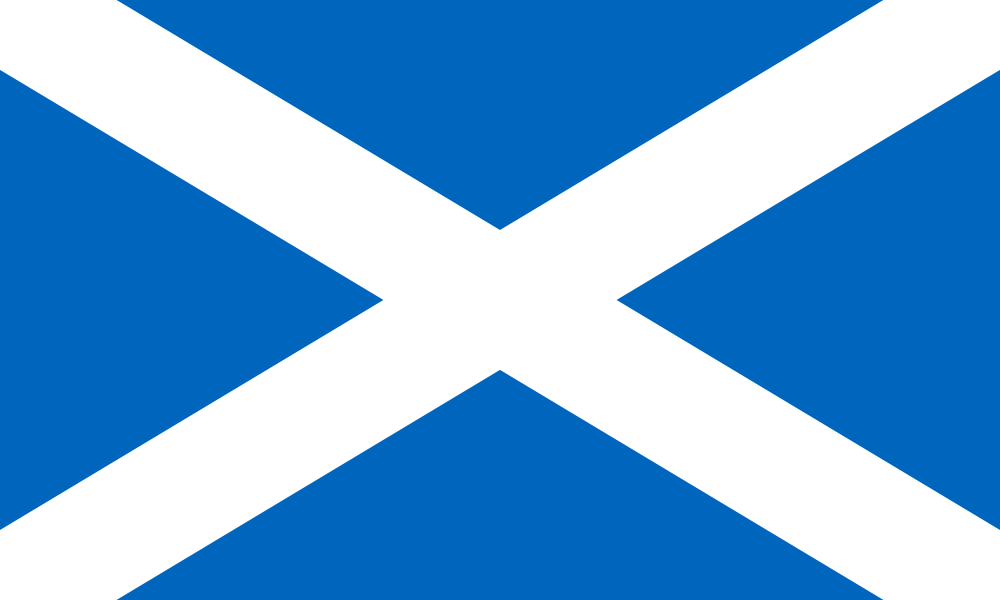
Flag of Scotland
Edinburgh, the country's capital and second-largest city, was the hub of the Scottish Enlightenment of the 18th century, which transformed Scotland into one of the commercial, intellectual, and industrial powerhouses of Europe. Glasgow, Scotland's largest city was once one of the world's leading industrial cities and now lies at the centre of the Greater Glasgow conurbation. Scottish waters consist of a large sector of the North Atlantic and the North Sea, containing the largest oil reserves in the European Union. This has given Aberdeen, the third-largest city in Scotland, the title of Europe's oil capital.


William Wallace
The Kingdom of Scotland emerged as an independent sovereign state in the Early Middle Ages and continued to exist until 1707. By inheritance in 1603, James VI, King of Scots, became King of England and King of Ireland, thus forming a personal union of the three kingdoms. Scotland subsequently entered into a political union with the Kingdom of England on 1 May 1707 to create the new Kingdom of Great Britain. (The Treaty of Union was agreed in 1706 and enacted by the twin Acts of Union 1707, passed by the Parliaments of both kingdoms, despite popular opposition and anti-union riots in Edinburgh, Glasgow, and elsewhere). 

The union also created a new Parliament of Great Britain, which succeeded both the Parliament of Scotland and the Parliament of England. In 1801, Great Britain itself entered into a political union with the Kingdom of Ireland to create the United Kingdom of Great Britain and Ireland; the Parliament of Ireland merging with that of Great Britain to form the Parliament of the United Kingdom. Since the creation of the Irish Free State in 1922, the United Kingdom has comprised Great Britain and Northern Ireland. 

More information: Visit Scotland

Scotland comes from Scoti, the Latin name for the Gaels. The Late Latin word Scotia land of the Gaels was initially used to refer to Ireland. By the 11th century at the latest, Scotia was being used to refer to (Gaelic-speaking) Scotland north of the river Forth, alongside Albania or Albany, both derived from the Gaelic Alba. The use of the words Scots and Scotland to encompass all of what is now Scotland became common in the Late Middle Ages.


I'm William Wallace, and the rest of you will be spared.
Go back to England and tell them... Scotland is free!

William Wallace

TINA PICOTES: MONEGASQUE STYLE FOR TRAVELLING

Tina Picotes
Today is a great day for our unforgettable families. Another member is going to join us: Tina Picotes.

Tina Picotes was born in Maison Neuve a quartier of Monte Carlo, Monaco. She studied in the London School of Economics and Political Science and she works like a Monegasque Diplomatic. Because of this, she is always travelling around the world. She’s an expert in human and political relations and she’s an important figure for her country. She always travels accompanied by her bodyguards: Grimaldi & Ghibellines.

Tina is going to explain us her travels and we’re going to learn a lot about different countries, manners and languages.

The Grandma met Tina in Saint Tropez in the French Riviera. Both of them have a common friend: Joseph de Ca’th Lon. All of them are going to explain you lots of interesting stories about different themes.

TINA'S HOMETOWN: LE MAISON NEUVE IN MONTE CARLO

Tina with Grimaldi and Ghibellines in Monte Carlo.
Monte Carlo, Monte-Carlu in Monegasque, officially refers to an administrative area of the Principality of Monaco, specifically the ward of Monte Carlo/Spélugues, where the Monte Carlo Casino is located. Informally the name also refers to a larger district, the Monte Carlo Quarter which besides Monte Carlo/Spélugues also includes the wards of La Rousse/Saint Roman, Larvotto/Bas Moulins, and Saint Michel. The permanent population of the ward of Monte Carlo is about 3,500, while that of the quarter is about 15,000. Monaco has four traditional quarters. From west to east they are: Fontvieille (the newest), Monaco-Ville (the oldest), La Condamine, and Monte Carlo.

Monte Carlo or literally Mount Charles is situated on a prominent escarpment at the base of the Maritime Alps along the French Riviera. Near the western end of the quarter is the world-famous Place du Casino, the gambling centre which has made Monte Carlo. It is also the location of the Hôtel de Paris, the Café de Paris, and the Salle Garnier, the casino theatre which is the home of the Opéra de Monte-Carlo.
More information: Visit Monaco

TINA'S ANCESTORS: THE HOUSE OF GRIMALDI

Tina, Grimaldi & Ghibellines leaving the Palais
The House of Grimaldi has ruled the tiny principality of Monaco on the Mediterranean coast for over 700 years. The first Lord of Monaco, a merchant-turned-pirate called Lanfranco Grimaldi, was Italian by birth and a member of the Genoan Guelphic family who invaded the area in 1297, following an economic dispute with rival clan, the Ghibellines.When Lanfranco died in 1309, he was succeeded by his first cousin, Rainier I, from whom all subsequent Monegasque monarchs are descended.

Rainier was also a seafaring man, but unlike those of his predecessor, the new leader's trading activities were legitimate, and eventually earned him the respect of the French monarch who appointed him Grand Admiral of France in 1304.

More information: Palais Princier de Monaco

Monaco became a principality when the then ruler Honor II assumed the title of prince in 1612. At that point the territory was still under the protection of Spain, with whom it had been linked since 1524, but the Treaty of Peronne in 1641 allied it instead with France. Subsequent Monegasque sovereigns upped their title count by marrying a string of French heiresses, which explains why; in addition to the title of Sovereign Prince of Monaco, the head of the principality can lay claim to 19 other titles.

Although the Grimaldi family was exiled from Monaco in 1793 following the French revolution - during which time the principality reverted to its ancient name of Fort d'Hercule - its members returned in 1815, following the Treaty of Paris, and have been its monarchs ever since.
 
Welcome Tina to our families!


 I must hurry back to my house and my flowers in Monaco - Lillie Langtry.

Saturday, 17 September 2016

THE UNDERGROUND RAILROAD: THE ROUTE OF FREEDOM

The Underground Railroad, 1860
The Underground Railroad was a network of secret routes and safe houses used by 19th-century enslaved people of African descent in the United States in efforts to escape to Free states and Canada with the aid of abolitionists and allies who were sympathetic to their cause. The term is also applied to the abolitionists, black and white, free and enslaved, who aided the fugitives. Various other routes led to Mexico or overseas. An earlier escape route running south toward Florida, then a Spanish possession, existed from the late 17th century until shortly after the American Revolution. However, the network now generally known as the Underground Railroad was formed in the early 19th century, and reached its height between 1850 and 1860. One estimate suggests that by 1850, 100,000 slaves had escaped via the "Railroad".

More information: History.com

British North America, present-day Canada, where slavery was prohibited, was a popular destination, as its long border gave many points of access. Most former slaves settled in Ontario. More than 30,000 people were said to have escaped there via the network during its 20-year peak period, although U.S. Census figures account for only 6,000. 

Numerous fugitives' stories are documented in the 1872 book The Underground Railroad Records by William Still, an abolitionist who then headed the Philadelphia Vigilance Committee.

The escape network was not literally underground or a railroad. It was figuratively "underground" in the sense of being an underground resistance. It was known as a "railroad" by way of the use of rail terminology in the code. 

The Underground Railroad consisted of meeting points, secret routes, transportation, and safe houses, and personal assistance provided by abolitionist sympathizers. Participants generally organized in small, independent groups; this helped to maintain secrecy because individuals knew some connecting "stations" along the route but knew few details of their immediate area.

More information: Africans in America

Escaped slaves would move north along the route from one way station to the next. "Conductors" on the railroad came from various backgrounds and included free-born blacks, white abolitionists, former slaves (either escaped or manumitted), and Native Americans. Church clergy and congregations often played a role, especially the Religious Society of Friends (Quakers), Congregationalists, Wesleyans, and Reformed Presbyterians as well as certain sects of mainstream denominations such as branches of the Methodist Church and American Baptists. Without the presence and support of free black residents, there would have been almost no chance for fugitive slaves to pass into freedom unmolested.

Harriet Tubman
Harriet Tubman (1822-1913) was an American abolitionist, humanitarian and an armed scout and spy for the United States Army during the American Civil War. Born into slavery, Tubman escaped and subsequently made some thirteen missions to rescue approximately seventy enslaved families and friends, using the network of antislavery activists and safe houses known as the Underground Railroad. She later helped abolitionist John Brown recruit men for his raid on Harpers Ferry, and in the post-war era was an active participant in the struggle for women's suffrage.

Born a slave in Dorchester County, Maryland, Tubman was beaten and whipped by her various masters as a child. Early in life, she suffered a traumatic head wound when an irate slave owner threw a heavy metal weight intending to hit another slave and hit her instead. The injury caused dizziness, pain, and spells of hypersomnia, which occurred throughout her life. She was a devout Christian and experienced strange visions and vivid dreams, which she ascribed to premonitions from God.

In 1849, Tubman escaped to Philadelphia, then immediately returned to Maryland to rescue her family. Slowly, one group at a time, she brought relatives with her out of the state, and eventually guided dozens of other slaves to freedom. Traveling by night and in extreme secrecy, Tubman or "Moses", as she was called, never lost a passenger. After the Fugitive Slave Act of 1850 was passed, she helped guide fugitives farther north into British North America, and helped newly freed slaves find work.

More information: Biography.com


Freedom means you are unobstructed in living your life as you choose. 
Anything less is a form of slavery.
Wayne Dyer